

"Bubble will burst" vs "Bull market continues"… Bubble debate intensifies on Wall Street
Summary
- Major Wall Street strategists said they expect the current AI- and tech stock-centered bull market to continue for the time being.
- Jeff Bezos, the CEO of Goldman Sachs, and Paul Tudor Jones warned of a bubble in the AI industry and the stock market, mentioning similarities to the 1999 dot-com bubble.
- Despite bubble concerns, experts said that without a policy change from the central bank, the likelihood of an immediate market crash is low and the bull market could continue for a period.
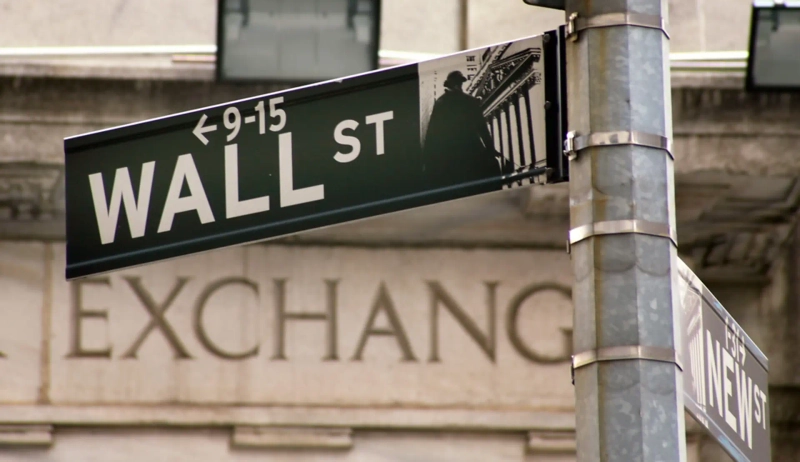
Despite headwinds such as U.S. tariff policies and a government shutdown, the New York stock market has continued its rally centered on artificial intelligence (AI) and tech stocks, and the bubble debate is heating up again.
Major Wall Street strategists such as Ed Yardeni and Michael Hartnett expect the bull market to continue for the time being. On the other hand, Amazon founder Jeff Bezos and Goldman Sachs CEO David Solomon have issued bubble warnings. However, those concerned about a bubble do not expect the market to crash immediately.
Bull market to continue
Market analyst Ed Yardeni, who first used the term 'bond vigilantes,' wrote in a report on the 6th (local time) that "the fear of a bubble itself is a bubble." He diagnosed that "the very fact that investors worry excessively about a bubble shows that the market has not yet entered an overheated phase." Yardeni pointed to the S&P 500's forward earnings hitting a record high, saying, "This reflects economic resilience rather than speculation."
Michael Hartnett, chief strategist at Bank of America (BofA) and one of Wall Street's leading strategists, said in a weekly report published a few days ago that "market bubbles only burst when central banks tighten," and "there are no signs of that now."
Hartnett went on to assess that "the current AI bubble is closer to a boom created by expanded liquidity." He also analyzed that "price movements, valuations, stock concentration, and speculation all show signs of overheating, but these are phenomena commonly seen in liquidity-driven markets." Ultimately, he reaffirmed his position that "unless central banks begin to withdraw liquidity, the bubble will not collapse."
Bezos: "An industrial bubble"
There are also considerable concerns that a market correction may come. On the 3rd, at the 'Italian Tech Week' in Talia Torino, Bezos labeled the AI craze an "industrial bubble." He said, "Capital is flowing into ideas in the AI industry that have no real profit base," and added, "There is a mood of optimism similar to the 1999 dot-com bubble."
At the same event, CEO Solomon also pointed out that "expectations for AI are too high." He said, "This is a period of excessive optimism, and a correction always follows such periods."
Recently, billionaire hedge fund manager Paul Tudor Jones also joined the chorus of bubble warnings. On the 6th, Jones said that the environment is already set for a massive rally in which stock prices could surge explosively before the market peaks. Jones gained fame by predicting the 1987 Black Monday stock market crash and making huge profits.
He is also a co-founder of Just Capital, a nonprofit that assesses U.S. listed companies' social and environmental standards.
In an interview with CNBC that day, he said, "I think all the ingredients are perfectly in place for a kind of 'blow-off' (the stage just before a bubble bursts). History tends to repeat itself in similar ways. I think it will happen again in some form. In fact, this period likely has much more explosive potential than 1999."
Jones pointed out that the current market shows patterns similar to the end of 1999 just before the dot-com bubble burst. As then, tech stocks are surging and speculative behavior is overheating.
Jones also said that phenomena making him "uneasy" include the 'circular trading' seen in today's AI sector—companies buying and selling each other's products or services to inflate sales—and 'vendor financing,' where suppliers lend money to customers to make them buy their products, creating artificial demand structures.
He especially cited the U.S. fiscal and monetary policy environment as the biggest difference between 1999 and now. At that time, the U.S. central bank (the Fed) was entering an interest rate-hiking cycle, whereas now it has rather begun a new easing cycle, he said.
Jones added, "The U.S. currently records a fiscal deficit equal to 6% of GDP, but in 1999 there was a fiscal surplus of $99 billion." He explained that this combination of fiscal and monetary conditions is the first of its kind since World War II.
"Even if it's a bubble, it won't burst immediately"
However, those who claim the current market is a bubble do not expect it to burst immediately. Jones diagnosed, "The bull market has not yet reached its final phase, and there is room for further gains until then."
Jones also explained that "to push prices higher, an ultimately speculative frenzy is needed," and "additional inflows from retail investors and re-entry by a variety of investors such as long-short hedge funds and long-term capital are required."
He said, "In a bull market, timing getting on and off the train is really important," and "history shows that the largest price increases concentrate in the 12 months before the peak. During that period, the annualized rate of increase nearly doubles. If you don't jump in before then you miss the gains, and if you jump in you must have very quick feet. Because a really, really bad ending follows."
Jeremy Grantham, co-founder of global asset manager GMO, also told the Financial Times (FT) in an interview at the end of September that "we are clearly in the late stage of an asset bubble, but this bubble will not burst immediately." Grantham noted, "Excessive optimism and abundant liquidity coexist in today's stock and real estate markets." However, he explained that "the life of the bubble depends on monetary policy and investor sentiment," and "it can continue to inflate until just before it bursts, like the 1999 dot-com bubble."
New York = Shin-young Park, correspondent nyusos@hankyung.com

Korea Economic Daily
hankyung@bloomingbit.ioThe Korea Economic Daily Global is a digital media where latest news on Korean companies, industries, and financial markets.