

"A huge wave of fear" warning…U.S. shaken by 71 trillion 'debt bomb'
Summary
- Prominent Wall Street investment banks Jefferies and JPMorgan Chase were reported to be exposed to large credit risks due to private credit defaults.
- Concerns are spreading that related firms' defaults could be larger than expected due to the lack of transparency and rapid growth of the private credit market.
- The bankruptcy of First Brands and related cascading failures have highlighted the risks of private credit within the U.S. financial market.
"Second SVB fear" sweeps Wall Street…growing concerns over private credit defaults
Jefferies had extended financing to an auto parts firm
Bankruptcy causes losses…stock plunges 25%
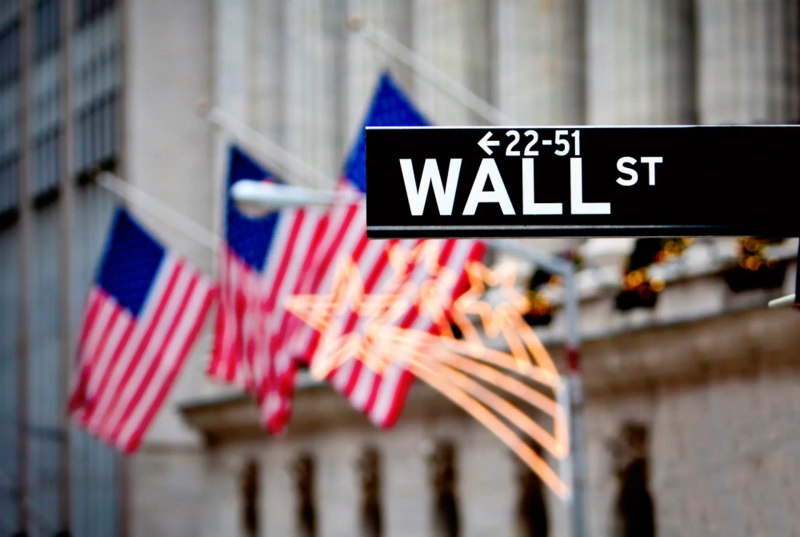
Shares of Jefferies, a leading Wall Street investment bank, have fallen about 25% so far this month, raising concerns about defaults in the U.S. private credit market. The fallout followed the recent bankruptcy of First Brands, an auto parts company to which Jefferies had provided private credit, prompting fears on Wall Street that a repeat of the Silicon Valley Bank (SVB) collapse could occur.
Jefferies' stock plunged more than 10% on the 16th (local time). It has fallen more than 25% in October alone. This is the largest monthly drop since March 2020 after the COVID-19 outbreak. Jefferies, through its unit Point Bonita Capital, had lent money using $715 million of First Brands' accounts receivable as collateral, and the bankruptcy of First Brands raised expectations that a large portion of those assets may have soured, driving the stock decline.
Private credit refers to nonbank financial firms lending or raising funds through private contracts at higher interest rates than banks. Unlike bank loans, private credit lacks transparency, and the market is highlighting the risks after the First Brands bankruptcy.
JPMorgan Chase has also been exposed to private credit risk. JPMorgan supplied funds to Tri-Color, which sells used cars and provides auto installment financing, by acquiring asset-backed securities and other means. Tri-Color filed for bankruptcy in early October. JPMorgan recorded at least $170 million in loan loss write-downs as a result.
Credit risks at regional banks have also come to the fore. Zions Bancorporation announced it "sustained large losses due to loan defaults by several borrowers." Western Alliance also said "a borrower committed fraud." Shares of both banks fell more than 10% that day.
Private credit's "dark" loans are the hidden bomb…"Jefferies is the tip of the iceberg"
Lenders will lend even with uncertain collateral…regional banks' credit anxiety rises
The private credit market rapidly expanded against a backdrop of ultra-low interest rates, abundant liquidity, and regulatory gaps. But as the U.S. central bank (Fed) raised rates and kept them high, borrowing companies have faced surging interest costs, and recent economic uncertainty and tariffs have increased profit pressures. As a result, Wall Street is increasingly worried that the share of distressed firms among those funded by private credit could be larger than expected.
◇ Deep ties with First Brands
Cleveland-based First Brands, which changed its name from Crown Group about five years ago, used borrowed funds to acquire several auto parts manufacturers in succession. But due to aggressive expansion and other factors, it ultimately collapsed late last month. Court filings in the bankruptcy case indicate First Brands carried debt of $10 billion to $50 billion while its assets were under $10 billion. The massive debt shocked Wall Street and unsettled lenders that funded First Brands' acquisitions.
In particular, Jefferies faces massive potential losses as it was not merely a simple creditor of First Brands but a financial partner deeply involved in the company's core cash flows.
Jefferies operated a factoring business through its unit Point Bonita Capital, buying First Brands' accounts receivable—payments owed by large retailers such as Walmart—for cash up front, acting as a cash-flow resolver. Point Bonita purchased $715 million in receivables under its factoring contracts with First Brands, many of which may have soured.
◇ Private credit failures are the root cause
Private credit has exploded in recent years because nonbank lenders can supply funds faster and more flexibly than banks, albeit at somewhat higher rates. Banks under strict regulation scrutinize loans, but the private credit market is relatively less regulated and less transparent. Peter Kory of Pave Finance said, "The private credit market is so opaque that a huge wave of fear can rise without us even knowing whether there is a problem." According to Morgan Stanley, the U.S. private credit market expanded from $1 trillion in 2020 to about $1.5 trillion in early 2024, and is estimated to reach $2.6 trillion by 2029.
◇ Spread of credit risk
JPMorgan Chase also had to take large loan loss provisions due to private credit troubles. Through a unit, JPMorgan extended large private credit to subprime auto lender Tri-Color Holdings, which filed for bankruptcy around the same time as First Brands.
Jamie Dimon, CEO of JPMorgan, referenced the Tri-Color case on the 14th, saying, "If you've seen one cockroach, there are probably more around," adding, "this event is a signal that hidden credit risks may exist across the industry."
Wall Street is concerned that other regional banks are also experiencing credit risks. Zions Bancorporation said its unit California Bank & Trust handled commercial and industrial loans of $50 million (about 68 billion won) that it wrote off as losses. Another regional bank, Western Alliance, said it was unable to enforce a senior lien against private equity firm Canter Group. Both banks are also reported to have exposure to First Brands.
New York = Shin-Young Park, correspondent / Da-Yeon Lim, reporter
▶Private credit
Private credit refers to nonbank financial firms such as private equity funds or asset managers providing funds to companies or small businesses. It can take various forms beyond direct loans, such as securitization of accounts receivable. It has ballooned in recent years, encroaching on the traditional bank lending market.

Korea Economic Daily
hankyung@bloomingbit.ioThe Korea Economic Daily Global is a digital media where latest news on Korean companies, industries, and financial markets.