PiCK
Trump cuts tariffs on Indian goods from 25% to 18%… conditional on halting imports of Russian oil
Summary
- The US said it has agreed to cut tariffs on Indian goods from 25% to 18% and to abolish a 25% punitive tariff linked to purchases of Russian crude.
- Indian assets rose in tandem—led by the Nifty 50, the iShares MSCI India ETF, and the rupee—highlighting improved investment appeal.
- Bloomberg and Capital Economics said India’s 18% tariff rate could boost its attractiveness as a manufacturing hub and increase the likelihood of GDP growth nearing 7%.
Forecast Trend Report by Period


Slightly lower than Vietnam’s 20% and Southeast Asia’s 19%
FT: “The US was likely pressured by India’s FTA deals with the EU”
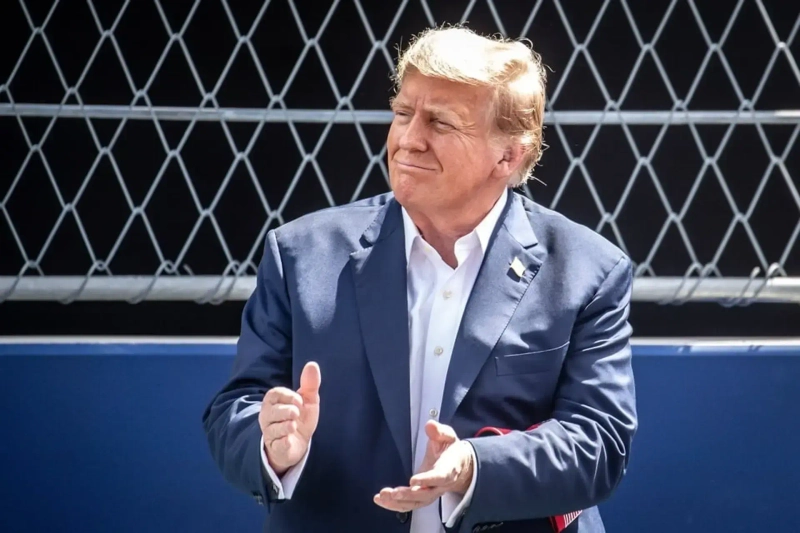
After protracted talks, the United States and India reached an agreement under which the US will lower tariffs on Indian goods from 25% to 18% and also scrap a retaliatory 25% duty tied to purchases of Russian crude. Analysts said India’s push to sign free-trade agreements with the European Union (EU) and the UK—leveraging its market of 1.4 billion people—likely played a major role in pressuring Washington.
US President Donald Trump said on social media on the 2nd (local time) that he had a phone call with Prime Minister Narendra Modi, announcing the tariff cut on Indian goods from 25% to 18%. He also said punitive tariffs on India (an additional 25%) would be removed in exchange for India agreeing to stop buying Russian oil. The move has eased tensions that had persisted for months.
Trump also wrote that India would “work to reduce tariffs and non-tariff barriers on the United States to zero” and would “purchase more than $500 billion worth of US energy, technology, agricultural products, coal and many other products.”
Modi also confirmed the deal in a social media post, saying “tariffs on Indian goods will now be reduced to 18%.” He did not, however, provide details on imports of oil or agricultural products—issues that have remained central sticking points in US-India trade negotiations.
India’s benchmark stock index, the Nifty 50, jumped as much as nearly 5% intraday, marking its biggest surge in five years. The iShares MSCI India ETF listed in the US rose 3%. The rupee gained 1.4% against the dollar in offshore trading, posting its biggest rise in three years.
The US had been pressuring India with tariffs totaling 50%, including retaliatory duties, after India refused to halt imports of Russian oil and resisted opening its agricultural market. India responded by increasing engagement with China—traditionally a difficult counterpart—and pursuing a diversification strategy through a long-delayed free-trade agreement with the EU and a trade deal with the UK.
CNBC interpreted Trump’s announcement of a trade deal with India—coming after last week’s conclusion of an EU-India free-trade agreement—as a signal that the US does not want to fall behind competitors.
The Financial Times (FT) also reported that “as India previously reached deals with the UK and the EU, President Trump was likely under pressure to strike an agreement with India.”
Terry Haines, founder of the research firm Pangaea Policy, described the US-India trade agreement as “a next-generation major trade deal based on the Trump administration’s national security strategy and economic ‘interdependence.’”
The size of the tariff cut is also larger than expected. According to Bloomberg, the reduction could enhance India’s appeal as a manufacturing hub that can substitute for China. India’s 18% tariff rate is below Vietnam’s 20% and the 19% rate across most of Southeast Asia.
Shilan Shah, an emerging-markets economist at Capital Economics, projected that the tariff cut could lift India’s GDP growth this year by about 0.2–0.3% points, bringing it close to 7%. Capital Economics forecasts growth of 6.5% for India in both 2026 and 2027.
Shah noted that “there could also be geopolitical spillovers,” adding that “if improving India-US relations continue, India is more likely to tilt back toward the US camp.”
India has been buying large volumes of Russian oil since Western sanctions following Russia’s 2022 invasion of Ukraine pushed Russian crude onto the market at discounted prices. The Trump administration has repeatedly demanded that India stop buying Russian oil, and last October it announced that Modi had agreed to halt purchases of Russian crude. But as the signing of a final trade agreement was delayed, Indian refiners continued to buy cheap Russian crude.
India was among the first countries to begin trade negotiations with the Trump administration, but relations deteriorated after Trump repeatedly claimed credit for a ceasefire agreement between India and Pakistan. His self-congratulatory remarks irritated Indian officials, and anti-US protests spread in India after punitive tariffs of as much as 50% were imposed.
India exports nearly one-fifth of its total exports to the US. The 50% tariffs imposed by Trump were among the highest levied on any major trading partner. The US is India’s largest export market, but the tariffs hit labor-intensive industries such as textiles, leather, footwear and jewelry. Recent trade data show exports in October fell about 12% year on year, while the trade deficit hit a record high.
Kim Jeong-a, contributing reporter kja@hankyung.com

Korea Economic Daily
hankyung@bloomingbit.ioThe Korea Economic Daily Global is a digital media where latest news on Korean companies, industries, and financial markets.