

U.S. to impose 25% tariffs on medium- and heavy-duty trucks and 10% on buses from November 1
Summary
- The United States said it will impose a 25% tariff on medium- and heavy-duty trucks and a 10% tariff on buses starting November 1.
- The Trump administration extended the automobile parts tariff relief policy from 2 years to 5 years and said it will maintain the relief rate at 3.75% for five years.
- The move was made considering the national security impact of the imports, and the medium- and heavy-duty truck manufacturing and parts market is expected to see volatility.
Car parts tariff relief policy extended from 2 years to 5 years
Relief rates also improved
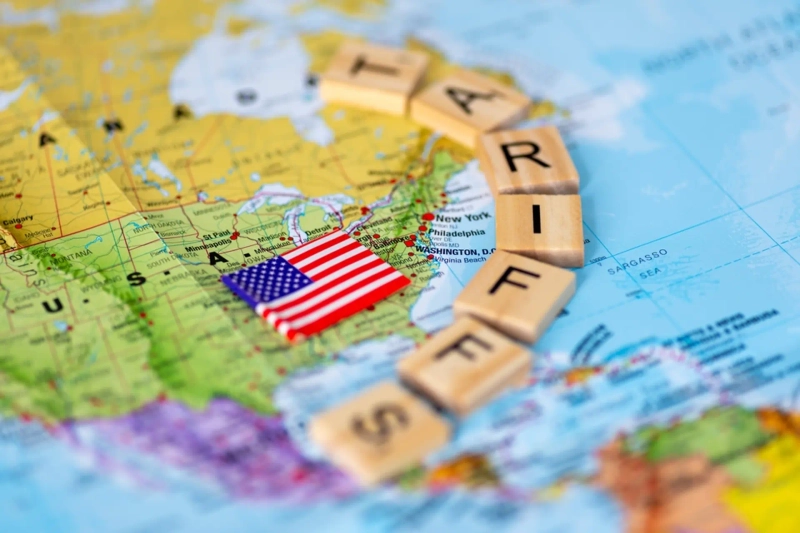
U.S. President Donald Trump has officially ordered that a 25% tariff be imposed on medium- and heavy-duty trucks imported into the United States starting next month on November 1.
The White House said Trump signed a proclamation on the 17th (local time) directing tariffs on medium- and heavy-duty trucks and buses.
Accordingly, from November 1, a 25% tariff will be imposed on medium- and heavy-duty trucks and their parts, and a 10% tariff will be imposed on buses. Medium-duty trucks refer to vehicles with a gross vehicle weight of 14,001 pounds (about 6,350 kg) to 26,000 pounds (about 11,793 kg), and heavy-duty trucks refer to vehicles with a gross vehicle weight above 26,001 pounds.
Passenger cars and light trucks with lower gross vehicle weight have already been subject to a 25% tariff since last April.
These truck tariffs do not overlap with existing product-specific tariffs such as steel and aluminum tariffs. Because the 25% truck tariff falls into a different category from general automobile tariffs, it is expected to be applied as is to countries like Japan and the European Union (EU), whose automobile tariffs were previously lowered from 25% to 15% as part of agreements with the Trump administration.
When asked at a briefing whether lower truck tariff rates would apply to Japan and the EU, a senior administration official responded, "If we have agreed to apply different tariff rates with a trading partner (than the proclamation's 25%), then when importing vehicles or parts from that trading partner, the agreed (new) tariff rate (not the 25%) will apply."
This means that countries that negotiated truck tariffs separately with the Trump administration would have the agreed rates applied instead of 25%. The truck tariffs announced this time came after the United States concluded trade negotiations with Japan and the EU, and the rates were not specified in those earlier agreements.
Trump also extended the duration of a policy introduced to reduce the tariff burden on companies importing automobile parts from the original 2 years to 5 years.
The Trump administration had announced a program providing credits that offset part of the 25% tariff on imported automobile parts for companies that assemble vehicles in the United States. Originally, this policy was scheduled to apply only to vehicles assembled between April 5, 2025 and April 30, 2027, but the period has now been extended to April 30, 2030.
Also, the offset rate was originally to be 3.75% of a vehicle's Manufacturer's Suggested Retail Price (MSRP) in the first year and reduced to 2.5% in the second year, but the administration decided to maintain 3.75% for the entire five years.
The administration plans to introduce a similar tariff relief policy for parts used in the manufacture of medium- and heavy-duty trucks. A senior administration official said they also plan to implement a tariff relief policy for parts used by companies that make automobile and truck engines.
The truck tariffs are being implemented based on Section 232 of the Trade Expansion Act, which grants the president authority to limit imports of products that threaten national security. The White House explained that medium- and heavy-duty trucks are used for military troop movement and disaster response and account for 70% of domestic logistics, so it is necessary to protect and strengthen the ability to manufacture medium- and heavy-duty trucks and their parts.
According to the White House, about 43% of medium- and heavy-duty trucks sold in the United States are imports.
Ahn Hye-won, Hankyung.com reporter anhw@hankyung.com

Korea Economic Daily
hankyung@bloomingbit.ioThe Korea Economic Daily Global is a digital media where latest news on Korean companies, industries, and financial markets.