

Summary
- Recently, Bitcoin's price has shown significant volatility due to tariff wars and global financial market instability.
- US$110,000 is acting as Bitcoin's psychological resistance level, and it is expected that the price will trade sideways in this range.
- The possibility of a U.S. rate cut is also being noted as an important variable affecting Bitcoin price volatility.
Bitcoin on a roller coaster… prices 'bouncing' amid tariff war and global financial instability
Bitcoin 'shaken' by a Trump-led trade war
U.S. regional bank loan defaults compound the issues
Liquidity flows into gold, a safe-haven asset
Attention on whether interest rates will be cut in October
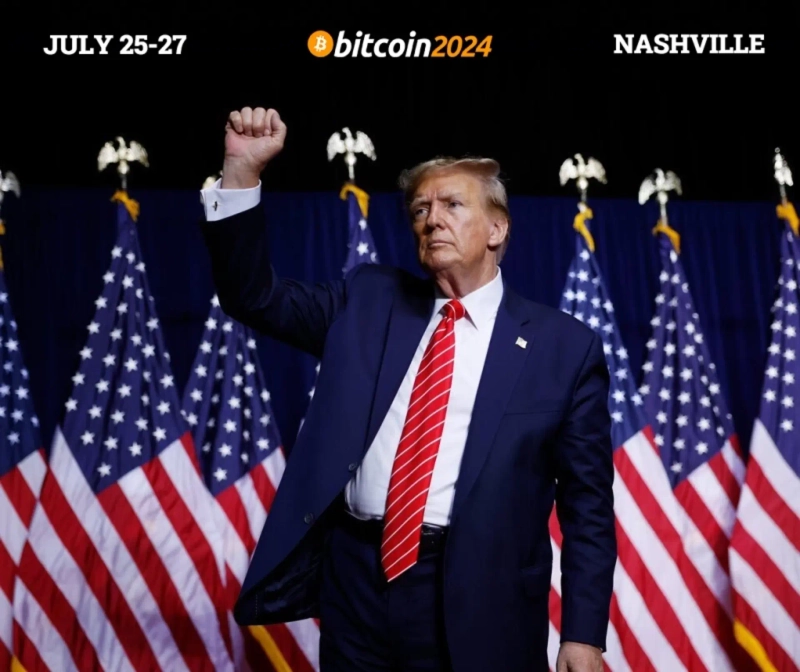
Bitcoin prices are on a roller coaster. Earlier this month, expectations of rate cuts pushed Bitcoin to record highs in domestic and international crypto markets and produced an upward trend, but as U.S.-China tariff conflicts and global financial market instability spread, it has failed to escape weakness. With increased price volatility, analyses diverge on whether this signals "entry into a bear market" or merely a "short-term correction."
○Uncertainty grows as the tariff war spreads
On the 18th, according to domestic cryptocurrency exchange Upbit, Bitcoin's price has recently fallen below 170,000,000 won. Bitcoin surged into the 178,000,000 won range on the 8th but dropped to the 160,000,000 won range from the 15th. Overseas markets are similar. According to CoinMarketCap, Bitcoin is trading around US$108,000. Earlier this month it surpassed US$126,000, setting new highs. However, it fell more than 10% over the week.
Bitcoin showed clear strength earlier this month because expectations grew that the timing for additional U.S. rate cuts had arrived. Typically, rate cuts reduce the appeal of safe assets such as deposits and bonds and increase preference for risky assets like crypto. Seasonal factors also played a role. October is often a month when Bitcoin rises and is called "Uptober (Up+October)." For example, Bitcoin has closed higher in October nine out of the past ten years.
However, U.S. President Donald Trump signaling his willingness to restart a tariff war with China acted as a negative factor. When President Trump on the 10th threatened to impose an additional 100% tariff on China in response to rare-earth export controls, Bitcoin's price lurched. As risk-asset avoidance intensified, Bitcoin plunged below US$110,000. Not only Bitcoin but altcoins such as Ethereum, XRP, and Solana also plunged. In addition, concerns about bad loans at U.S. regional banks surfaced, adding to global financial market instability and weighing on prices.
The unexpected crash in crypto assets like Bitcoin also triggered an unusually large liquidation event. According to coin data analytics firm CoinGlass, on the 10th the size of forced liquidations in the cryptocurrency futures market amounted to US$19,156,000,000 (about 27 trillion won). Liquidation refers to investors' positions being forcibly closed when coin prices fall sharply and margin is lost.
○US$110,000 is Bitcoin's 'psychological resistance level'
While Bitcoin hesitated, liquidity quickly moved into gold, a representative safe-haven asset. The international spot price of gold at one point reached US$4,300 per troy ounce during trading on the 17th. U.S. investment bank Bank of America even forecast that next year gold could reach US$5,000.
Markets expect Bitcoin's price volatility to remain high through the end of the year. That means concerns that a full-fledged bear market has begun coexist with opinions that this will be only a short-term correction. In particular, US$110,000 is viewed as a "psychological resistance level" for Bitcoin's price. Crypto news outlet Cointelegraph said, "Bitcoin's price is likely to trade sideways in the US$100,000–110,000 range for the time being."
Whether interest rates will be cut is also a factor to watch. Markets are suggesting that the U.S. central bank (the Fed) may cut its policy rate at the FOMC meetings this month and in December. Recently, Fed Chair Jerome Powell also made dovish (favoring monetary easing) remarks, leading analysts to believe that arguments for rate cuts are gaining momentum.
Reporter Jang Hyun-ju

Korea Economic Daily
hankyung@bloomingbit.ioThe Korea Economic Daily Global is a digital media where latest news on Korean companies, industries, and financial markets.