

Foreign media: "Trump's 28-point ceasefire plan was drafted based on a Russian draft"
Summary
- Reuters reported that the 28-point Ukraine ceasefire plan released by the Trump administration was drafted based on a Russian proposal.
- Analysts say the ceasefire plan largely reflects Russia's existing positions, including the cession of eastern Ukrainian territory and Russian demands.
- Within the U.S., skepticism is spreading that the plan is merely a list summarizing Russia's positions and lacks realism and effectiveness.
Reuters report
After the Trump-Zelensky White House meeting
Russia sent a draft to the U.S. in mid-October
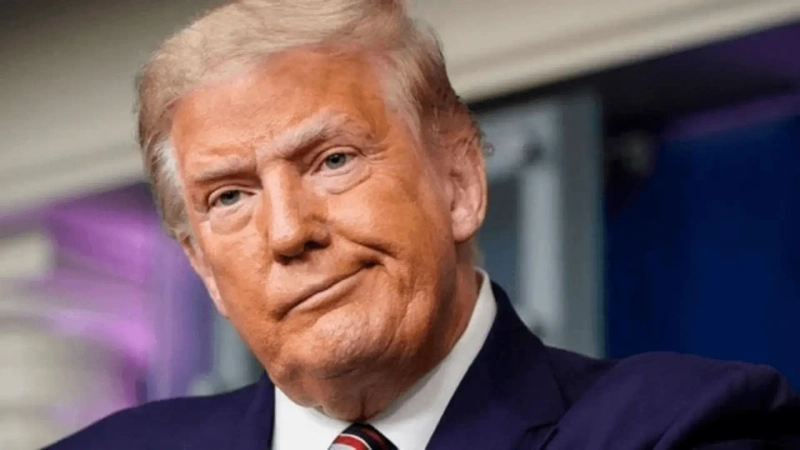
Donald Trump's administration last week made public a 28-point Ukraine ceasefire plan that was drafted based on a Russian proposal, Reuters reported on the 26th (local time).
According to Reuters, citing three anonymous sources, the Russian side shared this draft, which contained demands for a ceasefire, with senior U.S. officials in mid-September.
Reuters said the timing of Russia's sending of the draft was immediately after President Trump met with Volodymyr Zelenskyy, the president of Ukraine, at the White House on the 17th of last month.
The Russian draft was delivered in the form of an unofficial letter known in diplomatic terms as a 'non-paper.' It included demands that Russia has long presented at negotiation tables, including the cession of significant parts of eastern Ukrainian territory.
Reuters noted it is unclear why or how the Trump administration came to base its own peace plan on the Russian document.
Officials such as Secretary of State Mike Pompeo who reviewed the demands in the Russian non-paper believed that Russia's demands were likely to be immediately rejected by Ukraine, according to the sources who spoke to Reuters.
Since the Trump administration released the 28-point Ukraine ceasefire plan last week, skepticism has spread among U.S. government officials and members of Congress that the plan is merely a list summarizing Russia's positions rather than a serious proposal, Reuters reported.
According to Reuters, the creation of this ceasefire plan followed a secret meeting last month in Miami, Florida, between Jared Kushner, President Trump's son-in-law, and Kirill Dmitriev, head of the Russia Direct Investment Fund (RDIF) and a close associate of Russian President Vladimir Putin, along with Trump's Middle East envoy Steve Witkoff.
Reuters said only a very small number of State Department and White House officials were briefed about the secret meeting.
Earlier on the 25th, Bloomberg reported it had obtained a transcript of a call on October 14 between Envoy Witkoff and Kremlin foreign policy aide Yuri Ushakov, which included references to a "20-point plan."
Taken together, it appears that the mid-October "20-point plan" and the Russian draft were supplemented and organized through the Kushner-Witkoff-Dmitriev meeting at the end of October to become the Trump administration's "28-point Ukraine war peace plan."
AP said in an analysis that the presentation of Trump's Ukraine war peace plan shows a similar pattern to his mediation of a Gaza ceasefire.
AP identified commonalities such as: boldly proposing terms that unilaterally favor one side; setting deadlines for fighters but leaving follow-up measures vague after a ceasefire; and weak details on enforcement of ceasefire conditions, security guarantees, and who would bear reconstruction costs.
When mediating the Gaza ceasefire, Trump unilaterally backed Israel's position, and the "28-point Ukraine peace plan" heavily reflects Russia's position.
There are differences too. Unlike Israeli Prime Minister Benjamin Netanyahu, who resisted Trump's ceasefire demands for a time before accepting them, Russian President Vladimir Putin has made no concessions to Ukraine.
Also, when the Trump administration formulated the Israel-Hamas ceasefire plan, it solicited input from neighboring countries such as Egypt, Qatar, Jordan, and Saudi Arabia, but the Russia-Ukraine ceasefire plan did not reflect views from the European Union (EU).
Additionally, the Russia-Ukraine peace plan has 28 points, more than the 20 points in the Israel-Hamas ceasefire plan, and the former includes slightly more detailed provisions on who would bear reconstruction costs, among other minor differences.
Critics have also pointed out that Trump's goal appears to be a declaration that the war has stopped, rather than a durable peace or a formal peace treaty.
Maria Zolkina, a political analyst in Kyiv, Ukraine, said, "President Trump's approach focuses on declaring a ceasefire rather than ensuring compliance," and added, "President Trump does not care whether the ceasefire is sustainable."
Reporter Jeong-sam Go, Hankyung.com jsk@hankyung.com

Korea Economic Daily
hankyung@bloomingbit.ioThe Korea Economic Daily Global is a digital media where latest news on Korean companies, industries, and financial markets.