

PiCK
Richard Teng "Invested $600 million in October mass liquidations… User protection is Binance's greatest competitive advantage" [Coin Interview: BBW2025]
Summary
- Richard Teng, Binance CEO, said he injected $600 million during the global plunge in October to protect users.
- Binance cites security, compliance, and the SAFU fund as competitive advantages for providing a safe trading environment.
- He emphasized focusing on innovation such as regulatory compliance, tokenization, and AI adoption, and said he will turn regulation into a competitive advantage.
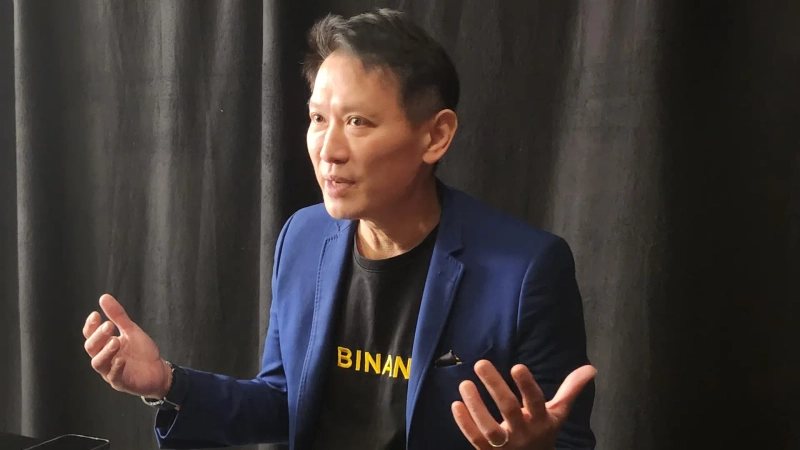
"We will not ignore user losses. Binance's greatest strength lies in providing a safe trading environment and building trust."
Richard Teng, Binance CEO, explained the rationale for injecting a total of $600 million in user compensation and goodwill payments during the global plunge on October 10th. He emphasized that even if it meant bearing short-term costs, a safe trading environment and restored trust would ultimately become Binance's greatest competitive advantage.
In an interview at Binance Blockchain Week 2025 on the 4th (local time), Teng said, "Other centralized exchanges and DeFi protocols did not provide any goodwill compensation, but we bore $600 million to share the pain with users." He stressed that the incident was not unique to crypto assets but a typical global macro event triggered by rare earth export restrictions and the announcement of 100% tariffs.
According to Teng, the U.S. stock market saw $1.5 trillion in market capitalization evaporate in a single day, and forced liquidations alone amounted to $150 billion. In the crypto market, about $19 billion of liquidations occurred within 45 minutes. As Ethereum network gas fees spiked to 200 times the usual level and even stablecoin transfers were blocked, liquidity dried up faster, causing losses across both centralized exchanges and DeFi protocols.
Binance acknowledged full responsibility for its own transfer delays and some token price dislocations that occurred during the process and directly compensated about $300 million. In addition, Teng said, "We identified the users who suffered the most and paid an additional $300 million even for areas without legal liability." He explained this decision as "an extension of the company's philosophy of prioritizing user protection."
The compensation funds came from Binance's SAFU fund and its own capital accumulated over years. The SAFU fund is a user-protection fund Binance created before regulatory authorities requested it and is currently about $1 billion in size. Teng said, "We're fine with criticism that we overinvest in security and compliance," adding, "Competitors that neglected these areas as their platforms grew have repeatedly been hacked."
He drew a line that not only centralized exchanges but also DeFi protocols and traditional financial firms are not free from hacking risks. However, he said, "How much you invest in security and surveillance infrastructure makes the difference," and "that's why funds move to Binance whenever incidents happen at other exchanges." He explained that Binance operates real-time monitoring and abnormal-trade detection systems to prevent user asset outflows in case of security incidents.
Teng described the tokenization craze as "one of the core real use cases of blockchain technology." He forecasted that after stablecoins and crypto payments, asset tokenization will become the third pillar connecting traditional finance and web3. Binance is cooperating on tokenization with global asset managers such as Franklin Templeton and BlackRock, aiming to support the integration of web2 financial infrastructure and web3 networks.
He also spoke about AI adoption. Teng revealed, "Now 40% of Binance's code is written by AI." He said AI has been introduced across the company, from basic tasks like customer inquiry responses and document forgery detection to trade monitoring, market manipulation surveillance, and internal operational efficiency. "AI and blockchain will reshape almost every industry structure within the next 5 to 10 years," he said, "and companies that absorb these technologies quickly will gain an overwhelming advantage over those that do not."
In payments, Binance Pay is seen as a core testing ground. Three years after the service launched, cumulative payment volume is about $272 billion, and the number of merchants surged from 12,000 earlier this year to 21 million recently. Richard Teng said, "The Kingdom of Bhutan adopted a national-level cryptocurrency payment system based on Binance Pay this year, and airline tickets, accommodations, and local store payments can all be processed with Binance Pay," adding, "We will expand such national-level cases to multiple regions."
On regulatory strategy, he said, "Only one-third of global regulators currently have crypto regulatory frameworks," and "we are in the stage of explaining basic concepts and co-creating with the remaining two-thirds." Binance has obtained licenses in 21 countries, and about 1,300 people, or 22% of its total workforce, belong to the compliance organization. He said, "We will turn regulation into a competitive advantage," predicting, "the gap will widen with small and medium operators that cannot bear regulatory risk."
Richard Teng officially formalized the co-CEO structure with co-founder He Yi on the 3rd. He said, "From the beginning, we have shared a single goal of putting users first," adding, "Our joint goal is to build a platform that simultaneously offers top-level security, regulatory compliance, and user experience, and to onboard the 'next billion' users after 300 million."

YM Lee
20min@bloomingbit.ioCrypto Chatterbox_ tlg@Bloomingbit_YMLEE