

Despite the narrowing US-Japan interest-rate gap… the puzzle of the 'weak yen'
Summary
- It reported that the US-Japan interest-rate gap has narrowed to its smallest level in about three years, yet the weak-yen phenomenon continues.
- It stated that Japan's persistent trade balance deficits and increased overseas investment via NISA are structurally intensifying pressure for yen weakness.
- It said that the expansion of the digital deficit and large-scale government fiscal spending could undermine confidence in the yen and act as additional weak-yen pressure going forward.
The conventional wisdom 'narrower rate gap → stronger yen' is outdated
Structural factors in the Japanese economy
Trade balance deficits → pressure for a weak yen
Digital deficit > travel surplus soon
Overseas investment via NISA also leads to yen selling
Takaichi's spending also undermines confidence in the yen
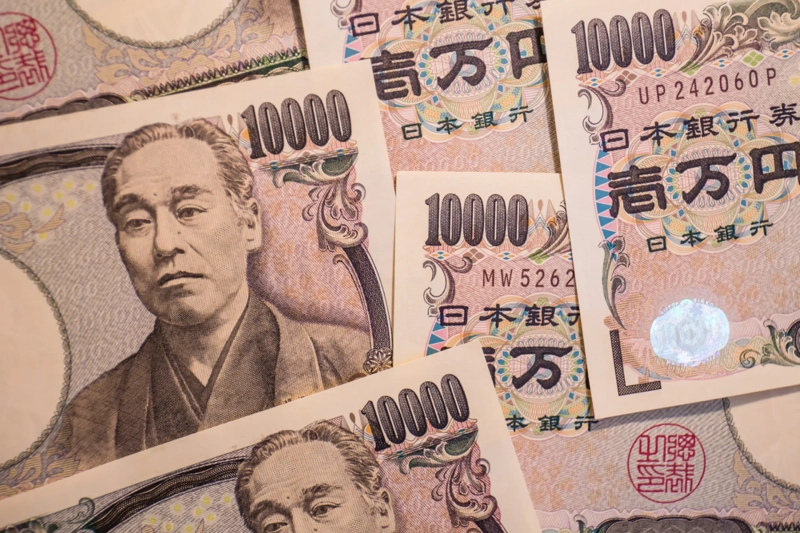
In the Japanese foreign exchange market, the conventional wisdom 'narrowing US-Japan interest-rate gap → stronger yen' is not holding. So far this year, with U.S. rate cuts and Japanese rate increases, the interest-rate gap between the two countries has narrowed to its smallest level in about three years, but the yen-dollar rate remains around 155 yen to the dollar, almost the same as at the start of the year. Where is the key to solving the puzzle of why the weak yen persists despite the narrowing rate gap?
According to the Nikkei, the Bank of Japan will hold a Monetary Policy Meeting on the 18th–19th to discuss raising the policy rate. The market's estimated probability of a rate increase is 95%. The United States decided at this month's Federal Open Market Committee (FOMC) meeting to cut rates for the third consecutive time. If the Bank of Japan raises rates, the U.S.-Japan rate gap will be the smallest in about three years.
Generally, a reduction in the rate gap caused by rising Japanese rates and falling U.S. rates leads to yen appreciation and dollar weakness. However, this conventional wisdom is not holding. The current yen exchange rate is around 155 yen to the dollar, almost the same trend as the 157 yen level at the start of the year. It is in a historic weak-yen zone near the 37-year low recorded in July last year (the upper 161-yen range).
Behind this are deep structural factors in the Japanese economy. According to the Ministry of Finance, the trade balance has been in deficit for four consecutive years through last year, and this year it was a deficit of 1.5 trillion yen through October. The fact that most import payments must be made in dollars acts as pressure for yen weakness.
Particularly serious is the services balance. The digital balance recorded a deficit of 5.6 trillion yen through October, but the travel balance secured a surplus of 5.4 trillion yen thanks to inbound visitors. In other words, the travel surplus has been offsetting the digital deficit.
Going forward, the digital deficit is likely to exceed the travel surplus, leading to sustained weak-yen pressure. The Ministry of Economy, Trade and Industry estimates the digital deficit will increase to 18 trillion yen by 2035. That would be larger than Japan's oil import bill last year (10 trillion yen).
With most cloud services and video streaming dominated by overseas companies, the spread of generative artificial intelligence (AI) is also acting as a negative factor. The travel balance's growth has slowed due to labor shortages and other factors, and recently worsening China-Japan relations have also acted as a headwind.
There are also claims that accumulation investments through the new tax-exempt small investment scheme (NISA) are a factor in yen selling. Since the introduction of the new NISA in January last year, outflows from purchases of overseas investment trusts have averaged 690 billion yen per month, a large increase from 380 billion yen in the same month the previous year. On an annual basis, about 8 trillion yen is being sold.
There is a view that the number of NISA accounts could increase from the current 27 million to around 40 million. It is said that at least for the next 5–10 years there will be persistent yen-selling pressure on the order of 10 trillion yen annually.
It is uncertain whether the fiscal spending promoted by the Sanae Takaichi administration will lead to economic growth or instead undermine confidence in the yen. The supplementary budget for this year recently passed by the Japanese Diet is the largest since COVID-19. Even if it leads to economic growth, there is a lag of one to two years, and there are opinions that weak-yen pressure will continue in the meantime.
Tokyo=Il-kyu Kim, correspondent black0419@hankyung.com

Korea Economic Daily
hankyung@bloomingbit.ioThe Korea Economic Daily Global is a digital media where latest news on Korean companies, industries, and financial markets.