PiCK
US-Iran War-Ending MOU Nears as Hormuz Reopening Sends Oil Down More Than 10%
Summary
- The US and Iran are close to signing an MOU aimed at ending the war and resolving the nuclear issue, while considering a plan to continue negotiations for the next 30 days on detailed terms.
- The proposed MOU includes US sanctions relief on Iran and the release of some frozen funds, along with Iran’s gradual easing of restrictions on passage through the Strait of Hormuz and a phased lifting of the US maritime blockade.
- News of progress in US-Iran talks sent international oil prices down more than 10%, with WTI falling to $89 a barrel and Brent dropping to $99 a barrel.
Forecast Trend Report by Period


MOU on nuclear issue said to be near
Talks on detailed terms to continue for 30 days
Global oil prices briefly plunge more than 10%
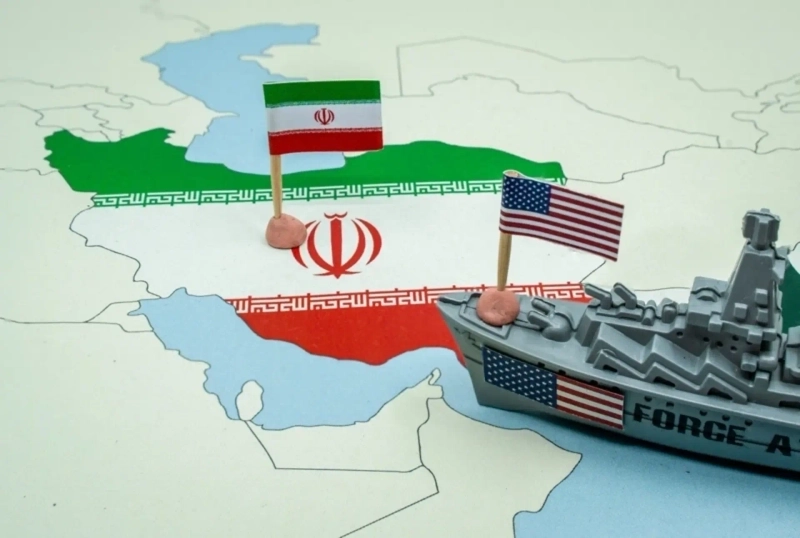
The US and Iran are close to signing a memorandum of understanding aimed at ending the war and resolving Tehran’s nuclear issue, Axios reported on May 6. Iran’s Islamic Revolutionary Guard Corps, or IRGC, said the same day that safe passage through the Strait of Hormuz would be guaranteed after the US stopped its threats. As the two sides moved toward what appeared to be a de facto end to the conflict, international oil prices fell about 10%.
Axios reported that the US and Iran were nearing an MOU to end the war. The document includes a temporary halt to Iran’s uranium enrichment, US sanctions relief and the release of some frozen funds, a gradual easing of Iran’s restrictions on passage through the Strait of Hormuz, and a phased rollback of the US maritime blockade on Iran. The two sides are considering signing the MOU first and then using the next 30 days to negotiate detailed terms for formally ending the conflict. Iran’s Foreign Ministry said it was reviewing the US proposal.
Shortly after the report, the IRGC Navy said in a statement that safe and stable transit through the Strait of Hormuz would be guaranteed now that threats from the “aggressor” had ended and new procedures were being put in place. It also thanked captains and shipowners in the Persian Gulf and the Gulf of Oman for complying with Iran’s rules for the strait and contributing to regional maritime security.
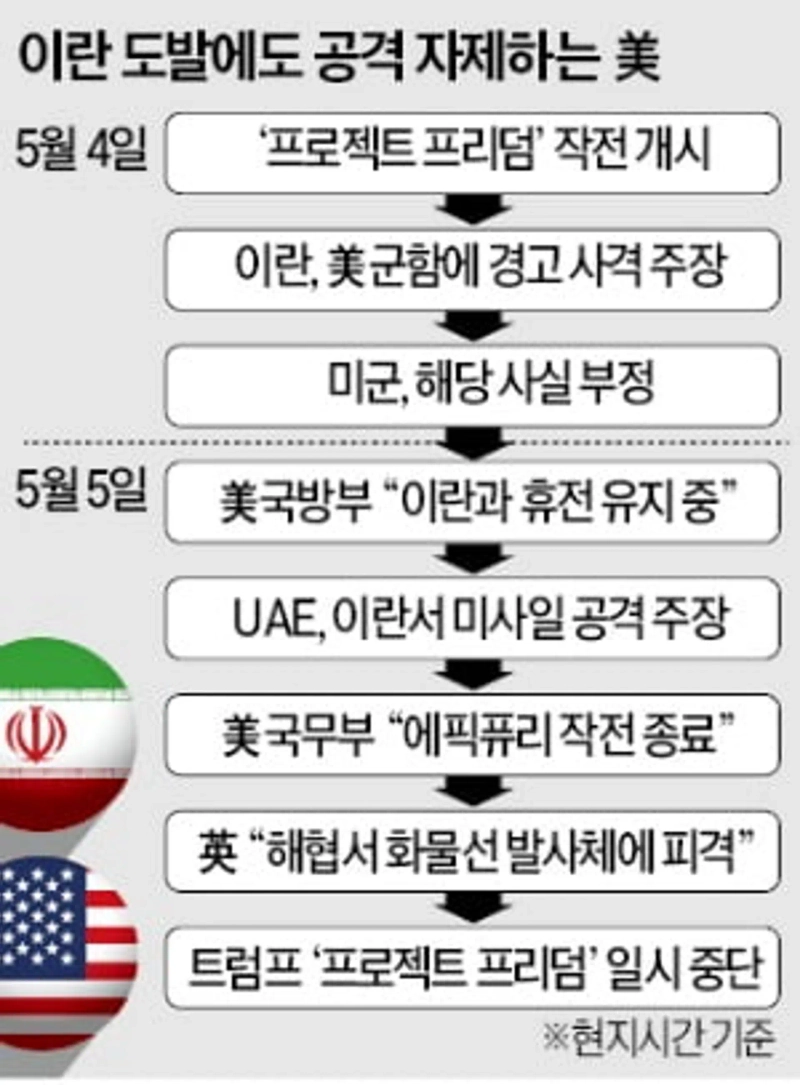
The statement was Iran’s first official response after President Donald Trump wrote on Truth Social a day earlier that there had been “major progress” toward a “complete and final agreement” with the Iranian delegation and that both sides had agreed to pause “Project Freedom.”
News of progress in the negotiations sent oil prices sharply lower. June West Texas Intermediate futures, after falling 3.90% on the New York Mercantile Exchange a day earlier, dropped more than 10% on May 6 to as low as $89 a barrel. July Brent crude also fell more than 9% intraday to $99 a barrel.
Iran Nuclear Freeze, US Sanctions Relief: One-Page War-Ending Deal Nears
US Seeks Iranian Reply Within 48 Hours; Tehran Pledges Safe Passage for Ships
The IRGC’s pledge to ensure safe passage through the Strait of Hormuz is being interpreted as a sign that talks with Washington are moving in a positive direction. Trump’s abrupt decision to halt the US military’s “Project Freedom” operation in the strait had already fueled speculation that negotiations with Iran were advancing. Still, the US is maintaining its maritime blockade on Iran, and Tehran continues to control access to the strait, leaving open the possibility that military clashes could resume if the talks collapse.
Will a war-ending agreement be reached?
Axios reported on May 6 that an MOU between the White House and Iran was close. The outlet said Washington expected Iran’s response on several core issues within the next 48 hours. People familiar with the matter said no agreement had been reached yet, but the two sides were closer to a deal than at any point since the war began.
According to the report, the one-page MOU contains 14 provisions setting out the basic principles for ending the war and for detailed nuclear negotiations. The terms include a temporary freeze on Iran’s uranium enrichment, US sanctions relief and the release of some frozen funds, a gradual easing of Iranian restrictions on passage through the Strait of Hormuz, and a phased lifting of the US naval blockade on Iran. It also calls for the start of 30 days of negotiations to finalize details tied to sanctions relief, with follow-up talks potentially taking place in Islamabad, Pakistan, or Geneva, Switzerland. White House envoy Steve Witkoff and Jared Kushner, Trump’s son-in-law, are discussing the MOU with Iranian officials directly or through mediators.
The nuclear portion of the negotiations remains under discussion. One source said Iran may agree to send its highly enriched uranium abroad. A transfer of the material to the US is also under consideration. During the “12-day war” in June last year, when the US and Israel attacked Iran, three of Iran’s uranium enrichment facilities were destroyed. But the whereabouts of about 440 kilograms of uranium enriched to 60% have yet to be confirmed. If Tehran changes its long-held position against allowing the material to be moved out of the country, negotiations on ending the war could accelerate.
Another ship attacked by Iran
Earlier, Secretary of State Marco Rubio formally announced the end of Operation Rising Wrath during a briefing in the White House press room. He said “Project Freedom” had begun over the weekend and that its goal was to rescue about 23,000 civilians from 87 countries who had been stranded in Gulf waters for more than two months. But less than three hours later, Trump wrote on social media that he was suspending the operation because talks with Iran had advanced. Iran’s military then signaled it would reopen the Strait of Hormuz, reinforcing the view that an agreement tied to ending the war was taking shape.
The chances of renewed US bombing of Iran appear to be diminishing for now. Rubio stressed that the mission had been a “defensive operation,” and Defense Secretary Pete Hegseth did not change his assessment that a “ceasefire situation” remained in place even after Iran attacked neighboring countries.
Iran, for its part, said the developments showed it had gained the upper hand. Tehran still retains control over the strait. The IRGC said a day earlier that all ships seeking to pass through the waterway must obtain permission from the Iranian military.
IRGC Deputy Commander Yadollah Javani said only routes designated by Iran were safe for passage through the Strait of Hormuz. Vessels that deviated from those routes would not be safe and would face a firm response from the IRGC Navy. For now, Iran is effectively saying safe passage will be guaranteed as long as ships comply with the Revolutionary Guards’ new rules.
Ships are still coming under IRGC attack. CMA CGM, the French shipping company ranked third globally, said on May 6 that one of its vessels had been attacked a day earlier while passing through the Strait of Hormuz.
Lee Sang-eun, Washington correspondent / Kim Dong-hyun, reporter selee@hankyung.com

Korea Economic Daily
hankyung@bloomingbit.ioThe Korea Economic Daily Global is a digital media where latest news on Korean companies, industries, and financial markets.