

PiCK
Bank of Korea "Will decide whether to cut interest rates next year while watching inflation, growth, house prices, and the exchange rate"
Summary
- The Bank of Korea said it will decide whether to cut the policy rate next year depending on next year's inflation rate, economic growth, house prices, and household debt.
- It said the won·dollar exchange rate in the mid-1,400 won-per-dollar range and exchange rate volatility are also key factors to consider.
- The Bank of Korea said it plans to implement market stabilization measures by comprehensively accounting for financial stability risks and the foreign exchange market situation.
Bank of Korea Announces 2026 Monetary and Credit Policy Operating Directions
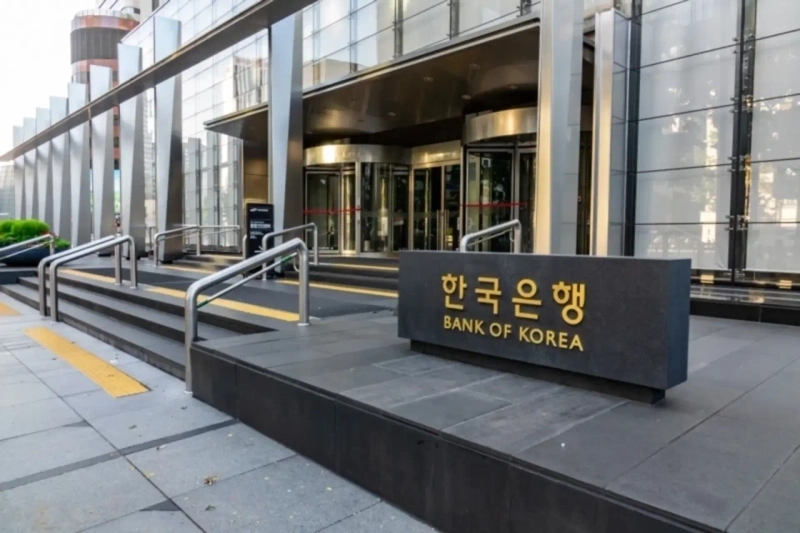
The Bank of Korea said it will decide whether to lower the policy rate next year by taking into account the inflation rate, economic growth, house prices, and household debt. It also identified the won·dollar exchange rate, which has been staying in the mid-1,400 won-per-dollar range, as a factor to consider.
In the '2026 Monetary and Credit Policy Operating Directions' released on the 25th, the Bank of Korea said, "The policy rate will be adjusted (cut or timing decided) while comprehensively considering the future path and uncertainties of inflation and growth, as well as risks to financial stability."
This can be read to mean that the Bank may not lower the policy rate, unlike in the '2025 Monetary and Credit Policy Operating Directions' announced at the end of last year, which simply mentioned "further cuts" without questioning whether to do so.
The Bank said, "Although the inflation rate is expected to fluctuate around the target level, upward pressure could increase due to a higher exchange rate and a recovery in domestic demand. Growth is expected to rise to the level of potential growth, but related upside and downside risks such as the global trade environment, the semiconductor cycle, and the speed of domestic demand recovery should also be considered."
Regarding financial stability, it mentioned the need to remain attentive to risks from housing prices in the Seoul metropolitan area, household debt, and possible increases in exchange rate volatility.
On the foreign exchange front, it said, "With heightened domestic foreign exchange sector vigilance due to domestic and external uncertainties, we will strengthen market monitoring and actively implement market stabilization measures against excessive concentration. We also plan to pursue measures such as 24-hour opening of the foreign exchange market and regulatory adjustments related to offshore use of the won among non-residents."
Seul-gi Lee Hankyung.com reporter seulkee@hankyung.com

Korea Economic Daily
hankyung@bloomingbit.ioThe Korea Economic Daily Global is a digital media where latest news on Korean companies, industries, and financial markets.