PiCK
Will the US Supreme Court rule at midnight tomorrow on whether the reciprocal tariffs are unconstitutional? Global markets on alert
Summary
- It reported that speculation has emerged that the US Supreme Court will rule on the legality and constitutionality of the Trump administration’s “reciprocal tariffs.”
- Market experts said that even if the Supreme Court blocks the tariffs, the administration is likely to keep tariffs in place through other legal means, limiting the shock to financial markets.
- South Korean brokerages assessed that the overall market impact will be neutral, considering the likelihood of an unlawful ruling, uncertainty over refunds, and the possibility of imposing alternative tariffs.
Forecast Trend Report by Period


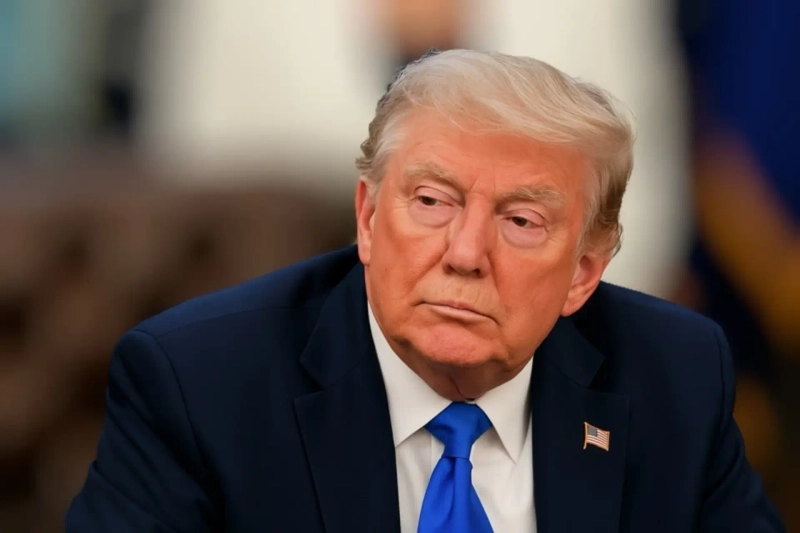
Speculation is growing that the US Supreme Court will issue a ruling at 10 a.m. local time on the 9th (midnight on the 10th in Korea) on the Donald Trump administration’s “reciprocal tariffs,” drawing intense attention from the market over the potential ripple effects on global financial markets and trade policy.
According to CNBC on the 9th (Korea time), there is increasing speculation that the US Supreme Court will rule on the legality of the tariff measures implemented by President Trump’s administration.
The Supreme Court said on its official website on the 6th that the justices would discuss the case in a closed conference at 10 a.m. local time on the 9th (midnight on the 10th in Korea) and could issue a decision. The court, however, did not specify which case the ruling would concern.
The key issue is whether the Trump administration’s imposition of tariffs based on the International Emergency Economic Powers Act (IEEPA) is permitted under the Constitution and relevant laws. If the court finds the measures unconstitutional or unlawful, the ruling could also address whether importers that have already paid the duties are entitled to refunds.
CNBC reported that US Treasury Secretary Scott Bessent said he expects a “mishmash” ruling, adding that “the tariff measures themselves will not be completely halted.” He also said that “in terms of overall revenue, there will not be a major change in the government’s ability to collect tariff-related receipts,” while stressing that “it would not be good for American citizens if the president were unable to use tariffs as a national security and negotiating tool.”
Market experts say the shock to financial markets may be limited. Jose Torres, chief economist at Interactive Brokers, said, “Even if the court blocks the tariffs, the administration is highly likely to find a workaround through other legal means,” adding, “The overall policy stance is unlikely to change abruptly.” He continued, “If tariffs are constrained, it could be a burden factor for fiscal conditions and interest rates, but for companies it could also improve earnings by easing cost pressures,” and added that “the market impact may be limited to short-term volatility.”
Ariana Salvatore and Bradley Tyan, analysts at Morgan Stanley, said in a report that “the court has broad discretion in issuing its ruling, and various outcomes are possible—such as narrowing the scope of existing tariffs without ordering a complete repeal, or not restricting future application of tariffs.” They added, “With political attention increasingly focused on easing inflation pressures, the outcome could leave room for the government to take a more accommodative approach to the overall tariff regime.”
South Korean brokerage houses also see the impact of the ruling as unlikely to be significant, citing the low likelihood that the Trump administration would readily accept an adverse decision.
Heo Jae-hwan, a researcher at Eugene Investment & Securities, said, “The Trump administration is also preparing a ‘Plan B.’ It will maintain or reimpose tariffs through Section 232 of the Trade Expansion Act and Section 301 of the Trade Act, among others.”
Woo Hye-young, a researcher at LS Securities, wrote in a report published the same day that “while the likelihood of an unlawful ruling itself is high, additional confirmation is needed as to whether it will have a positive impact on the US economy in 2026, given uncertainties over refunds and the possibility of alternative tariffs.”
Park Hye-ran, a researcher at Samsung Securities, said that “overall, the market impact will be neutral,” but “by industry, uncertainty could rise in the short term depending on the risk of an expansion in product-specific tariffs.”

Uk Jin
wook9629@bloomingbit.ioH3LLO, World! I am Uk Jin.