RedStone: “RWA, institutional entry is accelerating…set for major growth this year” [Cointerview]
Summary
- Kaźmierczak said he expects the RWA market to surge this year, with large-scale inflows of institutional capital and products beginning in 2026.
- RedStone said oracles are core infrastructure for RWA and DeFi, adding that it has secured more than 110 chains, 1,300 assets, and over 170 institutional clients.
- RedStone said it plans to use its token as a key means of accessing oracle services and data, and is reviewing a token staking structure, the STM acquisition, and broader collaboration tied to regulatory changes in Korea’s RWA market.
Forecast Trend Report by Period


Interview with Marcin Kaźmierczak, co-founder of RedStone
‘Oracle’ service spotlighted by BlackRock and Upbit
“As RWA grows… the importance of oracles will come into sharper focus”
“Tokens will be used as a means to access services”
“Watching regulatory changes in Korea…expecting future collaboration”
“Data in the blockchain world is vastly larger than in the legacy financial system. For every service being discussed today—RWA (real-world asset tokenization), STOs (security token offerings), and more—highly reliable data must be a prerequisite.”
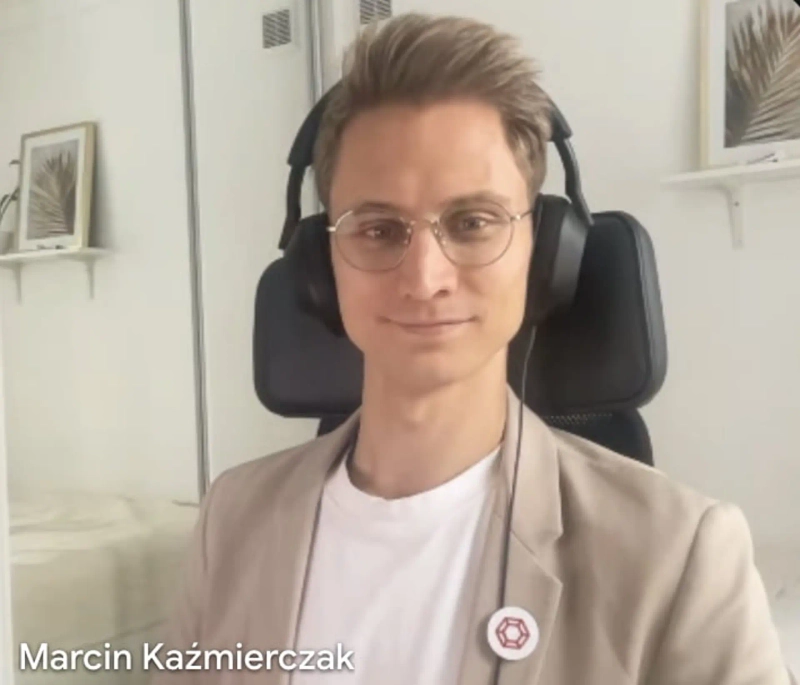
Marcin Kaźmierczak, co-founder of RedStone (RED) (pictured), said in an interview with Bloomingbit on the 21st that “the scale of blockchain finance is expanding rapidly.”
RedStone is a blockchain-based oracle project. Oracles refer to infrastructure that aggregates and distributes the data required by financial markets. Bloomberg Terminal and Refinitiv are representative oracles in traditional finance.
We spoke with Kaźmierczak about the role of oracles in the era of blockchain finance and the goals he aims to achieve.
Oracles: essential infrastructure for the blockchain-finance era
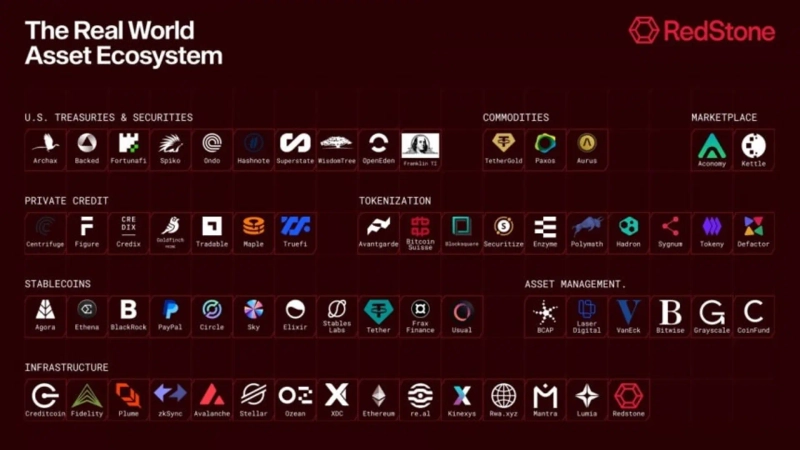
RedStone’s main clients are companies running services such as real-world asset tokenization (RWA) and decentralized finance (DeFi). These blockchain-based financial services require external data—such as prices of real-world assets, interest rates, and market information.
Leading blockchain-finance services including Securitize and BlackRock’s BUIDL, VanEck’s VBILL, CANTON Network, and Hyperliquid (HYPE) are already working with RedStone. In Korea, RedStone is also providing oracle services to Upbit’s GIWA Chain.
Kaźmierczak forecast that the RWA market will surge this year. “The stablecoin market—digital assets pegged to fiat currencies—currently stands at roughly $300 billion, but it could grow to $1 trillion this year,” he said, adding, “If the period so far has been about institutions validating the technology and structure, then from 2026 onward we will see a large-scale inflow of real capital and products.”
He explained that as the RWA market expands, the importance of oracles can only grow. “Tokens are on-chain, but to price those tokens you need to pull in information about the underlying assets from off-chain sources,” he said. “If that linkage doesn’t work properly, RWAs cannot function as financial products. Oracles are core infrastructure that makes blockchain finance possible.”
RedStone highlighted “flexibility” as a key strength of its oracle. “In RWA and DeFi environments, new chains and assets keep emerging,” Kaźmierczak said. “To respond, you need flexible infrastructure.” He added, “On that strength, we have secured more than 110 chains, over 1,300 assets, and more than 170 institutional clients.”
“Tokens will be the linchpin of expanding the oracle ecosystem”
RedStone also pledged to enhance the value proposition of its token. Specifically, it plans to use the token as a core means of accessing oracle services and data. Rather than merely holding the token, the company aims to build a structure in which various oracle-based services can be used through it.
“Institutional investors place importance on validating risk and performance based on historical data,” Kaźmierczak said. “For institutional-grade historical data or more advanced oracle functions, we are reviewing a structure that would require a certain level of token staking.”
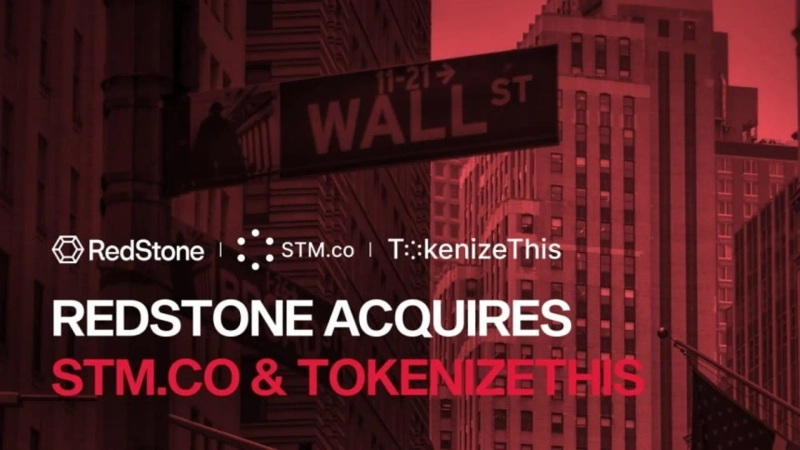
He also signaled expansion through partnerships and M&A. In fact, just before the interview, RedStone announced the acquisition of tokenized-securities data company Security Token Market (STM).
“As the RWA market grows, securing capabilities in specialized areas is becoming increasingly important,” he said. “To strengthen our oracle competitiveness, we are reviewing various expansion approaches, including strategic partnerships and acquisitions.”
“Closely monitoring Korea’s regulatory environment”
Kaźmierczak also expressed interest in the Korean market. “Korea is a market with high retail participation and rapid technology adoption, and discussions around blockchain finance are also progressing quickly at the institutional level,” he said, adding, “I understand that President Lee Jae-myung is also friendly toward new industries such as digital assets and blockchain.”
On Korea’s RWA market, he said, “A nation’s policy stance is a very important factor in the spread of RWA and on-chain finance,” adding, “The clearer the regulatory direction becomes, the more naturally institutional and corporate participation will expand.” He continued, “We are closely watching changes in Korea’s regulatory environment, and we look forward to collaborating with partners that need RedStone’s oracle.”

Uk Jin
wook9629@bloomingbit.ioH3LLO, World! I am Uk Jin.