Delayed 'tariff ruling'…likely to take at least another month
Summary
- The report said market uncertainty is lingering as the U.S. Supreme Court’s ruling on the legality of the reciprocal tariffs is delayed.
- It said the key question is whether declaring a national emergency and imposing reciprocal tariffs under the International Emergency Economic Powers Act (IEEPA) amounts to an abuse of presidential power.
- It said there is speculation that even if the reciprocal tariffs are invalidated, if the Supreme Court deals ambiguously with the tariff refund issue, refunds could effectively be blocked.
Forecast Trend Report by Period


127-page lower-court opinion shows 'fierce disputes'
Even if invalidated, refunds may not be addressed
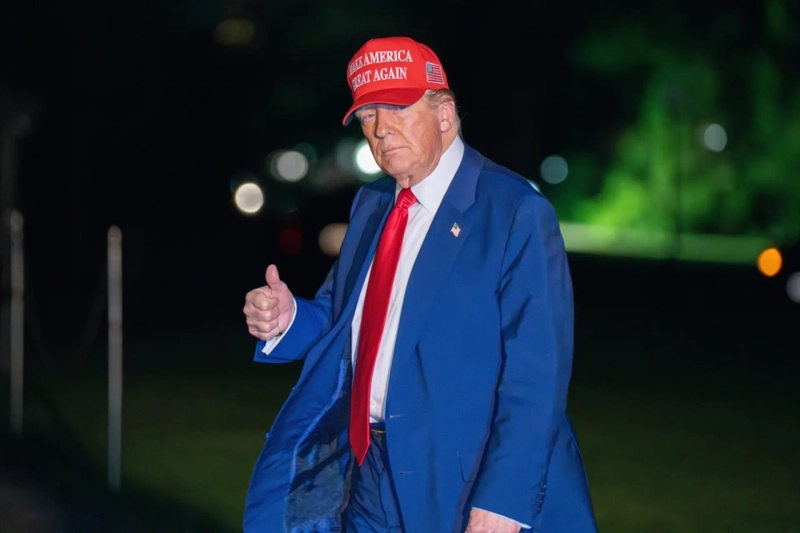
A ruling by the U.S. Supreme Court on whether the Donald Trump administration’s reciprocal tariffs are lawful is being delayed. Expectations had built that a decision would be issued on the 20th, following the 9th and 14th, but all such forecasts have proved wrong.
According to SCOTUSblog, a specialist outlet covering the Supreme Court, the tariff case is regarded as “technically very complex.” The lower-court opinion alone runs to 127 pages.
The central issue is whether declaring a national emergency under the International Emergency Economic Powers Act (IEEPA) and imposing reciprocal tariffs on that basis constitutes an abuse of presidential authority. In a live chat hosted by the blog, one participant suggested that “the disputes are intense, and it is highly likely that revisions between the majority and dissenting opinions are being repeated.”
The prevailing view is that the ruling is also unlikely to be unanimous. The Supreme Court is generally classified as having six conservative-leaning justices and three liberal-leaning justices out of nine.
It may also have influenced the Supreme Court that President Trump, using the IEEPA, said he would impose tariffs of up to 25% on eight European countries that deployed troops to Greenland.
There is also speculation that even if the reciprocal tariffs are ruled invalid, it is uncertain whether the Supreme Court will directly address the issue of tariff refunds. During oral arguments last year, Justice Amy Coney Barrett expressed concern that the refund process could cause major confusion. If the Court handles this point ambiguously, the Trump administration could make the refund procedures onerous and effectively try to block refunds.
Even the Trump administration does not know when the decision will come. When the Court indicated that major decisions could be handed down on the 9th, the White House held a contingency meeting the previous night, but no decision was issued. The Court announces only that major rulings will be released, without specifying which cases will be decided. Even reporters accredited to cover the Court receive details only when the rulings are handed down.
Washington=Lee Sang-eun, Correspondent selee@hankyung.com

Korea Economic Daily
hankyung@bloomingbit.ioThe Korea Economic Daily Global is a digital media where latest news on Korean companies, industries, and financial markets.