"FX authorities’ defenses neutralized"…Foreign media also taken aback by the frenzy among Korean retail investors
Summary
- Reuters reported that a surge in U.S. stock investing and a jump in dollar demand by Korean retail investors—so-called “Seohak ants”—is undermining FX authorities’ efforts to defend the exchange rate.
- It said domestic investors’ overseas equity holdings and net purchases of U.S. stocks have risen to record levels, stoking won weakness, and that the Kospi’s rise is serving as a channel for funds to move into U.S. stocks.
- Experts were cited as saying that without fundamental structural changes—such as adjustments to the National Pension Service’s currency-hedging strategy and improvements in corporate governance—it will be difficult to reverse distrust in the domestic market and the perception of U.S. stocks as a safe asset.
Forecast Trend Report by Period


Reuters: “FX authorities’ efforts to defend the exchange rate are being undermined”
Despite the Kospi posting one of the world’s highest gains
The “exodus from Korea” doesn’t stop—“paradoxical”
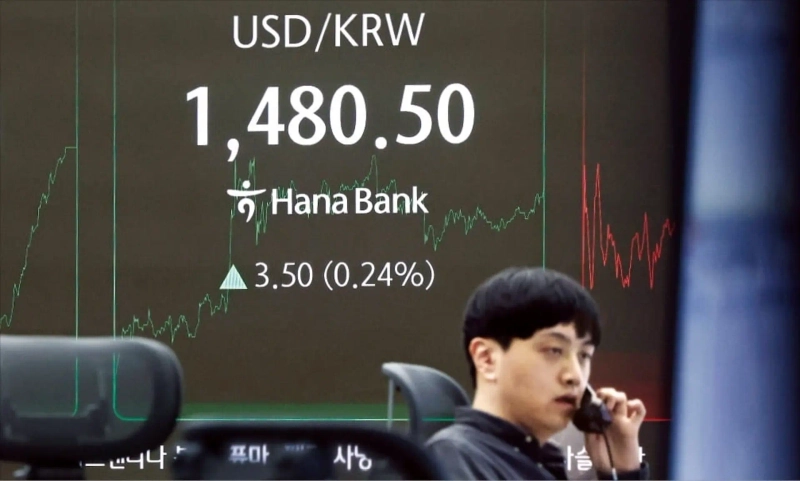
Reuters has published an analysis saying that the craze among Korean retail investors—so-called “Seohak ants”—is neutralizing the effectiveness of South Korean authorities’ exchange-rate stabilization policies. The report notes that their buying frenzy is driving a surge in demand for dollars, breaking through the authorities’ defensive line.
In an analysis article on the 5th, Reuters wrote that “South Korean authorities’ efforts to defend the exchange rate are paradoxically being undermined from the ground up by the intense enthusiasm of domestic investors for U.S. equities.” Reuters also said that investors have largely turned their backs on aggressive incentives unveiled by the government late last year, including an exemption from capital gains tax.
One retail investor said in an interview, “The U.S. market is still a land of opportunity,” adding, “After hearing the government’s announcement, I actually increased my dollar purchases to buy U.S. tech stocks.”
The authorities’ concerns are also evident in the numbers. According to the Korea Securities Depository, as of the 29th of last month, domestic investors’ holdings of overseas equities stood at about $171 billion, surpassing the all-time high. In January alone, net purchases of U.S. stocks reached $5.0 billion—more than doubling from the previous month’s $1.9 billion—adding fuel to the won’s weakness.
Reuters pointed out that it is paradoxical that the “exodus from Korea” has not abated even though the Kospi has recorded one of the world’s highest rates of increase over the past year. Experts cited by Reuters said the Kospi rally has instead become an exit channel for funds to lock in gains and rotate into U.S. stocks. Deep-rooted distrust in corporate governance and long-term performance at domestic companies was cited as the fundamental cause.
FX authorities are mobilizing all available tools, including urging exporters to sell dollars and arranging currency swaps with the National Pension Service. But the limits are clear. A Finance Ministry official told Reuters that authorities have confirmed that the main driver of the recent won weakness is not foreign speculative forces but strong domestic demand for dollars from within the country. Residents’ foreign-currency deposits have also hit a record high, surpassing $119.4 billion.
Experts broadly agree that rather than short-term fixes such as tax benefits, more fundamental changes must come first—such as revising the National Pension Service’s currency-hedging strategy and improving corporate governance. Reuters forecast that unless authorities can stem investors’ psychological shift—viewing the domestic stock market as an “unstable bubble” while treating U.S. equities as a “safe asset”—the FX authorities’ battle to defend the won will continue to face significant headwinds.
Park Soo-bin, Hankyung.com reporter waterbean@hankyung.com

Korea Economic Daily
hankyung@bloomingbit.ioThe Korea Economic Daily Global is a digital media where latest news on Korean companies, industries, and financial markets.