PiCK
Hinting at the possibility of rate hikes…Fed officials split over resuming rate cuts [Fed Watch]
Summary
- The Fed said internal views diverged over the path of the policy rate later this year, with officials split between additional rate cuts, holding steady, and even leaving room for possible rate hikes.
- According to CME FedWatch, futures-market participants see June as the next most likely timing for a rate cut, with pricing also reflecting the possibility of additional cuts in September or October.
- Some officials believe a rate hike could be appropriate if inflation persistently remains above the target, while others have taken a more favorable stance toward rate cuts, raising the prospect of a shift in the policy stance.
Forecast Trend Report by Period


Divided views on policy direction for the second half of the year
Some officials also raised the possibility of rate hikes
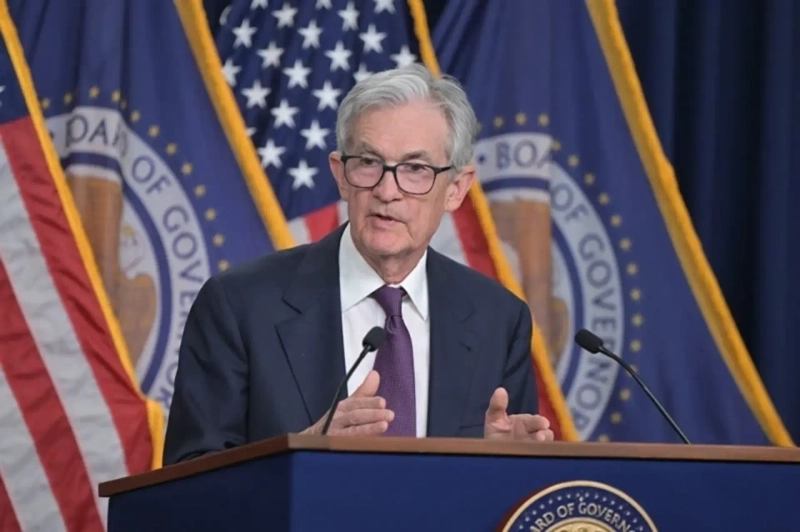
Clear differences have emerged within the Federal Reserve over the future path of the policy rate.
According to minutes from the Federal Open Market Committee (FOMC) meeting held Jan. 27–28 and released by the Fed on the 18th, officials broadly agreed to pause additional rate cuts for the time being, but diverged on the policy direction later this year.
The minutes said that “several participants noted that, if inflation continued to decline in line with expectations, it could become appropriate to further reduce the target range for the federal funds rate.” However, some officials judged that additional easing might not be warranted until there were signs that disinflation had clearly resumed.
The decision to hold the policy rate steady at this meeting was largely supported. Still, the minutes indicated that debate continued over whether policy should stay more focused on restraining inflation or place greater weight on supporting the labor market.
In particular, some officials argued the Fed should keep the possibility of rate hikes on the table. They wanted the post-meeting statement to more clearly reflect that future rate decisions could evolve in a “two-sided” manner—meaning that if inflation persistently runs above the target, a rate increase could be appropriate.
The Fed cut rates by a total of 0.75 percentage point across three moves in September, October and December last year. The policy rate currently stands in a range of 3.5% to 3.75%.
The January meeting was the first under a new voting lineup of regional Fed presidents. Dallas Fed President Lorie Logan and Cleveland Fed President Beth Hammack have publicly stressed the need to keep rates on hold for an extended period. Both continue to view inflation as a key risk factor.
The FOMC includes 19 Fed governors and regional Fed presidents, but only 12 have voting rights.
The future makeup of the Fed’s leadership is also seen as a variable. If former Fed Governor Kevin Warsh is confirmed as the next chair, there could be a shift in the policy stance. Warsh has expressed a favorable view toward rate cuts. Governors Steven Myron and Christopher Waller also dissented at the January meeting, calling for an additional 0.25 percentage-point cut and voting against the hold decision. Chair Jerome Powell’s term ends in May.
Officials generally projected that inflation would slow over the course of this year, but assessed the pace and timing as uncertain. They also mentioned the impact of tariffs on prices, expecting that effect to gradually fade over the year.
However, the minutes reported that “most participants warned that progress toward the Committee’s 2% inflation goal could be slower and more uneven than expected, and judged that the risk of inflation persistently running above the goal was meaningful.”
Recent economic data have been mixed. Private-sector job growth is showing signs of cooling, and a sizable share of new jobs appears to be concentrated in healthcare. By contrast, the unemployment rate fell to 4.3% in January, and nonfarm payroll gains exceeded market expectations.
Inflation data have also been uneven. The personal consumption expenditures (PCE) price index, which the Fed watches closely, has been stuck at around 3%. However, in the latest consumer price index (CPI) report, core inflation excluding food and energy came in at its lowest level in about five years.
Meanwhile, CME FedWatch shows futures-market participants see June as the most likely timing for the next rate cut, with the pricing also reflecting the possibility of additional cuts in September or October.
New York = Park Shin-young, correspondent nyusos@hankyung.com

Korea Economic Daily
hankyung@bloomingbit.ioThe Korea Economic Daily Global is a digital media where latest news on Korean companies, industries, and financial markets.