PiCK
White House backs limited stablecoin ‘rewards,’ seeks to mollify banking backlash
Summary
- The White House said it backs a plan to allow stablecoin rewards (interest) on a limited basis and will keep it in the draft of the Digital Asset Market Clarity Act (the Clarity Act).
- Negotiators proposed a compromise that would restrict interest for simply holding stablecoins while allowing rewards programs tied to specific activities or transactions.
- Passing the bill will require a bipartisan agreement and alignment on issues such as sanction requirements for illicit DeFi activity and limits on senior officials’ participation in the digital-asset industry.
Forecast Trend Report by Period


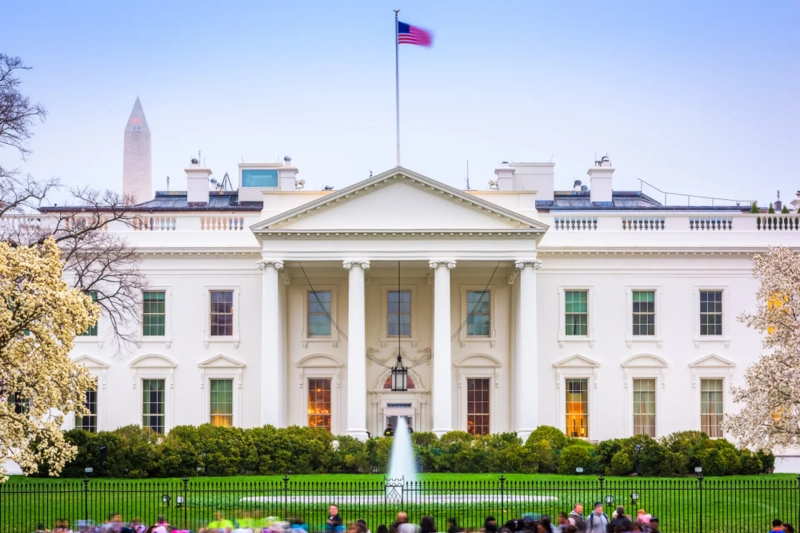
The White House has formally voiced support for a proposal to allow stablecoin “rewards (interest)” in a limited form—one of the key sticking points in legislation to set the market structure for digital assets (cryptocurrencies).
According to CoinDesk on the 19th (local time), the White House said at a working-level meeting the previous day—attended by representatives from the banking sector and the digital-asset industry—that it would keep certain types of stablecoin rewards programs in the next draft of the “Digital Asset Market Clarity Act” (the Clarity Act). Executives from major Wall Street banks attended the meeting to fine-tune the language, and the White House plans to circulate a revised draft reflecting those changes in the near future.
A negotiating team led by Patrick Witt, President Donald Trump’s digital-asset adviser, presented a compromise. Under the approach, interest payments for simply holding stablecoins—akin to bank deposits—would be restricted, while rewards based on specific activities or transactions would be permitted. The move is seen as partially reflecting concerns from traditional finance that stablecoin interest could erode banks’ deposit-based business models.
The previously enacted “Guiding and Establishing National Innovation for U.S. Stablecoins Act” (the GENIUS Act) grants relatively broad autonomy to rewards programs run by digital-asset platforms. As a result, some observers say that if banks reject the compromise, the existing legal framework could remain in place—potentially leaving the industry in an even more favorable position. In the market, greater weight is being placed on a scenario in which banks accept a pragmatic compromise to secure support from a group of dissenting senators.
The digital-asset industry responded positively to the discussions. In a statement, Summer Mersinger, CEO of the Blockchain Association, who attended the meeting, said, “This White House meeting was a constructive opportunity to advance unresolved challenges surrounding rewards and to put market-structure legislation back on track.”
Even so, significant hurdles remain before the bill can be passed. A bipartisan agreement is essential to bring it to a full Senate vote. In particular, Democrats are calling for tighter sanction requirements against illicit actors in decentralized finance (DeFi).
In addition, Democratic negotiators are demanding that the bill include provisions limiting direct participation by senior government officials in the digital-asset industry, putting them at odds with the White House. They are also pressing for the administration to quickly finalize appointments to vacant seats at the Commodity Futures Trading Commission (CFTC) and the Securities and Exchange Commission (SEC).
At present, most of Democrats’ key demands have yet to be agreed. If the Senate Banking Committee pushes ahead with the bill, it could lead to a partisan vote—raising concerns that passage on the Senate floor would be difficult.

Doohyun Hwang
cow5361@bloomingbit.ioKEEP CALM AND HODL🍀