Won-dollar exchange rate reclaims the 1,500 won mark intraday…Whipsawed by Powell’s hawkish remarks and Middle East risks [Korea FX Market Watch]
Summary
- The won-dollar exchange rate again topped 1,500 won intraday, but fell back below the 1,500 level on exporter dollar selling and authorities’ verbal intervention.
- Experts said won-dollar volatility could increase due to the Middle East war, oil prices and the dollar index, but that a break above 1,550 won would be difficult.
- They also said strong semiconductor exports, a widening current account surplus, the “three FX stabilization bills,” and the RIA scheme could boost won conversion demand, limiting the upside in the won-dollar exchange rate and raising the likelihood of a return to the mid-1,400s.
Forecast Trend Report by Period


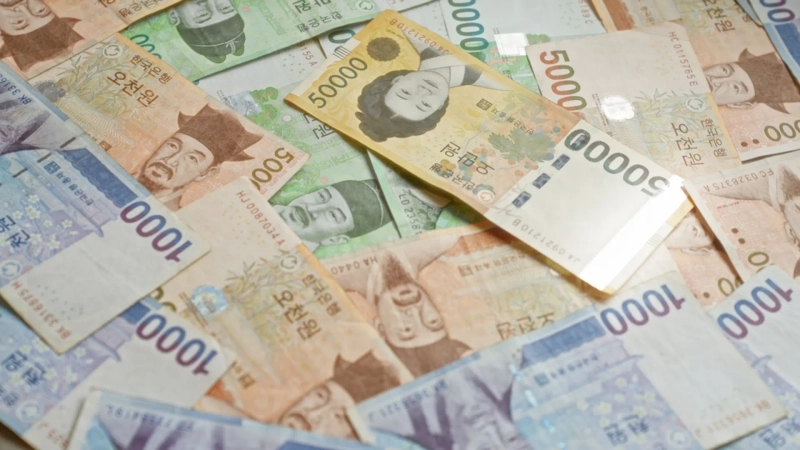
The won-dollar exchange rate climbed back into the 1,500-won-per-dollar range intraday for the first time in three days. Remarks by Federal Reserve Chair Jerome Powell that he would “not rule out the possibility of further rate hikes” were cited as a key factor amplifying volatility in the FX market. Escalating fighting in the Middle East also fueled broad dollar strength. Still, dollar selling by exporters and verbal intervention from the authorities pushed the won-dollar rate back below the 1,500 level.
On the 19th in the Seoul FX market, the won-dollar rate opened at 1,505 won, up 21.9 won. On a daytime trading basis, it marked the highest level since March 10, 2009 (1,561.0 won), during the global financial crisis.
The move reflected the impact of the Middle East war and the Fed’s decision at its Federal Open Market Committee (FOMC) meeting on the 18th (local time) to hold the policy rate at 3.50%–3.75% while noting it was also considering further increases. Chair Powell said “the next move could be a rate hike,” adding “we are not ruling out any option,” sending what markets read as a hawkish signal.
The exchange rate was also jolted by reports that facilities at South Pars, Iran’s giant gas field, were hit in targeted airstrikes, stoking concerns about disruptions to oil supply. The US February Producer Price Index (PPI) also came in above market expectations, reinforcing inflation pressures. The dollar index, which measures the dollar’s value against major currencies, rose above 100.
That said, the rate pared gains during the morning as authorities stepped up verbal intervention. Deputy Prime Minister and Minister of Economy and Finance Koo Yun-cheol said in opening remarks at an expanded macroeconomic and financial meeting that the government is “maintaining heightened vigilance over the FX market and closely monitoring conditions,” adding it would “respond in a timely manner if the won’s moves become excessively detached from fundamentals.” Bank of Korea Senior Deputy Governor Yoo Sang-dae likewise convened a meeting to review market conditions, saying the central bank would “maintain heightened vigilance and assess how domestic and external risk factors unfold and their impact on finance and the economy,” and would “respond in a timely manner through market-stabilization measures if necessary.”
Analysts also said the fact that the exchange rate broke above 1,500 prompted exporter “nego” flows (dollar selling for conversion), contributing to the pullback. The won-dollar rate briefly fell to as low as 1,495 won per dollar in the morning.
Experts said the won-dollar rate could remain volatile for some time depending on the war and oil prices. However, they also argued it would be difficult to break above the 1,550 level, as some fear. Kwon A-min, an analyst at NH Investment & Securities, said, “It’s hard to see oil prices staying above $100 per barrel throughout the first half,” adding, “With the current account surplus expanding on the back of strong semiconductor exports, the exchange rate should revert to the mid-1,400s.” Min Kyung-wook, an analyst at Woori Bank, also said, “With midterm elections ahead, President Donald Trump is in a position where it would be difficult to endure inflation driven by a sharp rise in oil prices, so he is likely to craft an exit strategy soon,” adding, “Each time the rate moves above 1,500, exporter dollar selling and government verbal intervention will likely prevent further gains.”
There are also expectations that the “three FX stabilization bills” could cap the upside. The centerpiece is the “Repatriation Investment Account (RIA)” scheme. If investors sell overseas stocks within a certain period and invest in the domestic equity market, capital gains tax is exempted or reduced. Kim Yu-mi, an analyst at Kiwoom Securities, said, “The RIA scheme will increase demand for converting into the won and contribute to stabilizing the FX market,” adding, “In particular, it could help the won-dollar rate stabilize on the downside as the Middle East war situation cools.”
Reporter Shim Sung-mi smshim@hankyung.com

Korea Economic Daily
hankyung@bloomingbit.ioThe Korea Economic Daily Global is a digital media where latest news on Korean companies, industries, and financial markets.