Government to apply blockchain to subsidy programs, paying out via ‘deposit tokens’
Summary
- The government said it will pay subsidies for an electric-vehicle charging infrastructure project using blockchain-based deposit tokens.
- The pilot program totals 30 billion won, and the government said its goal is to convert one-quarter of national treasury subsidy disbursements into digital currency by 2023.
- The government said deposit tokens are traceable, helping prevent fraudulent subsidy claims and improving the transparency and efficiency of disbursements.
Forecast Trend Report by Period


The government will use blockchain technology to pay subsidies for a project to build electric-vehicle charging infrastructure in the form of deposit tokens.
The Ministry of Finance and Economy said on the 19th that it will sign a memorandum of understanding (MOU) on the 24th at the Government Complex Seoul with the Bank of Korea and the Ministry of Climate, Energy and Environment to jointly pursue a pilot program for disbursing national treasury subsidies using digital currency. The core of the agreement is to use deposit tokens issued by commercial banks, based on the Bank of Korea’s wholesale digital currency, to pay out national treasury subsidies.
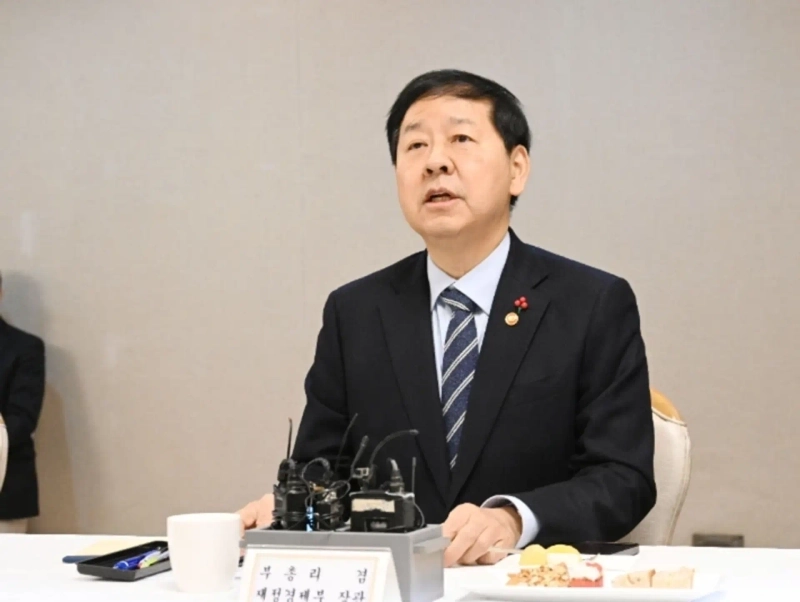
A deposit token is a commercial bank deposit converted into a crypto-asset form through blockchain technology. The government said this is the first time in the world that a digital-currency system has been applied to a national treasury program. Deputy Prime Minister Koo Yun-cheol, who also serves as finance minister, said, “Our goal is to convert one-quarter of national treasury subsidy disbursements into digital currency by 2023.”
The pilot program will cover a 30 billion won electric-vehicle charging infrastructure project led by the climate ministry. The Korea Environment Corporation, the subsidy operator, plans to solicit applications for project participants in May, select them in June, and then disburse the subsidies in deposit tokens.
The government says that, unlike general crypto assets, deposit tokens are traceable, which helps prevent fraudulent subsidy claims. Koo said, “This agreement will serve as a catalyst to enhance the transparency and efficiency of national treasury subsidy disbursements,” adding, “We will actively identify and expand projects that use digital currency.”

JOON HYOUNG LEE
gilson@bloomingbit.ioCrypto Journalist based in Seoul