K Bank: “Stablecoins, starting with remittances” … Pushes cross-border-focused business
Summary
- K Bank said it will pursue a digital-asset business using stablecoins through a hybrid model centered on cross-border areas such as overseas remittances.
- K Bank said it has conducted POCs overseas including Thailand, and is reviewing entry into Central Asia and Japan as well as targeting the remittance market for foreign workers residing in Korea.
- K Bank said it will push integrated risk management incorporating compliance, AML, and on-chain data, and expand into wallet-centric Web3-based financial services, while scaling the business step by step in line with the regulatory framework.
Forecast Trend Report by Period


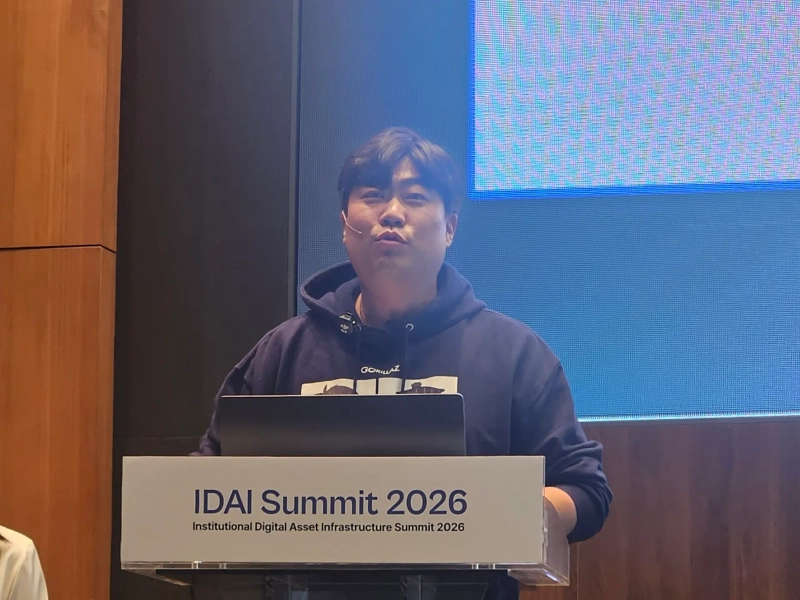
K Bank has laid out a strategy to pursue a digital-asset business using stablecoins, focusing on cross-border areas such as overseas remittances. Taking the regulatory environment into account, it put emphasis on a “hybrid model” that combines stablecoins with existing financial infrastructure rather than pursuing direct exposure.
At the “IDAI Summit 2026” held on the 2nd at the IFC Forum in Yeouido, Seoul, Choi Jae-hyuk, head of K Bank’s Digital Assets TF, said, “Stablecoins are a key tool that can replace or improve the efficiency of banks’ existing payments and FX operations,” adding, “They are particularly useful in the remittance sector.”
Choi said the global stablecoin market is rapidly shifting from retail-investor-driven demand to institution- and corporate-led demand. In the past, crypto-native users were the main participants, but recently interest has broadened significantly among banks, companies and regulators worldwide. In Europe in particular, discussions on bank-led stablecoin issuance are gaining traction, and the number of stablecoins backed by currencies other than the US dollar is gradually increasing.
In line with this trend, K Bank plans to prioritize a cross-border remittance-specialized model. Users would continue to use the existing banking app, while stablecoins would be used only behind the scenes to improve remittance efficiency—a “sandwich structure.” The approach uses blockchain only during the transfer process, designing the experience so it appears to users like a conventional financial service.
“Rather than putting stablecoins front and center, using them within existing account-based services is a realistic approach,” Choi said, describing it as “a structure that considers both regulation and user experience.”
K Bank has already conducted proof-of-concept (POC) work overseas, including in Thailand, and is reviewing expansion into Central Asia and Japan. In particular, it views the remittance market for foreign workers residing in Korea as a key target.
As core challenges in introducing stablecoins, the bank cited compliance and the buildout of internal control frameworks. “Banks already have competitiveness in that they possess regulatory response capabilities such as AML (anti-money laundering) and CFT (countering the financing of terrorism),” Choi said. “What matters is implementing the same level of controls in a blockchain environment.”
Specifically, he pointed to key design elements including wallet management methods, key-management architecture, segregated custody of customer assets and bank assets, transaction approval frameworks, and whitelist-based withdrawal controls. He also raised the need to build separate data analytics systems for wallet tracing and transaction monitoring given the nature of on-chain transactions.
He also stressed the importance of an integrated risk-management framework that combines legacy financial systems with blockchain data. “We need to build a transaction monitoring system that includes on-chain data, and AI-based analysis or the use of external data is also necessary,” Choi said.
Over the longer term, he outlined plans to expand into a wallet-centric financial platform built on stablecoins. The strategy is to develop beyond simple remittances into “Web3-based financial services” that integrate functions such as login, authentication and asset management.
“A wallet-centered structure can connect a wide range of financial and non-financial services,” Choi said. “Over the long term, a new financial environment could open up in which users have data sovereignty.”
However, he added that “not only technology but also regulatory response will be the key variable that determines business success or failure,” and said the bank would “expand the business step by step in line with the regulatory framework.”

Suehyeon Lee
shlee@bloomingbit.ioI'm reporter Suehyeon Lee, your Web3 Moderator.