"Yuan could become a reserve currency within five years… crypto assets and stablecoins also weakening the dollar"
Summary
- Professor Kenneth Rogoff said that the yuan could rise to become a global reserve currency within the next five years, and that the trend among global investors to cut reliance on the dollar is gaining momentum.
- He said China should reduce its dependence on SWIFT by opening its government bond market and building financial infrastructure as well as an independent payment system, CIPS.
- Rogoff said digital assets such as crypto assets and stablecoins are acting as a factor weakening the dollar-based system, and criticized the regulation under the U.S. Genius Act as overly lax.
Forecast Trend Report by Period


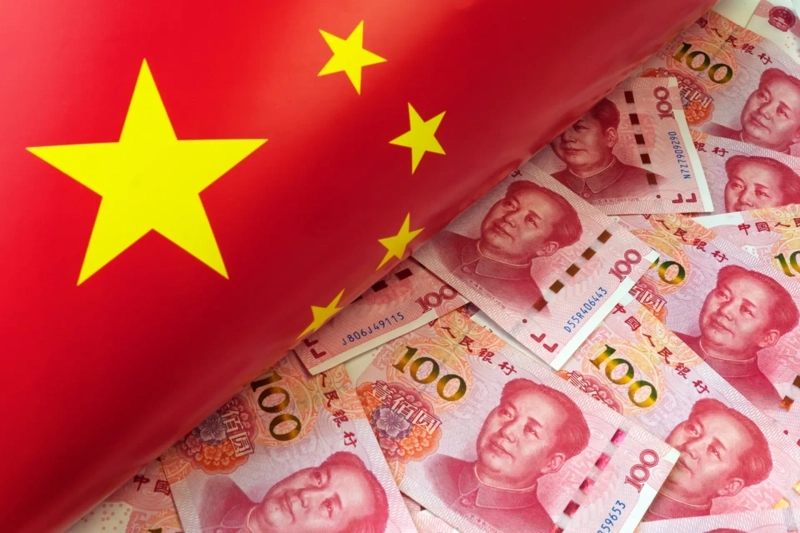
Kenneth Rogoff, a professor at Harvard University, projected that China’s yuan could rise to become a global reserve currency within the next five years.
According to BeInCrypto on the 5th (local time), Rogoff said in a recent interview with the South China Morning Post (SCMP) that President Xi Jinping’s official emphasis on yuan internationalization marked a turning point, adding that a growing trend is taking hold among global investors to reduce reliance on the dollar.
He explained that for the yuan to secure reserve-currency status, China needs to open its government bond market to foreign investors and build out financial infrastructure such as futures markets and interest-rate swaps. However, he added that full capital-account liberalization is not a necessary condition, noting that the United States also maintained a certain level of capital controls through the 1970s while retaining its reserve-currency status.
He also stressed that China needs to develop its own payment system that does not depend on the Society for Worldwide Interbank Financial Telecommunication (SWIFT). Rogoff assessed that blockchain technology could replace existing financial infrastructure at lower cost, and that China’s Cross-Border Interbank Payment System (CIPS) could serve as the foundation.
On virtual assets (cryptocurrencies), he argued they are acting as a factor weakening the dollar-based system. He said, "The global underground economy is about $20 trillion," adding that "digital assets, including stablecoins, are replacing traditional cash and spreading rapidly in the realm of illicit transactions."
However, he said it would be difficult for virtual assets to replace the dollar in the legitimate economy, as governments can sufficiently control them through regulation.
Rogoff also called the U.S. stablecoin regulatory framework, the "Genius Act," overly lax, and projected that regulation could be tightened to the level of central bank digital currencies (CBDCs).
He added that currency-hegemony competition is accelerating as Europe and China move to build independent financial systems to reduce their reliance on U.S. sanctions.

Suehyeon Lee
shlee@bloomingbit.ioI'm reporter Suehyeon Lee, your Web3 Moderator.