[Exclusive] South Korea’s Non-Middle East Crude Imports Jump 30% as Hormuz Closure Reshapes Buying
Summary
- The closure of the Strait of Hormuz drove South Korea’s March non-Middle East crude import bill up 30.1% from a year earlier.
- The government will expand refunds for excess freight costs on crude imported from the Americas, Africa and Europe to full coverage from April through June.
- Industry officials said facility investment and expanded tax credit support are needed to reduce dependence on Middle East crude.
Forecast Trend Report by Period


March reliance on Middle East crude fell to 62.9%, down 10 percentage points from a year earlier
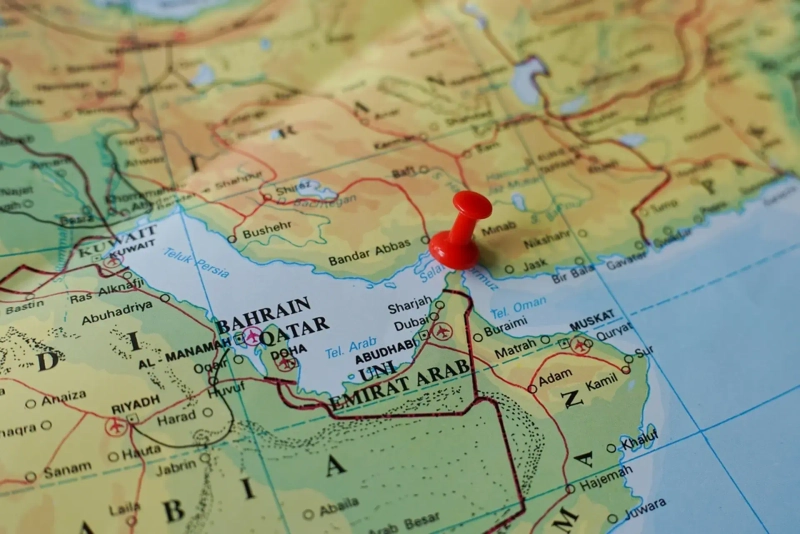
South Korea’s imports of non-Middle East crude surged 30% in March from a year earlier in the aftermath of the closure of the Strait of Hormuz. By contrast, the country’s dependence on Middle East crude fell by 10 percentage points over the same period, staying in the 60% range and fueling hopes of a broader shift away from the region.
An analysis of Korea International Trade Association data showed South Korea imported $2.2047 billion of non-Middle East crude in March, up 30.1% from a year earlier. That contrasted with a 5.3% decline in the country’s total crude import bill. Imports of US crude climbed 75.8% to $1.37804 billion, while imports from Australia and Malaysia rose 44.7% and 140%, respectively.
The increase followed refiners’ aggressive move to secure alternative supplies after the Strait of Hormuz was shut. The government currently refunds 25% of the additional freight cost for crude imported from the Americas, Africa and Europe versus Middle East supplies, and has decided to raise that to 100% for April through June. The refund is limited to the petroleum import levy cap of 16 won per liter.
During the same period, crude imports from seven Middle East countries — Bahrain, Saudi Arabia, the United Arab Emirates, Oman, Iraq, Qatar and Kuwait — fell 18.3% from a year earlier to $3.74812 billion. As a result, the Middle East share of South Korea’s crude imports dropped to 62.9% in March, approaching the record annual low of 59.8% posted in 2021. That was fully 10 percentage points below the 73% share recorded in March last year. Dependence on Middle East crude was still around 70% in January and February this year.
The challenge is that non-Middle East crude is less economical. South Korean refiners have traditionally processed heavier, high-sulfur Middle East crude into higher-value products such as jet fuel and diesel. US shale oil and other alternatives are lighter and lower in sulfur, which improves quality, but they are not well matched to domestic refining facilities, reducing yields even when refiners process the same volume. Longer shipping times for US and African crude also remain a disadvantage.
Industry officials say a lasting shift away from Middle East crude will require mid- to long-term investment to retool facilities. “If South Korea wants to lower its dependence on Middle East crude, support measures will need to accompany facility investment, including expanded tax credits,” an industry official said.
Shin Jeong-eun, Hankyung.com reporter, newyearis@hankyung.com

Korea Economic Daily
hankyung@bloomingbit.ioThe Korea Economic Daily Global is a digital media where latest news on Korean companies, industries, and financial markets.