PiCK
Tokenizing Jeonse Deposits Could Help Prevent Rental Fraud, Professor Says
Summary
- Professor Hong Seung-pil said tokenized securities (STOs) should be used to address jeonse fraud, information asymmetry and the lack of rapid response measures.
- He said introducing trust oracles, smart contracts and blockchain to jeonse deposits would enforce contracts and fundamentally resolve collusion and fraud.
- He said tokenizing jeonse deposits would let landlords raise needed funds more easily while allowing tenants to reduce deposit risk and share investment returns, and that the model should be brought into the institutional framework through a regulatory sandbox.
Forecast Trend Report by Period


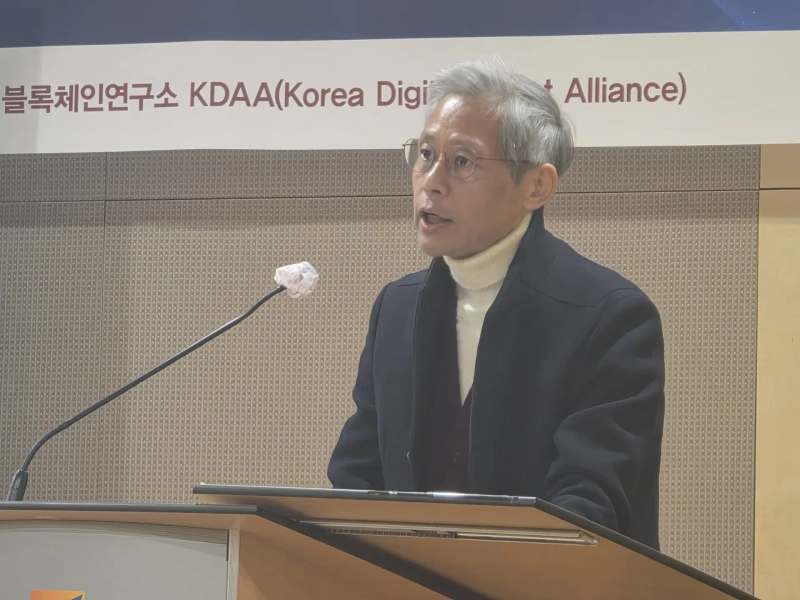
Tokenized securities, or STOs, should be used to help tackle jeonse fraud, one of South Korea’s most persistent social problems, according to a policy proposal presented at a forum on April 28. The approach would increase liquidity in the jeonse market and use blockchain technology to reduce information asymmetry.
Hong Seung-pil, a professor at Hanshin University, presented the proposal at a discussion hosted by the Financial Investment Education Institute titled "Forum on Fostering the Digital Asset Industry Through a Public STO Model." In 2023 alone, about 17,800 jeonse fraud cases were recorded, causing losses of 3 trillion won, or about $2.17 billion, he said. To prevent such losses, authorities need to address information asymmetry, the lack of tenant verification methods and the absence of rapid response measures.
Hong’s proposed solution is to introduce blockchain-based "trust oracles" and smart contracts for jeonse deposits. Offline data on landlords, including certified property registry records and National Tax Service tax delinquency APIs, should be recorded on-chain, while contracts should be executed through smart contracts, he said. That would enforce contracts as originally intended and fundamentally eliminate collusion and fraud.
Hong also argued that applying tokenized securities to a deposit market built on blockchain technology could generate economic and social benefits.
Tokenizing jeonse deposits would allow landlords to raise needed funds more easily, while tenants could lower deposit risk and share in investment returns, he said. If the model takes hold, it could expand into a global market worth about 20 quadrillion won, or roughly $14.49 trillion. It could also ease anxiety over jeonse fraud, provide a safer housing safety net and broaden access to real-estate investment opportunities that had previously been limited to a small group.
Hong said the model’s effectiveness should be tested quickly through a regulatory sandbox and then incorporated into the institutional framework, including the Capital Markets Act, in stages.

Uk Jin
wook9629@bloomingbit.ioH3LLO, World! I am Uk Jin.