UAE Quits OPEC, Targets 5 Million Barrels a Day in Blow to Group’s Supply Clout
Summary
- The UAE said it will quit OPEC and expand its crude output to as much as 5 million barrels a day.
- The move could weaken OPEC’s ability to manage supply, adding downward pressure to global oil prices over the medium to long term.
- For now, the closure of the Strait of Hormuz is keeping Brent futures on a gradual uptrend, with prices rising to $111.26 a barrel.
Forecast Trend Report by Period


50-Year Oil Cartel Shows Cracks
UAE Was OPEC’s Fourth-Largest Producer Before Exit
“Output Can Reach 5 Million Barrels a Day”
Longer Term, Move Could Weigh on Prices
The United Arab Emirates’ decision on April 28 to leave the Organization of the Petroleum Exporting Countries could reshape the way international crude prices are set. The move opens a major fissure in the OPEC-led cartel system that has dominated the global oil market for more than 50 years. The UAE said it will leave OPEC and OPEC+, the group’s broader alliance, effective May 1.
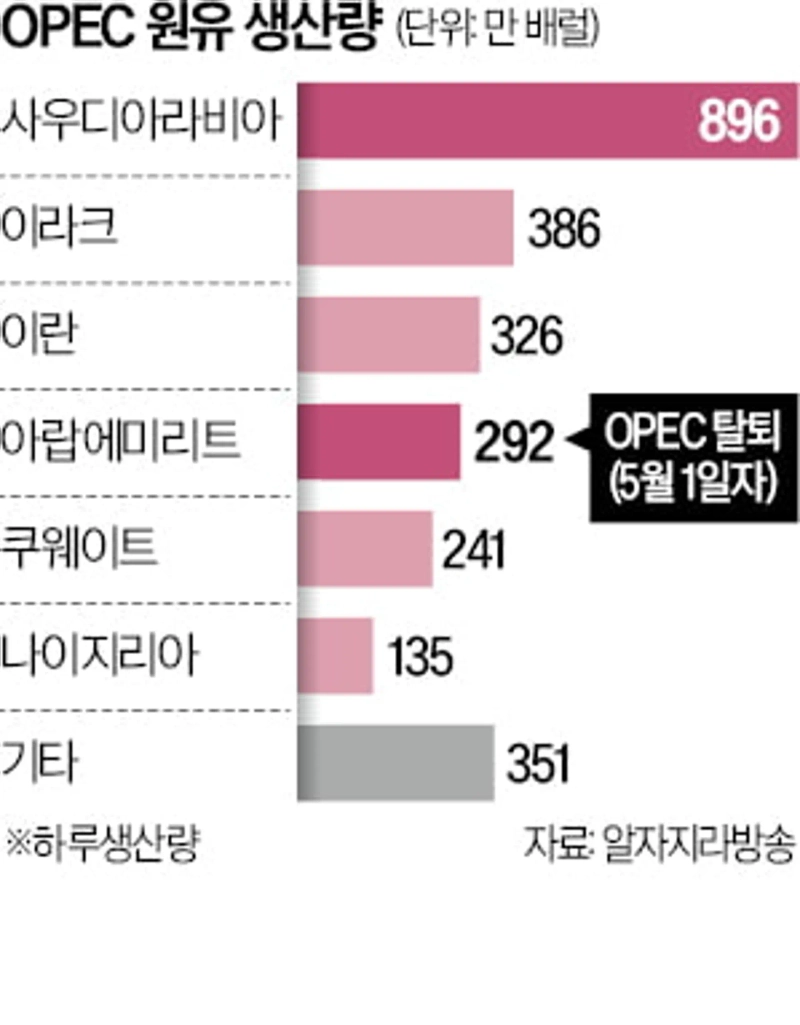
The UAE is OPEC’s fourth-largest crude producer, behind Saudi Arabia, Iraq and Iran. Before the outbreak of the Iran war, the country was pumping about 2.9 million barrels a day, or roughly 12% of OPEC output, according to the International Energy Agency. The IEA estimates the UAE could raise production to as much as 5 million barrels a day.
Until now, the global oil market followed a relatively simple pattern. Saudi-led OPEC managed supply to defend a floor under crude prices, while the US influenced global demand through consumption and the size of its strategic petroleum reserves. OPEC has long moved the market by cutting or raising output as needed. The UAE’s departure stands to weaken that power.
The move would add to pressure on an OPEC system that was already losing influence. The US became the world’s largest oil producer after the shale revolution, and OPEC production decisions no longer move markets as powerfully as they once did. America’s ability to increase output has blunted the effect of OPEC supply cuts.
Even so, global crude prices may stay elevated for now. Recent price action has reflected the closure of the Strait of Hormuz more than the UAE’s exit from OPEC. Despite news that the UAE plans to raise production after leaving the group, Brent futures for June delivery settled at $111.26 a barrel on April 28, up 2.8% from the previous session.
“In a normal market, news of the UAE’s departure would have created downward pressure and triggered substantial selling,” John Kilduff, a partner at Again Capital, said. With the Strait of Hormuz effectively blocked, however, even additional supply would have nowhere to go, he added. Crude prices are therefore likely to continue a modest rise for the time being.
Still, the UAE’s exit from OPEC will put downward pressure on the market over time. If the Strait of Hormuz returns to normal operations, oil-producing countries could begin competing to increase output at the same time. Some market participants are even discussing the possibility that crude could fall below $60 a barrel over the medium to long term.
Ebtessam Al Ketbi, president of the Emirates Policy Center, a UAE think tank, said the country is redefining its role as a swing producer that contributes to market stability. The shift would gradually weaken OPEC cohesion while strengthening the UAE’s position as a key player with direct influence over global supply.
Kim Ju-wan, Hankyung.com reporter, kjwan@hankyung.com

Korea Economic Daily
hankyung@bloomingbit.ioThe Korea Economic Daily Global is a digital media where latest news on Korean companies, industries, and financial markets.