

PiCK
Kim Seo-jun, Hashed Representative, "Expecting the Institutionalization of Korea's Virtual Asset Industry... Remaining Issues Must Be Resolved"
Summary
- Kim Seo-jun, Hashed representative, emphasized the need to resolve issues while expecting the institutionalization of Korea's virtual asset industry.
- In Korea, restrictions on opening accounts and trading activities for virtual assets are hindering industry development.
- While major overseas countries have already institutionalized STO and RWA, Korea's regulations are still insufficient.
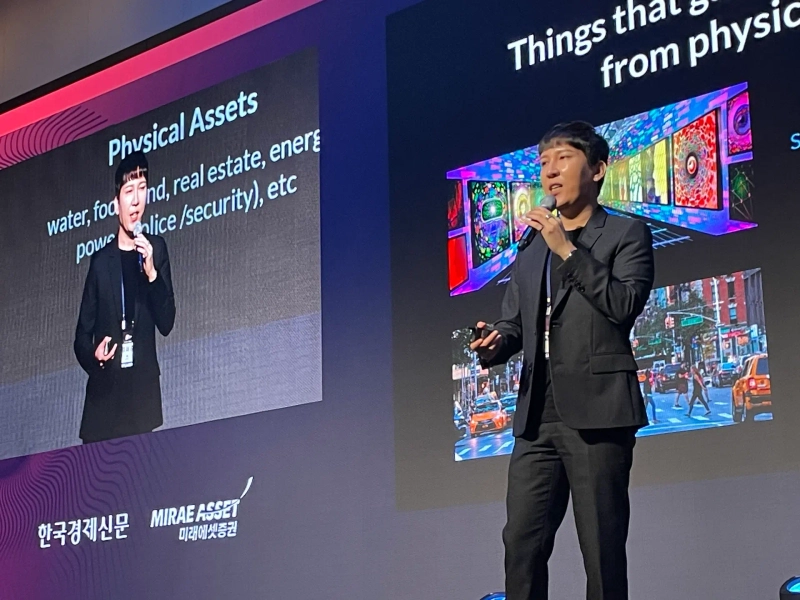
With the two-year grace period for domestic virtual assets (cryptocurrency) confirmed, Kim Seo-jun, the representative of Asia's largest blockchain investment firm Hashed, stated that while he expects the institutionalization of Korea's virtual asset industry, many issues need to be resolved for this to happen.
On the 1st, Kim Seo-jun, Hashed's representative, stated through X (Twitter), "As the grace period for virtual assets in Korea extends by two more years, the institutionalization of virtual assets and the Web3 industry, which had been delayed, is expected to accelerate," adding, "With the upcoming enactment of the Virtual Asset Industry Promotion Act, we hope Korea will seize a great opportunity in the Web3 market."
Kim further mentioned the issues to be resolved for the institutionalization of the virtual asset industry in Korea, such as ▲ approval for opening virtual asset accounts for corporations ▲ approval for virtual asset investment by domestic institutional investors ▲ approval for domestic issuance of coins and tokens.
Currently, in Korea, the opening of virtual asset accounts for corporations is practically prohibited, and activities like coin and token issuance are also impossible. As a result, most companies related to domestic virtual assets are conducting their business overseas by establishing corporations abroad, and virtual asset investments are also impossible without using foreign corporations or special relationships.
Kim also emphasized the need for ▲ guidelines for Security Token Offering (STO) and Real World Asset (RWA) tokenization ▲ acquisition of accounting guidelines for the issuance, holding, and investment of virtual assets by Korean companies.
In reality, major leading countries like the U.S. have already institutionalized STO and RWA, and related industries are growing actively, but in Korea, there is still no guide, and most domestic virtual asset companies have given up on business trials. The lack of clear accounting guidelines for virtual assets is also a problem, as many resources are consumed in the process of issuing, holding, or investing in virtual assets.
Finally, Kim stressed the need for discussions on ▲ specialization and segmentation of audit work ▲ approval for venture company certification for companies related to virtual assets ▲ approval for opening foreign accounts for domestic virtual asset exchanges ▲ approval for investment in overseas blockchain-related companies by Korean companies.
Currently, in Korea, virtual asset exchanges and issuers are struggling with audit roles, and there is a concern about conflicts of interest. Also, companies with even a small connection to virtual assets and finance are classified as financial companies, making it impossible to receive venture company benefits, unlike other startups. When Korean companies invest in overseas virtual asset and Web3 companies, they need to report to the Korean Financial Supervisory Service, but the service currently refuses to accept reports related to overseas virtual asset investments.

Uk Jin
wook9629@bloomingbit.ioH3LLO, World! I am Uk Jin.