

Concerns Rise Over Trade War... International Gold Price Hits Record High of $3,148
Summary
- It was reported that demand for gold, a safe asset, surged as the global trade war expanded, pushing gold prices to a record high.
- The sharp rise in gold prices was attributed to a combination of economic slowdown and interest rate cut expectations, as well as central bank purchases.
- An analyst pointed out that if the tariff announcement is less severe than expected, gold prices could turn downward.
Increasing Recession Predictions and Rate Cut Bets
18% Rise in Q1 Alone
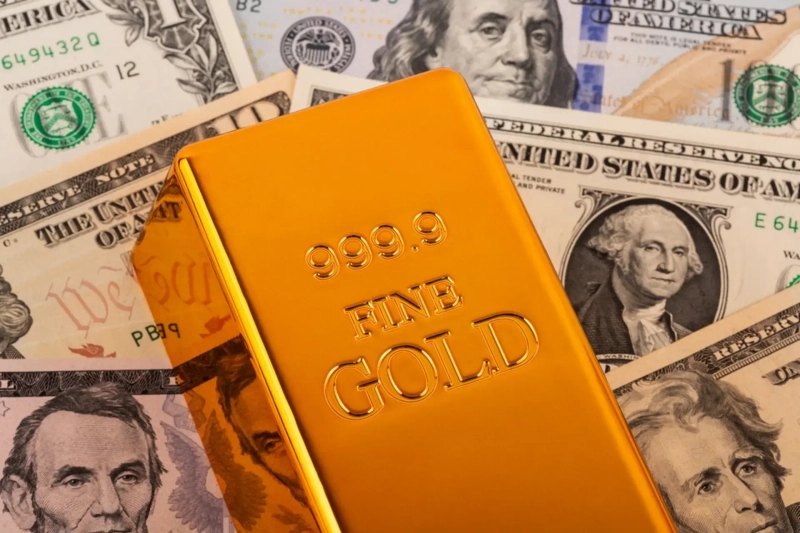
On the 31st (local time), the international gold price exceeded $3,100 per ounce, marking an all-time high. Concerns that the global trade war will expand and trigger a recession due to U.S. President Trump's 'reciprocal tariffs' have driven demand for gold, a representative safe asset.
According to Reuters, spot gold in the European market was trading at $3,116.82 per ounce as of 6:38 AM Greenwich time, up 1.1% from the previous trading day. At one point during the day, it reached $3,128.06. In the U.S. market, gold futures were trading at $3,148.00, up 1.1%.
Traditionally considered a hedge against political and economic uncertainty, gold rose more than 18% in the first quarter of this year, recording the largest quarterly increase in 38 years since September 1986.
The rise in gold prices is based on increased rate cut bets due to economic slowdown forecasts, purchases by central banks, and inflows into exchange-traded funds (ETFs).
Other precious metals also rose. Spot silver rose 0.6% to $34.32 per ounce. Platinum rose 1.1% to $994.60 per ounce.
Tim Waterer, chief market analyst at KCM Trade, said, "Demand for gold as a defensive investment has increased amid anxiety ahead of the U.S. reciprocal tariff announcement." However, the analyst pointed out that "if the tariff announcement is not as severe as feared, profit-taking at the peak could trigger a downturn in gold prices."
Trump is expected to announce reciprocal tariffs on April 2. The auto tariffs, which were abruptly announced last week, will take effect on April 3. The day before, Trump said he would impose secondary tariffs of 25%-50% on buyers of Russian crude oil if Russia blocks his efforts to end the Ukraine war.
Guest reporter Kim Jung-ah kja@hankyung.com

Son Min
sonmin@bloomingbit.ioHello I’m Son Min, a journalist at BloomingBit