

"Interest Rate Freeze on the 17th, Likely Cut in May"
Summary
- Experts from the Hankyung Economist Club expect the Bank of Korea to freeze the base rate at the current level on the 17th.
- 85% of experts believe there will be a rate cut in the first half of the year, with a high possibility of a cut in May.
- They stated that pursuing a package of supplementary budget and rate cut would be effective for economic stimulus.
Hankyung Economist Survey
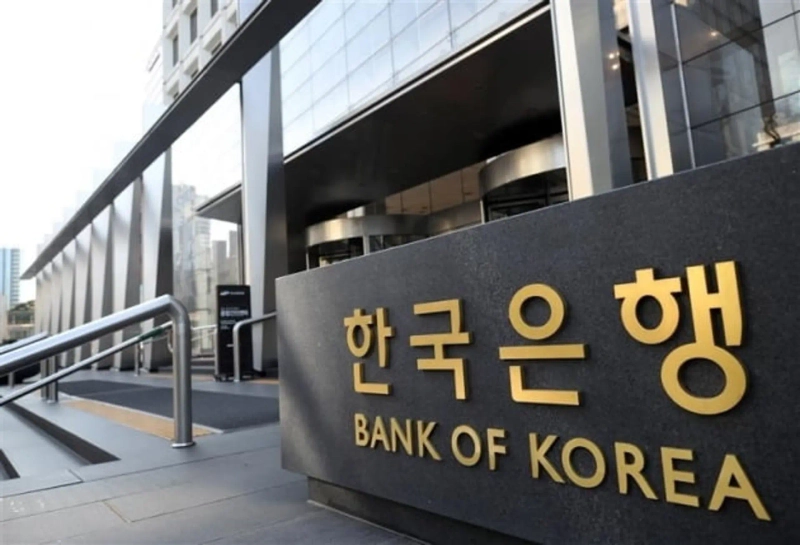
Most economic experts from the Hankyung Economist Club expect the Bank of Korea's Monetary Policy Committee to freeze the base rate at the current level (2.75% per annum) during the monetary policy direction meeting on the 17th and to cut it by 0.25 percentage points at next month's meeting. They believe the timing of the rate cut will be determined by observing domestic and international market trends following the tariff policy of the Donald Trump administration in the U.S.
On the 15th, when asked about the monetary policy direction of the Monetary Policy Committee on the 17th, 16 out of 20 economic experts (80%) from the Hankyung Economist Club predicted that the base rate would be frozen at the current level. The remaining 4 (20%) expected a 0.25 percentage point cut at this meeting. By the end of June, 17 experts (85%) expected the base rate to be around 2.5% per annum. Most experts who predicted a rate freeze this month also expected a rate cut in May.
This year's economic growth rate forecast averaged 1.29%, below the Bank of Korea's forecast of 1.5%. It has decreased by 0.28 percentage points compared to the forecast of 1.57% in February.
"Due to 'Tariff Shock,' This Year's Growth Rate Falls to 1.3%...Early Supplementary Budget Needed"
"Pursuing a Package of Supplementary Budget and Rate Cut for Greater Effectiveness"
The economic experts of the Hankyung Economist Club believe that the Bank of Korea should lower the base rate to respond to the domestic economic downturn, but they judge that next month is better than this month for the rate cut.
Among the 20 experts who responded to the survey on the 15th, 16 (80%) expected the base rate to be frozen at the Monetary Policy Committee's monetary policy direction meeting on the 17th, and 13 of them expected a rate cut next month. Including the 4 who expected a rate cut this month, 85% (17 experts) of all experts judged that there would be one rate cut in the first half of the year.
Kathleen Oh, Chief Economist at Morgan Stanley Korea, predicted, "In this meeting, it is more likely to suggest a rate cut in the next meeting while analyzing the impact of the tariff shock rather than cutting the rate." Namgang Lee, Economist at Korea Investment Holdings, explained, "In terms of the benefits affecting the economy, there is not much difference between a rate cut in April and May, but from a cost perspective, a rate cut in April raises concerns about the real estate market sentiment and tariff uncertainties."
It is noteworthy that this survey was conducted at a time when the foreign exchange market was somewhat stable. The won-dollar exchange rate, which exceeded 1,480 won last week, fell by nearly 60 won to the 1,420 won level this week. Despite the stabilization of the exchange rate, many experts expect the Bank of Korea to make a conservative decision (rate freeze) at this meeting. There were also 4 opinions predicting a rate cut in April. Minji Hee, a researcher at Mirae Asset Securities, explained, "If the possibility of a rate cut in May is high, there is also enough possibility of a preemptive cut at this point where the slowdown in growth is intensifying."
Economic experts emphasized that "pursuing a package of supplementary budget and rate cut can enhance the effect of economic stimulus." When asked about the most urgent measures for economic recovery (up to 2 multiple responses), 75% (15 experts) answered "quick supplementary budget arrangement." This was followed by early settlement of trade negotiations with the U.S. (55%) and base rate cut (35%).
Most experts expect the exchange rate to remain at the current level or slightly decrease. 16 (80%) predicted the won-dollar exchange rate to be 'above 1,400 won and below 1,450 won' in the first half of the year. By the end of the year, 10 (50%) answered '1,400-1,450 won,' 6 (30%) '1,350-1,400 won,' and 2 (10%) '1,300-1,350 won.' Donghyun Ahn, Professor of Economics at Seoul National University, predicted, "Factors such as the U.S. dollar weakening policy and the global capital outflow from the U.S. are acting as factors for the decline of the won-dollar exchange rate," and "the exchange rate could fall to the 1,350-1,400 won level per dollar in the second half of the year."
Reporter Dongwook Jwa leftking@hankyung.com

Korea Economic Daily
hankyung@bloomingbit.ioThe Korea Economic Daily Global is a digital media where latest news on Korean companies, industries, and financial markets.