

US: "Advantageous to Conclude Tariff Negotiations Early"...Korea: "Won't Be Rushed by Time"
Summary
- The Trump administration announced a strategy to pressure China by concluding negotiations first with allies, including Korea.
- The Korean government emphasized a cautious approach to negotiations prioritizing maximizing national interest, but the need for quick negotiations is increasing due to US pressure.
- Issues of interest to President Trump, such as the Alaska LNG project, are mentioned as negotiation topics, but the Korean government plans to take a cautious approach.
US Prioritizes Tariff Negotiations with Five Allies...Strategy to Encircle China
Priority to Korea, Japan, UK, Australia, India
Intention to Pressure China with Allies
Reiterated: "Our Ultimate Target is China"
"Alaska LNG, Non-Tariff Barriers, etc.
Korea Needs to Show Sincerity to the US"
Japan: "Rushing Leads to Mistakes" Long-Term Strategy
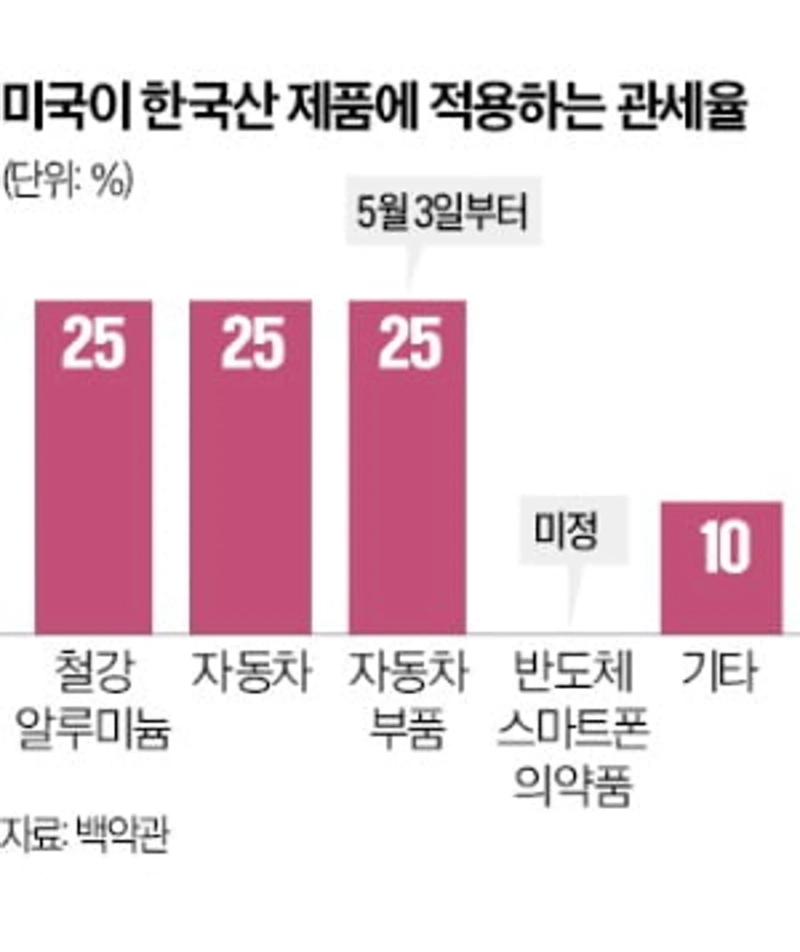
The Trump administration is increasing pressure on Korea by stating that "the country that concludes negotiations first will achieve the best agreement," urging early negotiation conclusions. The Korean government plans to start negotiations quickly but prioritizes maximizing national interest without being rushed by time.
◇Korea Included in Top 5 Priority Negotiation Countries
US Treasury Secretary Scott Besant said in a Bloomberg interview on the 14th (local time) that "there will be advantages for countries that move first with allies," adding that "usually, the person who concludes negotiations first achieves the best agreement." The Wall Street Journal (WSJ) reported, citing sources, that Secretary Besant prioritizes negotiations with Korea, Japan, Australia, the UK, and India. According to the US Treasury, the Trump administration began trade negotiations with Vietnam on the 11th, followed by Japan on the 16th, and will enter negotiations with Korea next week. US Vice President JD Vance stated, "We are working hard with the Keir Starmer cabinet," indicating ongoing negotiations with the UK. It is known that over 50 countries have requested tariff-related negotiations with the US.
The five countries identified by the Trump administration as priority negotiation countries are either top US allies or part of the Quad (US, Japan, Australia, India security consultative body). This has led to analysis that the US aims to complete trade negotiations with allies and partners first and then use this as a basis to pressure China. Secretary Besant stated on the 9th that "after reaching agreements with some allies, we can respond to China as a group." In the interview, he also said, "China is our biggest economic competitor and military rival, so negotiations with China will be more difficult than with other countries."
He also hinted at the intention to eliminate various non-tariff barriers, mentioning "currency manipulation, wage and facility investment subsidies, etc." Regarding the negotiation format, he said, "It may not be an actual trade document (agreement)," and "if a principled agreement is reached, we can move forward from there." It is also possible that the US will use tariffs on semiconductors, smartphones, pharmaceuticals, and auto parts as negotiation cards in the future.
◇Cautious Approach Prevails in Korea
Korean trade authorities plan to 'start negotiations quickly but create results that maximize national interest.' Korean trade authorities have adopted a strategy of closely monitoring the responses of countries in similar situations, such as Japan and Taiwan, before entering negotiations. However, as the US has declared its intention to set up negotiation tables with allies first and publicly pressured that 'countries that negotiate first will have an advantage,' the need to start negotiations immediately has increased. A government official said, "Since the inauguration of the Trump administration, we have been continuously communicating with the US through director-level dialogue channels and informal lines," adding, "It seems that the US feels pressured to produce meaningful negotiation results within the 90-day mutual tariff suspension period."
However, the government has not yet decided whether to include issues of interest to President Trump, such as participation in the Alaska LNG project, in the US tariff negotiation package. Namho Choi, the second vice minister of the Ministry of Trade, Industry and Energy, stated, "We are pursuing a local business trip for business feasibility review," indicating that it is a visit for business feasibility exploration.
Within the government, there is considerable opinion that negotiations should be approached cautiously. A government official said, "Agricultural products have very complex interests, and there are many hurdles to overcome, such as parliamentary consent," adding, "There is concern about the aftermath if results are produced first and the content is worse than that of the counterpart country."

Korea Economic Daily
hankyung@bloomingbit.ioThe Korea Economic Daily Global is a digital media where latest news on Korean companies, industries, and financial markets.