

China's Q1 Growth Surprises at 5.4% Amid Pre-Tariff Shipping Surge; Slowdown Expected
Summary
- China's first-quarter economic growth rate exceeded expectations at 5.4%, but it is expected to slow down due to tariff impacts.
- The U.S. 145% tariff is expected to hit the export-driven economy, and the government plans to introduce additional stimulus measures.
- Global investment banks have lowered their GDP growth forecasts for China this year, citing deflation and rising unemployment as major concerns.
Government's Domestic Demand Promotion and Investment Activation Effective
High Unemployment and Deflation Concerns Persist Amid Tariff Impact
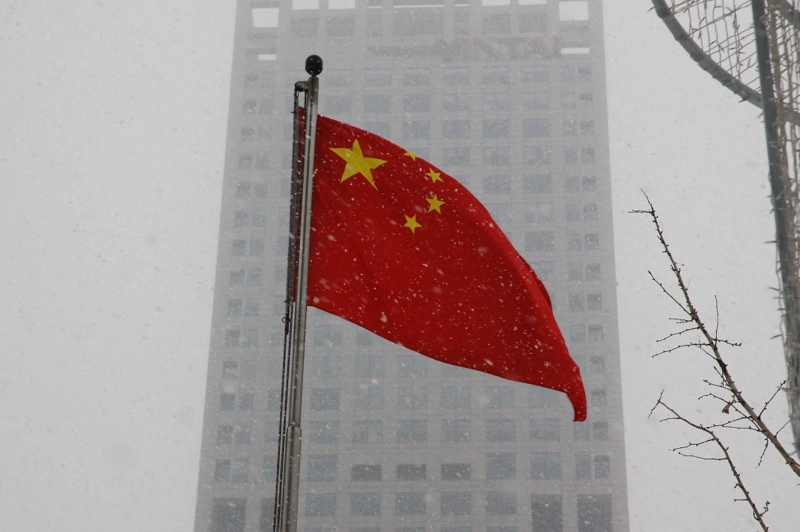
China's first-quarter economic growth rate exceeded expectations, recording an annualized 5.4%, but is expected to slow down as Trump's 145% tariff is applied. Despite the government's consumption promotion policies, the economic recovery appears uneven due to rising unemployment and deflationary pressures.
According to Reuters on the 16th (local time), the Chinese government announced that the GDP for the January-March quarter grew by 5.4% year-on-year, maintaining the same level as the fourth quarter. This exceeded analysts' expectations of a 5.1% increase compiled by Reuters.
Analysts interpreted this unexpected boom as a result of the consumption promotion measures and investment activation led by the Chinese government. Chinese Premier Li Qiang stated this week that China's exporters would have to cope with significant external changes and that domestic consumption would be further supported.
Exports remain China's only hope, supporting growth with a trade surplus of $1 trillion last year. However, as the U.S. tariff shock is expected to hit the export-driven Chinese economy, future growth is likely to cool down.
According to a Reuters survey, China's economy is expected to grow by only 4.5% this year compared to last year. This is slower than last year's 5.0% and falls short of the official target of about 5.0%. Global investment banks have lowered their GDP forecasts for China this year.
ANZ lowered its forecast for China's GDP growth rate this year from 4.8% to 4.2% due to punitive U.S. tariffs. Nomura Securities also lowered its forecast from 4.5% to 4.0%.
Chinese authorities presented a more pessimistic forecast this week, assuming that the U.S. 145% tariff would remain and that the government would introduce additional stimulus measures, lowering this year's growth forecast from 4% to 3.4%.
UBS analysts predicted in a report that "the tariff shock will bring unprecedented trials to China's exports and significant adjustments to the domestic economy."
In particular, as factories rushed shipments to avoid Trump's tariffs, China's March exports and trade surplus surged, but they are expected to plummet sharply in the coming months as the massive U.S. tariffs take effect.
Analysts expect additional support measures in the coming months following a series of monetary easing measures implemented late last year.
Amid the escalating trade war with the U.S., consumer indicators and factory production have improved.
Retail sales increased by 5.9% year-on-year in March, following a 4.0% increase in January-February, and factory production growth surged from 5.9% in January-February to 7.7%. Both figures exceeded analysts' expectations. Retail sales showed an upward trend, driven by double-digit growth in home appliances and furniture sales thanks to the government's consumer goods purchase system.
First-quarter real estate investment fell by 9.9% year-on-year, still acting as a drag on overall growth. New home prices in March remained unchanged from the previous month.
This suggests that economic recovery remains uneven, with rising unemployment and persistent deflationary pressures amplifying concerns about weak demand.
Raymond Yeung, ANZ's chief economist for China, emphasized that even if China's GDP has grown, it does not indicate the overall health of the economy. He pointed out that deflation and youth unemployment remain major concerns. Nevertheless, he added that the Chinese government's options are limited beyond large-scale fiscal expansion.
Guest reporter Kim Jung-ah kja@hankyung.com

Korea Economic Daily
hankyung@bloomingbit.ioThe Korea Economic Daily Global is a digital media where latest news on Korean companies, industries, and financial markets.