

Summary
- It was reported that semiconductor stocks plunged due to the H20 export restrictions on Nvidia and AMD.
- The Nasdaq index fell more than 2% on the New York Stock Exchange, indicating a sluggish performance in tech stocks overall.
- Allianz's chief economic advisor emphasized that tensions between China and the U.S. continue, and market volatility is expected to be high.
Nvidia, AMD Fall More Than 5% on Huge Loss Expectations
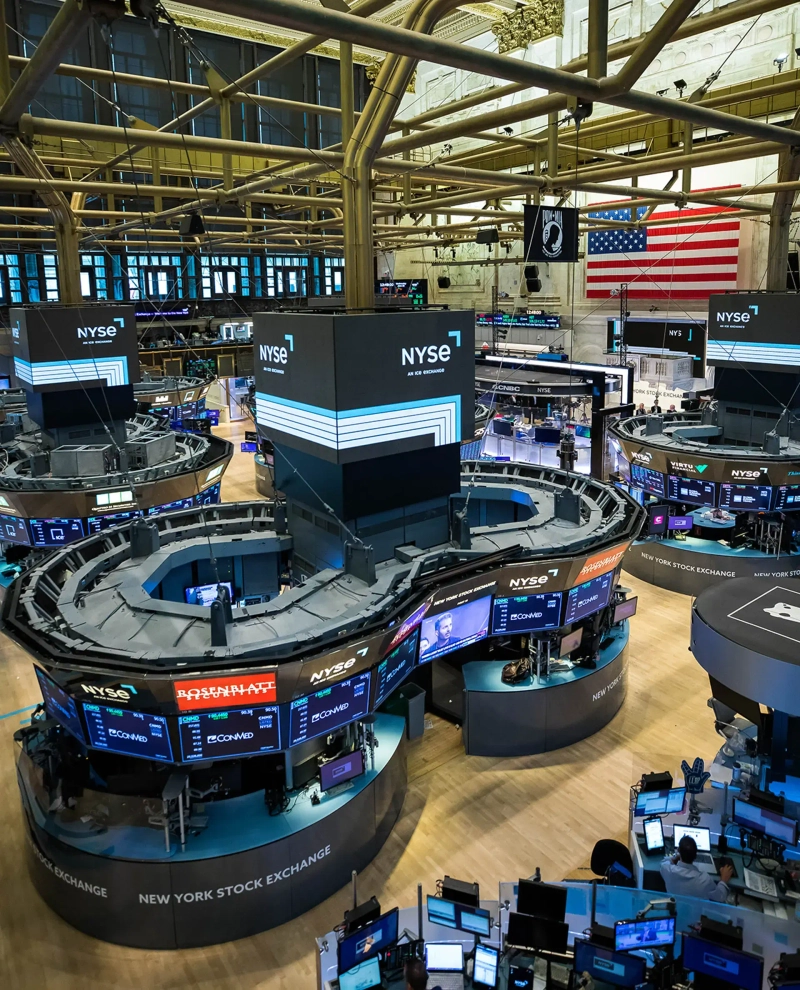
As the Trump administration imposes additional export restrictions on AI chips to China, semiconductor stocks like Nvidia plummeted, causing the New York Stock Exchange to expand its losses after opening on the 16th (local time).
At 10 a.m. Eastern Standard Time, the S&P 500 fell 1.4%. The Nasdaq Composite dropped 2.3% as tech stocks, including Nvidia, declined significantly. The Dow Jones Industrial Average fell 0.7%.
The Bloomberg Dollar Spot Index weakened, falling 0.5% from the previous day. Gold rose 2.2% to over $3,300 per ounce, reaching an all-time high. The 10-year Treasury yield remained almost unchanged at 4.33%.
The U.S. Department of Commerce announced late the previous day that it would also restrict exports of Nvidia's H20 chips to China, causing Nvidia's stock to trade at $103, down 6.3%. Nvidia warned that the H20 export restrictions would result in a $5.5 billion loss this quarter. Additionally, semiconductor stocks were pressured by weak orders from semiconductor equipment manufacturer ASML, which can infer semiconductor companies' investments.
Like Nvidia, AMD, which has also been exporting AI chips to China, fell more than 6%, and semiconductor stocks overall declined, with Broadcom and Micron Technology dropping more than 3%. ASML's American Depositary Receipts (ADR) also plummeted 6%.
Alphabet, facing a £5 billion (9.41 trillion won) class-action lawsuit in the UK for alleged abuse of dominance, fell more than 2%, and Tesla also dropped more than 2% amid news of a potential halt in importing cyber taxi parts from China.
Since the Trump administration first announced "reciprocal" tariffs on April 2, the three major indices of the New York Stock Exchange have each fallen more than 4%.
Mohamed El-Erian, chief economic advisor at Allianz, said in an interview with CNBC, "The chicken game between China and the U.S. continues, and other countries are struggling to navigate it." He emphasized that the chicken game between the Trump administration and the Federal Reserve also continues, and the market is expected to remain volatile.
Federal Reserve Board Chairman Jerome Powell is scheduled to speak late in the afternoon. Investors are likely to watch for signs of the Fed intervening to strengthen the U.S. Treasury market.
Ian Lyngen of BMO expects Powell to reiterate his approach of sticking to recent messages on policy rates, given the varied predictions about the impact of the new tariff environment on the U.S. economy.
Guest Reporter Jung-A Kim kja@hankyung.com

Korea Economic Daily
hankyung@bloomingbit.ioThe Korea Economic Daily Global is a digital media where latest news on Korean companies, industries, and financial markets.