

Japanese Finance Minister Meets Trump, Agrees Only on Early Conclusion of Tariff Negotiations
Summary
- It was reported that the United States and Japan agreed on the early conclusion of tariff negotiations.
- Japan demanded the abolition of high tariffs on steel and automobiles, but the U.S. maintained its demand for expanded defense cost sharing.
- This negotiation will lead to a U.S.-Japan leaders' announcement, and the two countries will continue discussions at both ministerial and working levels.
50-Minute Meeting Before Official Negotiations Between the Two Countries
Only Confirmed Positions on Tariffs and Defense Costs
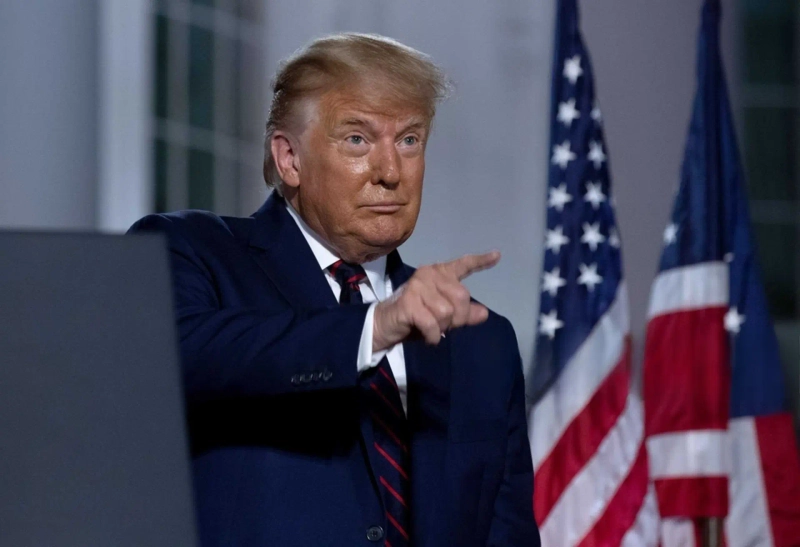
In the first tariff negotiations between the United States and Japan, which could serve as a 'gauge for the Korea-U.S. tariff negotiations,' the two countries agreed to conclude the negotiations early. However, it is reported that the Japanese government demanded the abolition of tariffs on steel and automobiles, but the U.S. maintained its existing stance, including expanding defense cost sharing, resulting in no substantial achievements.
According to Kyodo News, the delegations from both countries agreed to quickly conclude the tariff negotiations between the two countries in Washington, D.C., on the 16th (local time), and once a final agreement is reached, the U.S. and Japanese leaders will announce it. The two sides also agreed to continue discussions at both the ministerial and working levels. The second round of talks is scheduled to be held additionally this month.
U.S. President Donald Trump met with Japan's chief negotiator, Ryosei Akazawa, Minister of Economic Revitalization, for about 50 minutes at the White House on this day. Subsequently, U.S. Treasury Secretary Scott Besant and U.S. Trade Representative (USTR) Representative Jamison Greer held a separate meeting with Minister Akazawa for 75 minutes. The U.S. has already imposed a 25% tariff on steel and automobiles and plans to impose a reciprocal 24% tariff on Japanese products.
In this negotiation, Japan strongly demanded the abolition of high tariffs on steel and automobile products. However, the U.S. did not respond to this and instead reportedly raised the issue of expanding defense cost sharing. Japan repeatedly expressed regret over the U.S. imposition of tariffs on its exports. Minister Akazawa said immediately after the meeting, "The U.S. imposition of tariffs is extremely regrettable and negatively affects not only Japanese industry but also U.S.-Japan investment and job expansion." He stated, "We strongly requested a review of tariffs on automobiles and steel, but the progress of the negotiations is uncertain."
It was confirmed that the exchange rate issue was not discussed at this negotiation. Minister Akazawa drew a line by saying, "Exchange rates are a matter for the finance ministers of both countries to handle." However, he avoided commenting on whether security issues were officially on the agenda. President Trump has previously expressed dissatisfaction with Japan's monetary policy, the weak yen, and the burden of U.S. military expenses in Japan.
Immediately after the meeting, President Trump posted on Truth Social, "It was a great honor to meet with the Japanese trade delegation," and described it as "great progress." It is known that he gifted a red hat with the phrase 'Make America Great Again (MAGA)' engraved on it, along with a photo taken with Minister Akazawa at the White House. Japanese Prime Minister Shigeru Ishiba, after receiving a report on the tariff negotiations, evaluated, "This negotiation is not an easy process, but it is meaningful progress to move to the next stage."
Reporter Lee So-hyun y2eonlee@hankyung.com

Korea Economic Daily
hankyung@bloomingbit.ioThe Korea Economic Daily Global is a digital media where latest news on Korean companies, industries, and financial markets.