

PiCK
Powell: "Tariff Impact Much Larger Than Expected... Could Face Dilemma Between Inflation and Growth"
Summary
- Jerome Powell warned that due to the U.S. tariff policy impact, the economy could fall into a stagflation situation, leading to a dilemma of choosing between inflation and growth.
- Powell expressed concerns that tariffs could cause supply chain disruptions and sustained inflation, and that economic slowdown could increase the unemployment rate.
- If the structural risk of the U.S. increases, its attractiveness as an investment destination could decrease, and the Fed plans to maintain its existing quantitative tightening policy while observing the situation.
Trump's 'Fear of S' Warning
"Raising Rates Raises Recession Concerns
Lowering Rates Causes Inflation Dilemma"
No "Fed Put" Expectations
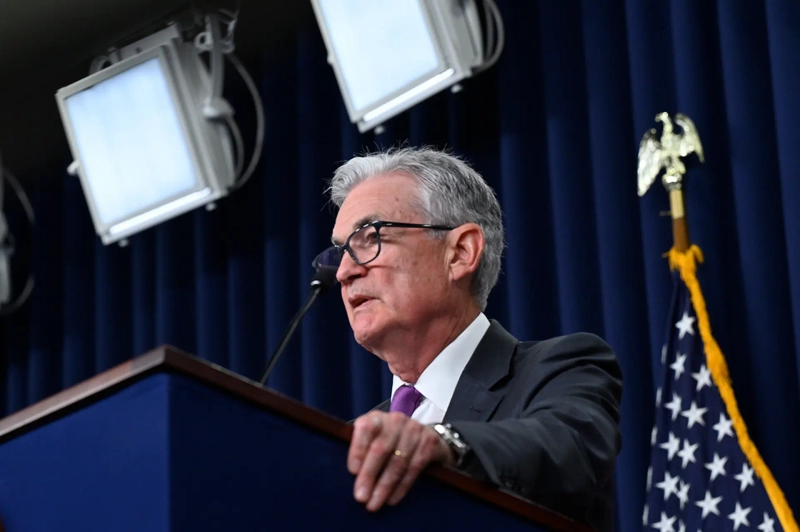
Jerome Powell, Chair of the United States Federal Reserve (Fed), warned on the 16th (local time) that the U.S. could fall into stagflation (rising inflation amidst economic recession) due to the tariff policies of the Donald Trump administration, leading to a dilemma of choosing between inflation and growth.
In a discussion at the Chicago Economic Club, Powell stated, "The scale of the announced tariff increases so far is much larger than expected," and added, "The economic impact, including inflation and growth slowdown, will also be significant." He pointed out that "we may face a difficult scenario where the Fed's dual mandate of price stability and maximum employment collide."
Powell noted that tariffs could be passed on to the public, leading to price increases. He also pointed out that supply chain disruptions due to tariffs are a variable for inflation. He expressed concern that "looking at the automotive industry, which is subject to tariffs, there is a high possibility of significant supply chain disruptions, and inflation could persist for years." Although the labor market is currently in full balance, he predicted that "if the economy slows down, the unemployment rate is likely to rise."
Powell lamented, "Our policy tools (interest rate changes) can only achieve one of the two," and said, "It's difficult to decide what action to take." However, he emphasized prioritizing price stability, stating, "Without price stability, we cannot achieve long-term strong labor market conditions that benefit all Americans."
Regarding the Trump administration's trade policies, Powell evaluated them as "a fundamental change in the (free trade) policies that the U.S. has maintained for a long time." He warned that if the tariff impact is greater than the Smoot-Hawley Tariff Act enacted by the U.S. in 1930, and if the U.S. becomes structurally more dangerous, its attractiveness as an investment destination will decrease.
He drew a line, saying there will be no "Fed put," where the Fed lowers interest rates or provides liquidity through quantitative easing (large-scale bond purchases) whenever the financial market is difficult. Powell explained, "We don't know where or how trade policies will work and where they will settle," and "it's difficult to make a judgment until the answer comes out due to increased uncertainty." He reaffirmed the existing stance of not considering monetary policy adjustments, such as lowering the base rate, immediately and observing the economic situation further.
The Fed plans to continue quantitative tightening, which absorbs market liquidity by selling held bonds. Powell stated, "We want this process (quantitative tightening) to continue," and "reserves are sufficient." The Fed reduced the scale of quantitative tightening from $25 billion to $5 billion starting this month.
Reporter Kim In-yeop inside@hankyung.com

Korea Economic Daily
hankyung@bloomingbit.ioThe Korea Economic Daily Global is a digital media where latest news on Korean companies, industries, and financial markets.