

'110th Report in Progress'... Chaos Due to Fluctuating US Tariffs
Summary
- Frequent changes in US tariff policies have led Korean companies to revise their performance forecasts multiple times, and they may abandon new businesses.
- Particularly, companies related to solar and energy storage systems (ESS) are severely impacted by tariff barriers, facing difficulties due to rising raw material costs.
- As pressure to produce in the US is expected to continue, some companies are considering relocating manufacturing facilities.
Frequent Changes in Tariff Policies Also Alter Performance Outlook
Considering Closing New Businesses
Most Solar ESS Companies Import Raw Materials from China
Direct Hit from High US Tariffs on China
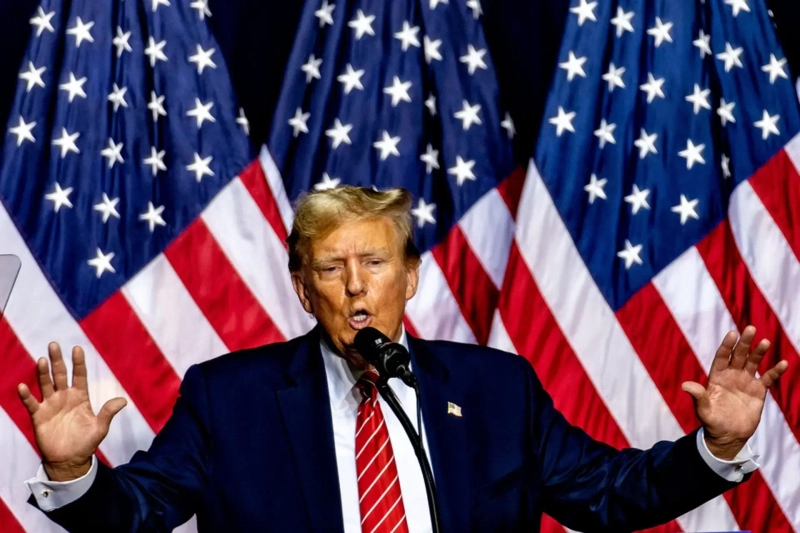
The Trump administration frequently changes tariff policies and targets, causing headaches for Korean companies operating in the US. The frequent changes in import cost calculations due to tariffs and the review of manufacturing facility relocations have led to the creation of more than dozens of versions of year-end performance forecasts and long-term investment budgets. Some companies have expressed that they are "considering closing some new businesses."
On the 17th (local time), a representative from the US branch of a manufacturing company A said, "We are currently making our 110th performance forecast," adding, "Other companies in the same industry are in a similar situation." The company has its final manufacturing facility in the US and imports raw materials from China and Mexico. The performance outlook for the company has become more complicated as US President Donald Trump imposes high tariffs on China and Mexico at different times and rates.
Company B is contemplating ways to bring in as much raw material as possible into the US during the 90-day grace period of mutual tariffs. A representative from Company B expressed concern, saying, "The problem is that it is difficult to predict what will happen after the 90 days," and "If the grace period is extended, the costs incurred to import as much raw material as possible within 90 days may become unnecessary."
Large Korean banks with branches in the US are checking the credit risks of their client companies. A bank representative stated, "The headquarters in Seoul has instructed us to check the loan repayment capabilities of companies whose profitability is expected to deteriorate due to tariffs," adding, "We are also conducting interviews with the companies."
Small and medium-sized enterprises supplying parts to automakers are considering moving their factories from Mexico to the US or purchasing the US factories they have been renting. A representative from the company said, "We expect that the pressure to produce in the US will continue regardless of which administration comes after the Trump administration," adding, "If we have to continue doing business in the US, relocating production facilities to the US might be a solution."
Companies related to solar and energy storage systems (ESS) are in a much more serious situation than those in other industries. This is because most of the raw materials come from China. Amidst the Trump administration's strong opposition to renewable energy, the cost of building the infrastructure is skyrocketing due to tariff barriers.
Surprisingly, the semiconductor-related industry is not significantly affected by tariffs. The US government plans to announce a more comprehensive tariff plan through a tariff investigation on the semiconductor and electronics supply chain within 1-2 months. A representative from a semiconductor-related company said, "Most semiconductors exported to the US are embedded in smartphones and electronic devices," adding, "There are semiconductor volumes exported directly to the US, but they do not account for a significant portion of our performance."
New York = Park Shin-young, Correspondent nyusos@hankyung.com

Korea Economic Daily
hankyung@bloomingbit.ioThe Korea Economic Daily Global is a digital media where latest news on Korean companies, industries, and financial markets.