

"Powell, I don't like him" Trump threatens to fire... 1935 precedent 'noted' [Lee Sang-eun's Washington Now]
Summary
- President Trump's push to dismiss Chairman Powell is a direct threat to the independence of the Fed, which could lead to financial market instability.
- President Trump argued that Chairman Powell should be dismissed due to the slow pace of rate cuts, but there is a consensus that this is not a legally justifiable reason.
- Super Mario Dojin and other experts warn that the president's unilateral abuse of personnel authority is likely to lead to legal battles, which could remain an important precedent defining presidential authority.
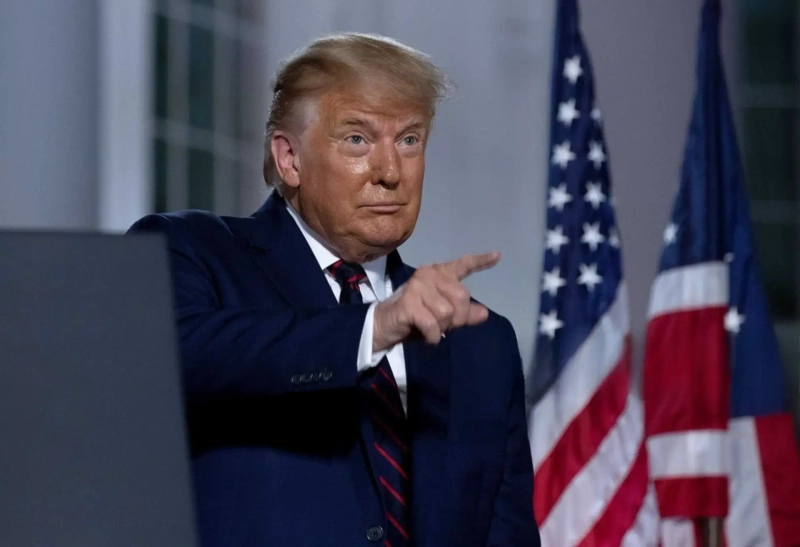
U.S. President Donald Trump is publicly threatening to fire Jerome Powell, the chairman of the U.S. Federal Reserve (Fed). On the 17th (local time), President Trump called Chairman Powell "'too late' Jerome Powell" on Truth Social and emphasized that "the sooner Powell is removed, the better." He also said, "I don't like working with him," when he met with Italian Prime Minister Giorgia Meloni that day, adding, "Let him know he's going out."
Such threats are beyond the president's authority according to U.S. Supreme Court precedents, but President Trump does not care. As the independence of the Fed is being seriously threatened, there is speculation that the financial market may be shocked once again.
○"Powell, I don't like him"
Chairman Powell's term as chairman is until May 15 next year. He was nominated by President Trump in 2017 and has been chairman for four years since 2018, and former U.S. President Joe Biden nominated him again as chairman (May 23, 2022 - May 15, 2026).
The reason President Trump claims to fire him is 'because the rate cuts are slow.' On this day, he pressured Chairman Powell on Truth Social, saying, "Always too late and wrong," and "Powell should have cut rates long ago like the European Central Bank (ECB) and should cut them now."
In a press conference, when asked if he plans to fire Chairman Powell, he replied, "If he does not change the rate cut policy." He added, "Oil prices have fallen to $60-65 per barrel, and food prices have also dropped. Lowering rates would make things better. It's hard to understand seeing inflation as a possibility." It is widely analyzed that Chairman Powell's mention of the possibility of inflation due to tariff policies the previous day particularly irritated him.
However, the consensus is that differences in policy views are difficult to justify as a reason for dismissal. According to the Federal Reserve Act, "just cause" is required for the dismissal of Fed directors (including the chairman). The courts have interpreted this as 'misconduct' or 'neglect of duty.'
If the dismissal of Chairman Powell is enforced, a lawsuit is expected to follow. The U.S. Constitution's 2nd Amendment, Section 2, only grants the president the power to 'nominate' federal officials, and they must be appointed through the 'advice and consent' process in the Senate. This is to prevent the executive branch from wielding personnel authority unilaterally. However, there is no explicit provision regarding dismissal.
The most important precedent regarding dismissal standards is the 1935 'Humphrey's Executor v. United States' ruling. It was a case where the Supreme Court found it unjust for President Franklin D. Roosevelt to dismiss a Federal Trade Commission (FTC) commissioner without cause in 1933. At the time, the Supreme Court unanimously ruled that "a commissioner can be removed by the president for inefficiency, neglect of duty, or malfeasance," interpreting the FTC regulation as limiting the president's removal authority to "only for reasons specified by law."
○"The President is not a king"
Even after the Humphrey case, there have been several attempts by presidents to dismiss federal officials. In 2020, during Trump's first term, the Supreme Court sided with then-President Trump regarding his arbitrary dismissal of the head of the Consumer Financial Protection Bureau (CFPB). However, unlike federal agencies with a single head, organizations like the FTC or the Fed, which have a 'board' system, are intended to be independent from the government, making it more prevalent that the president cannot arbitrarily dismiss them.
President Trump does not intend to accept this interpretation. Shortly after taking office, he dismissed Gwen Wilcox, a member of the National Labor Relations Board (NLRB), and Cathy Harris, chair of the Merit Systems Protection Board (MSPB). Last month, on the 7th, Judge Beryl Howell of the Washington D.C. District Court ruled in favor of the plaintiffs in a reinstatement lawsuit filed by the two, pointing out, "President Trump is not a king."
On the other hand, the atmosphere in the Supreme Court is somewhat different. Currently, the Supreme Court has six conservatives and three liberals. Three of the conservatives were appointed by President Trump during his first term. Among them, Justices Clarence Thomas and Neil Gorsuch argue that the Humphrey's Executor ruling is a 'wrong' precedent. Chairman Powell repeatedly stated at a press conference last November that he has no intention of resigning. If a legal battle ensues, it is likely to remain a key precedent defining presidential authority in U.S. history.
○Concerns about financial market shock
If the Fed's independence is shaken, it ultimately deviates from the Fed's goal of managing prices, and rising inflation expectations could drive up long-term interest rates. This would result in the opposite of what President Trump wants. It could also fuel distrust in the value of the dollar.
Treasury Secretary Scott Besant is known to have opposed the dismissal of Chairman Powell. Politico reported, citing multiple anonymous sources, that Secretary Besant repeatedly warned White House officials that efforts to fire Chairman Powell could increase financial market instability.
Secretary Besant previously tried to block interference with the Fed by saying he was more focused on keeping the 10-year Treasury yield lower than the Fed's benchmark rate, but such efforts were rendered futile in the face of President Trump's blunt rhetoric. Kevin Warsh, a Fed director, and Arthur Laffer, chairman of Laffer Associates, are mentioned as potential successors to Chairman Powell.
Washington Correspondent Lee Sang-eun

Korea Economic Daily
hankyung@bloomingbit.ioThe Korea Economic Daily Global is a digital media where latest news on Korean companies, industries, and financial markets.