

"Because of Trump"... US Investment Banks Rapidly 'Shift Course'
Summary
- Wall Street banks have reportedly lowered their year-end forecasts for the S&P500 index following the US's announcement of reciprocal tariffs.
- JP Morgan explained that it is lowering its year-end S&P500 index forecast from 6,500 to 5,200, assuming tariff relief.
- Citigroup also lowered its year-end S&P500 index forecast from 6,500 to 5,800, mentioning that the recent US stock market plunge could be a bear market due to President Trump's actions.
US Stock Market Outlook Significantly Downgraded
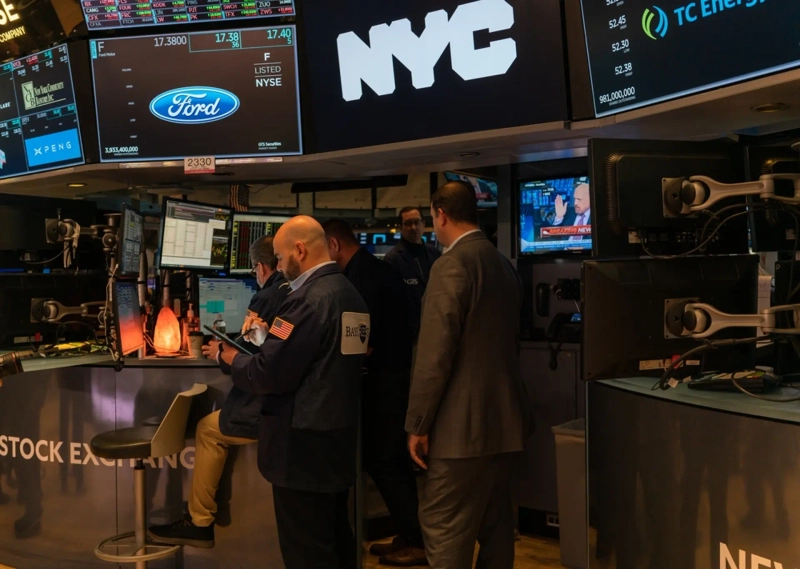
Wall Street banks are lowering their year-end forecasts for the S&P500 index following the US's announcement of reciprocal tariffs.
According to the Financial Times (FT) on the 19th (local time), at least 10 banks, including JP Morgan, Bank of America, and Evercore ISI, have downgraded their year-end S&P500 index forecasts since US President Donald Trump announced a 10% base tariff on all countries and reciprocal tariffs on over 70 countries on the 2nd.
During this period, the S&P500 index plummeted by 6.2%.
Currently, the average year-end S&P500 index forecast by Wall Street banks is at the 6,012 mark.
JP Morgan lowered its year-end S&P500 index forecast from 6,500 to 5,200, assuming partial tariff relief on the 7th.
JP Morgan explained, "We do not think American exceptionalism is over, but the shock of this 'Day of Liberation' occurred at a time of high valuations, crowded investment positioning, and particularly weak leadership."
Citigroup also lowered its year-end S&P500 index forecast from 6,500 to 5,800 on the 18th.
Citigroup analyst Scott Chronert said, "The Goldilocks sentiment that emerged earlier this year has given way to extreme uncertainty," and the recent US stock market plunge could be "the first bear market triggered by the actions of the US President."
The S&P500 index rose by 24% and 23% in 2023 and 2024, respectively.
Reporter Lee Hwi-kyung ddehg@wowtv.co.kr

Korea Economic Daily
hankyung@bloomingbit.ioThe Korea Economic Daily Global is a digital media where latest news on Korean companies, industries, and financial markets.