

Can Trump Fire Powell?…"Low Possibility of Dismissal"
Summary
- President Trump has hinted at the dismissal of Federal Reserve Chairman Powell and pressured for an interest rate cut, but economists believe the possibility of his dismissal is low.
- Concerns about the negative impact of Powell's dismissal on the financial market have led to analyses suggesting that Trump's dismissal possibility is limited.
- Despite Trump's pressure, if the Federal Reserve adjusts its interest rate policy, market expectations could lean towards the possibility of an interest rate cut.
"Powell's Offense+Influence on Interest Rate Policy+Blame for Economic Recession" Purpose
NYT "Advisors Convey Concerns of Financial Market Panic, Will Not Dismiss"
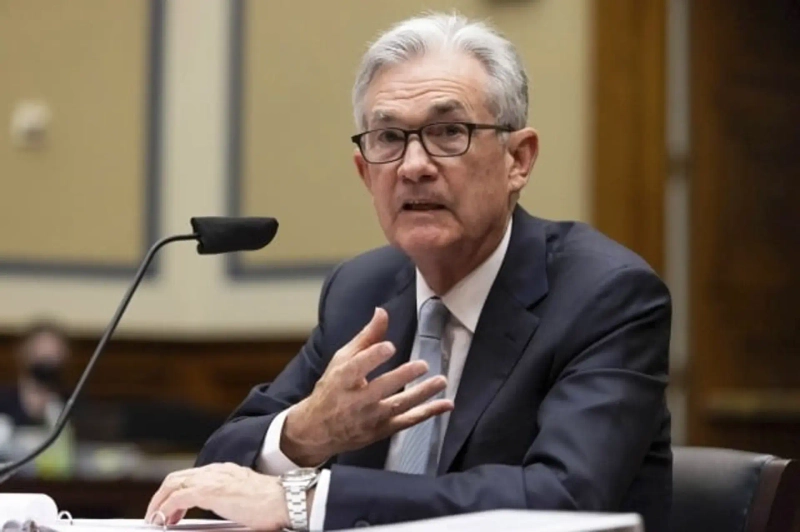
President Trump once again criticized Jerome Powell, the Chairman of the Federal Reserve (FED), on the 21st (local time), pressuring for a rate cut.
On this day, Trump called Chairman Jerome Powell a "major loser" on Truth Social, stating that the U.S. economy could slow down if interest rates are not lowered immediately. He claimed that "there is virtually no inflation in the U.S." and that the prices of energy and most things are falling. He also hinted at Powell's dismissal last Thursday.
Nevertheless, American economists believe that the possibility of Trump dismissing Chairman Powell is low.
Under current law, even the president finds it difficult to arbitrarily fire the chairman of the central bank, the Federal Reserve. The Federal Reserve is an organization with guaranteed independence, and the chairman's term is legally protected. Powell has firmly stated that the president cannot dismiss him according to the law.
Moreover, Trump is aware that dismissing Powell would have greater side effects. On this day, the New York Times (NYT) reported that Trump heard from advisors that dismissing Chairman Powell would cause greater panic in the financial market, and currently, he has no intention of dismissing Powell.
However, mentioning dismissal can be seen as an attempt to influence the Federal Reserve's interest rate policy. Additionally, if an economic recession occurs, it serves the purpose of instilling the message to the public that it is "because the Federal Reserve did not lower the interest rate," rather than his tariff policy.
Francesco Bianchi, an economics professor at Johns Hopkins University, pointed out that if Trump's threats lead to a recession, the Federal Reserve could be publicly blamed. He predicted that due to Trump's repeated mentions, "people will say the Federal Reserve should lower the interest rate."
Although consumer prices have stabilized recently, new tariffs could raise prices again. Amita Shultz of Seriti Partners pointed out that if a recession occurs and public opinion is formed that it is the Federal Reserve's responsibility, it could influence the Federal Reserve's decision-making.
Currently, the market and the Federal Reserve have differing opinions on interest rate forecasts. Derivatives market investors, who see a high possibility of a recession, expect the Federal Reserve to cut interest rates by 100 basis points this year.
Trump began criticizing Powell after Powell criticized Trump's tariff policy last week. Chairman Powell stated at the Chicago Economic Club that "imposing tariffs could constrain U.S. economic growth and fuel inflation."
Trump's anger was triggered when Powell criticized his tariff policy and refused to lower interest rates. By demanding a rate cut and criticizing Powell, Trump could use it as an opportunity to mislead public opinion that if a recession occurs, it is because the Federal Reserve did not lower the interest rate.
Professor Bianchi said he does not think Trump will carry out the threat of dismissal. Powell's term ends in a year. Even if Trump does not know, his advisors are aware that there is no practical benefit in becoming the first president to disrupt the financial market and undermine the concept of the Federal Reserve's independence with only a year left.
If Chairman Powell is dismissed, the financial market expects interest rates to rise further. This could harm the economy in various ways and make Trump's tax cut plans more difficult. Bianchi said, "Treasury Secretary Besent knows this would be a complete disaster for the Trump administration."
In 2018, during his first term, Trump was angry when the Federal Reserve continued to raise interest rates even after the tax cut was passed. He continued to pressure the Federal Reserve to lower interest rates through tweets. Market participants generally lowered their expectations for future interest rate levels accordingly.
Bianchi said, "At that time, the market believed that due to the pressure on the Federal Reserve, it was less likely to raise interest rates or more likely to lower them in the future."
Federal Reserve officials claim they do not make decisions for political reasons, but they cannot avoid market influence. Ultimately, the Federal Reserve stopped raising interest rates at the end of 2018 and began lowering them the following year.
Bianchi explained, "If you can move market expectations, you've already achieved half of the actual policy change." "During Trump's first term, the Federal Reserve stopped raising interest rates and began lowering them, partly due to Trump's pressure," he said.
Bianchi said that market forces can influence the Federal Reserve's actions. Even if not directly following the president's orders, if political pressure develops into market pressure, it can eventually influence the central bank's judgment.
On Wall Street, there was a warning that if Trump actually infringes on the Federal Reserve's independence by firing Powell, a massive market crash would occur.
Michael Brown, a senior research strategist at Pepperstone, said, "If Chairman Powell is dismissed, the most dramatic U.S. asset sell-off imaginable will follow." He pointed out that "with the Federal Reserve's independence clearly threatened, the possibility of a weaker dollar and a departure from U.S. hegemony is becoming a reality."
Krishna Guha, vice president of Evercore ISI, said on CNBC that day, "If there is an attempt to dismiss the Federal Reserve chairman, interest rates will rise, the dollar will fall, and stocks will be sold off." He said, "I can't believe the U.S. government is trying to achieve that."
Guest reporter Kim Jung-ah kja@hankyung.com

Korea Economic Daily
hankyung@bloomingbit.ioThe Korea Economic Daily Global is a digital media where latest news on Korean companies, industries, and financial markets.