

PiCK
US Sell-off Shakes Fed by Trump... Stocks, Bonds, Dollar Plunge [New York Stock Market Briefing]
Summary
- It was reported that major indices in the New York stock market plummeted due to President Trump's shaking of the central bank's independence.
- It was stated that major investors withdrew funds from U.S. assets, causing a plunge in bond prices and the value of the dollar.
- The surge in U.S. Treasury yields and increased uncertainty led to market concerns about monetary policy, resulting in a sell-off of U.S. assets.
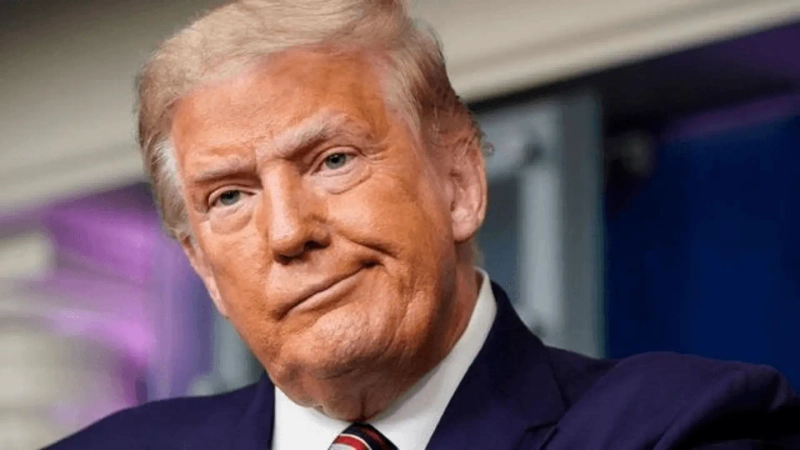
Major indices in the New York stock market plummeted. As U.S. President Donald Trump pressured Jerome Powell, the chairman of the U.S. Federal Reserve (Fed), shaking the independence of the central bank, investors were seen withdrawing money from the U.S. Not only stock prices but also bond prices and the value of the dollar plunged.
On the 21st (local time) at the New York Stock Exchange (NYSE), the Dow Jones Industrial Average fell 971.82 points (2.48%) to 38,170.41, the Standard & Poor's (S&P) 500 index dropped 124.50 points (2.36%) to 5,158.20, and the Nasdaq Composite Index fell 415.55 points (2.55%) to 15,870.90.
Investors felt uneasy as President Trump once again demanded a rate cut from Chairman Powell and made harsh criticisms.
President Trump said on his social media, "If 'Mr. Too Late', the biggest failure, does not cut rates immediately, economic growth may slow," adding, "Many people are demanding a preemptive rate cut." 'Mr. Too Late' is a nickname Trump recently used to refer to Powell, meaning 'the man who is too late.'
Previously, on the 17th, President Trump also demanded a rate cut from Chairman Powell, suggesting his dismissal by saying, "If I want him out, he will be really quickly kicked out."
Investors responded to President Trump's actions, which not only initiated a tariff war against the world but also ignored the independence of the central bank, increasing uncertainty in monetary policy, by selling off U.S. assets. On this day, the dollar index, which indicates the value of the dollar against major currencies, fell below the 99 line, recording the lowest level in over three years.
The sell-off of U.S. Treasury bonds caused interest rates to soar, widening the spread between long-term and short-term bonds. The interest rate gap between 2-year and 10-year bonds widened to 65bp. It was the first time since February 2022 that the spread between 2-year and 10-year bonds exceeded 60bp based on closing prices.
Concerns about U.S.-China trade negotiations also increased. China took a hard stance. In a statement posted on its website, the Chinese Ministry of Commerce said, "China firmly opposes achieving deals with the U.S. at the expense of China's interests," adding, "If such a situation arises, China will take countermeasures."
On this day, defensive stocks such as consumer staples and materials in the U.S. stock market performed well, limiting the decline to the 1% range. All other sectors fell more than 2%.
The 'Magnificent 7', referring to seven giant tech companies, all declined.
Tesla plunged more than 5% as Barclays lowered its target price ahead of its earnings announcement the next day. Nvidia also fell more than 4%.
On the other hand, Netflix rose 1.53% thanks to strong first-quarter earnings and improved future earnings guidance.
UnitedHealth Group's stock fell more than 6% again. The increased utilization of medical services in the Medicare Advantage business segment continued to be a burden as it increased medical expenses.
According to the Chicago Mercantile Exchange (CME) FedWatch Tool, the probability of the federal funds rate being held steady by the end of June fell to 27.5%. The probability of a 50bp cut rose to 9.0% from 5.7% at the close of the previous day.
The Chicago Board Options Exchange (CBOE) Volatility Index (VIX) rose 4.17 points (14.06%) to 33.82 from the previous session.
Han Kyung-woo, Hankyung.com reporter case@hankyung.com

Korea Economic Daily
hankyung@bloomingbit.ioThe Korea Economic Daily Global is a digital media where latest news on Korean companies, industries, and financial markets.