

Trump Calls Powell 'Mr. Too Late'... Shifting Blame for Tariff Policy Failure?
Summary
- President Trump is reported to be pressuring Chair Powell with the intention of stimulating the economy through rate cuts.
- The market sees President Trump's actions as an attempt to shift the responsibility for the economic slowdown due to the side effects of tariff policies onto the Fed.
- There are concerns that the administration's pressure on the Fed could increase market instability.
High Tariffs Impacting Economy... 'Powell's Responsibility' Continues to Ignite
"Recession Will Come If Rates Aren't Cut Immediately"
Increasing Pressure for Rate Cuts
If Tariff Side Effects Cause Inflation
'Blame Powell for Not Cutting Rates in Time'
Strategy to Shift Blame to Fed
Possibility of Early Nomination for Next Chair
Aiming to Neutralize Authority Instead of Dismissal
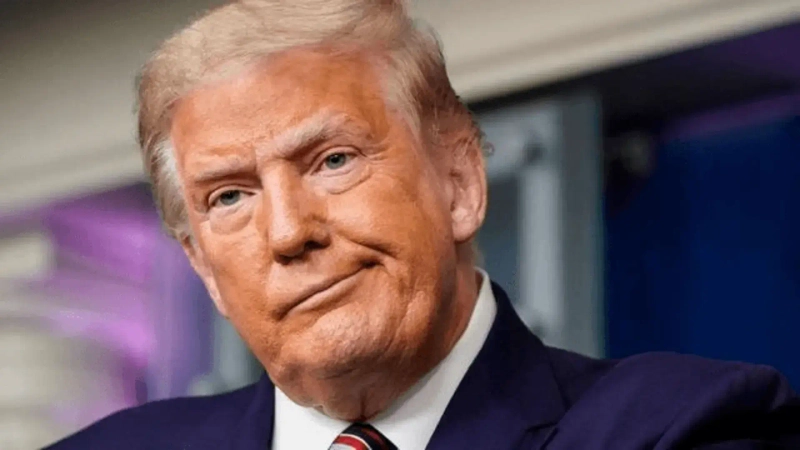
On the 21st (local time), U.S. President Donald Trump criticized Jerome Powell, the Chair of the U.S. Federal Reserve (Fed), as "Mr. Too Late," pressuring for a cut in the benchmark interest rate. Following recent discussions about the possibility of dismissing Chair Powell, Trump has once again launched an attack on Powell. As President Trump disregards the independence of the Fed and the impact on financial markets, there is speculation in the market that he intends to shift the blame for the economic downturn due to tariff policy failures onto Powell.
◇ Trump Continues "The Problem is Powell"
On this day, President Trump referred to Chair Powell as a 'procrastinator' and a 'major failure' via social media, stating, "If rates are not cut immediately, an economic slowdown could occur." Regarding current U.S. inflation, he emphasized, "Energy and food prices have substantially fallen, and most other items are on a downward trend, so there is virtually no inflation." He criticized the Fed for not taking any action despite the conditions being ripe for a rate cut.
President Donald Trump watches Jerome Powell's press conference at the White House after appointing him as the Chair of the U.S. Federal Reserve (Fed) on November 2, 2017, during his first term. Reuters Yonhap News Image
President Donald Trump watches Jerome Powell's press conference at the White House after appointing him as the Chair of the U.S. Federal Reserve (Fed) on November 2, 2017, during his first term. Reuters Yonhap News
Trump's repeated pressure is interpreted as an attempt to induce an early rate cut to stimulate the economy. He believes that a 'Fed put' is necessary to defend against market crashes by lowering the benchmark interest rate to mitigate the market shock from tariffs. However, the Fed maintains a cautious stance on rate cuts due to concerns about the resurgence of inflation. On the 17th, Chair Powell stated, "Our duty is to maintain long-term expected inflation stably so that temporary price increases do not lead to sustained inflation." In response, President Trump immediately expressed dissatisfaction, saying, "Powell's term should end quickly."
In the market, there is a growing view that President Trump's remarks are not intended to dismiss Chair Powell but rather to shift the responsibility for the economic slowdown onto the Fed. Analysts suggest that Trump is preemptively engaging in a public relations campaign to claim that 'the Fed did not lower rates in time' if the side effects of tariffs, such as inflation and economic recession, become a reality. It is seen as creating a 'scapegoat' for his policy failures. Tim Duy, an economist at SGH Macro Advisors, pointed out, "President Trump is trying to shift the responsibility for the economic impact of tariff policies onto the Fed," adding, "It's like saying, 'My plan was perfect, if only Powell hadn't interfered.'"
◇ Setting Up a 'Shadow Chair' to Create a 'Lame Duck'?
While the view that dismissing Chair Powell is legally close to impossible prevails, concerns are emerging that the situation could change recently. Chair Powell emphasized on the 16th, "We cannot be dismissed without just cause," while also mentioning a case where President Trump removed a member of the National Labor Relations Board (NLRB), a similar independent body to the Fed. Although the first trial ruled it illegal, the appeals court later sided with President Trump. However, legal controversy remains over whether it is justified for the president to dismiss the head of an independent agency. Chair Powell stated, "I don't think that ruling will apply to the Fed, but it's not certain."
There is also speculation that the Trump administration might activate a 'shadow chair' system by nominating the next Fed chair early. The plan is to create a 'lame duck' state before the end of Powell's term by granting substantial authority to the next chair without dismissing Powell. Chair Powell's term lasts until May next year.
Experts worry that the administration's attempts to influence the Fed itself could amplify market instability. Krishna Guha, Vice Chairman of Evercore ISI, said in a CNBC interview, "It is not desirable for the White House to pressure Powell by setting up a shadow chair," adding, "Leaving Powell in place would provide the best opportunity for the Fed to adjust rates without market shock, maintaining stable expected inflation and bond yields."
Reporter Lim Dayeon allopen@hankyung.com

Korea Economic Daily
hankyung@bloomingbit.ioThe Korea Economic Daily Global is a digital media where latest news on Korean companies, industries, and financial markets.