

Trump Says 'No Plan to Dismiss Powell, Will Lower Tariffs on China'... Global Stock Markets Rebound
Summary
- President Trump withdrew his dismissal of Powell and hinted at lowering tariffs on China, leading to a sharp rebound in Asian stock markets.
- With expectations of eased U.S.-China trade tensions, European and U.S. stock markets also showed an upward trend, restoring market confidence.
- While Trump's policy changes could introduce uncertainty to the market, investors emphasized the importance of maintaining a long-term perspective amid stock market volatility.
Asian Stock Markets Rise in Unison on Eased U.S.-China Trade Tensions
Gold Prices Plummet, U.S. Long-term Treasury Yields Fall
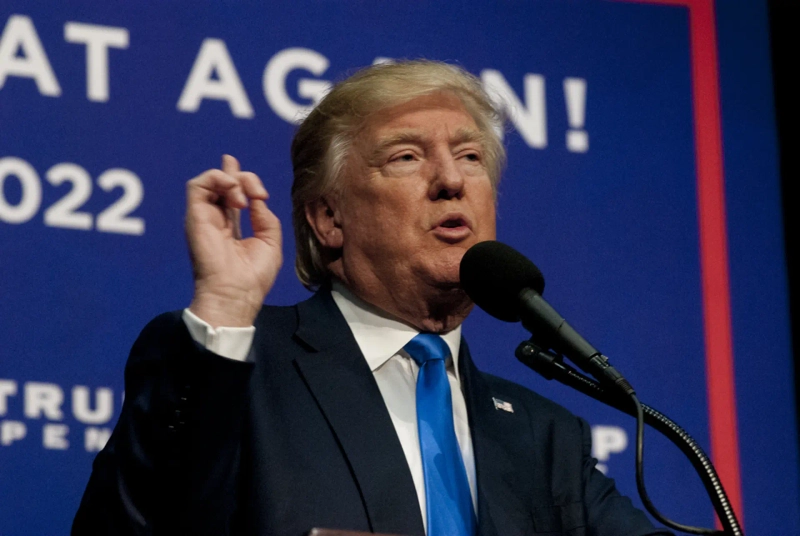
U.S. President Trump stated that he has no plans to dismiss Jerome Powell, the Chairman of the Federal Reserve Board, and hinted at lowering tariffs on China, leading to a sharp rebound in Asian stock markets. European markets also opened on an upward trend, and U.S. stock index futures showed an upward trend before the market opened.
According to Reuters and Bloomberg on the 23rd (local time), as the attack on Powell intensified the selling of dollars, U.S. bonds, and stocks, President Trump reversed his previous statement, saying he has no plans to dismiss Powell. He also expressed a desire to reach an agreement with China at a level where tariffs do not approach 145%.
The Asian market surged overnight. In the Tokyo stock market, the Nikkei 225 rose by 1.89%. South Korea's KOSPI index increased by 1.57%. With expectations of eased U.S.-China trade tensions, Hong Kong's Hang Seng index rose by 2.3%, and Taiwan's TAIEX surged by 4.5%.
The STOXX 600 index in the European market rose by 1.9%. The withdrawal of threats against Powell and expectations of eased U.S.-China trade friction spread across global markets.
The long-term U.S. Treasuries and the dollar, which had been declining due to a drop in confidence in U.S. monetary and fiscal policies, also turned upward.
The dollar surged by more than 1.1% against the yen immediately after Trump's withdrawal of threats against Powell but reduced its gains as European market trading began. The yen traded at 142.82 per dollar.
The 10-year U.S. Treasury yield fell by 5 basis points (1bp=0.01%) to 4.336% on this day. The 30-year Treasury yield fell by 7.5bp to 4.804%. Meanwhile, as investors saw a low possibility of a rate cut despite Trump's pressure, the 2-year Treasury yield rose by 3bp. Bond prices and yields move in opposite directions.
Gold prices, which had surpassed $3,500 during the previous day's session, plummeted by more than 2.5% as demand for safe assets decreased and profit-taking increased, trading at around $3,330 per ounce.
The U.S. stock market is expected to continue the previous day's bullish trend. At 5 a.m. Eastern Standard Time, S&P 500 futures rose by 2%. Nasdaq 100 futures rose by 2.4%, and Dow futures also rose by 1.5%. Tesla's stock price rose by 6% before the market opened, as CEO Elon Musk announced a significant reduction in his work with the U.S. government, despite weaker-than-expected earnings the previous day.
Late the previous day, President Trump stepped back from remarks that raised concerns about the independence of the Federal Reserve. He also used a softened expression regarding the conflict with China, saying, "The final tariffs will not even come close to 145%."
Market participants pointed out, "Although it's still early, the selling atmosphere of U.S. assets has partially reversed." However, they noted that due to Trump's tendency to make impulsive policy decisions and reverse statements at any time, uncertainty could arise in the market at any time.
Investors have been concerned that Trump's tariffs could increase inflationary pressures, and his pressure for rate cuts could accelerate inflation.
Jefferies strategist Mohit Kumar, however, pointed out that the big picture has not changed enough for investors to flock to U.S. assets yet.
Strategist Kumar said, "Volatility in the U.S. stock market will continue, and institutions will increase their holdings of European and Asian stocks if selling occurs." He added, "In such a market, it is reasonable to respond humbly and nimbly, focusing on the long-term perspective and trading based on news."
As risk sentiment generally improved, oil prices recovered some of their large declines. Brent crude rose by 1.6% to $68.50 per barrel.
Guest Reporter Kim Jung-ah kja@hankyung.com

Korea Economic Daily
hankyung@bloomingbit.ioThe Korea Economic Daily Global is a digital media where latest news on Korean companies, industries, and financial markets.