

Fed Officials Concerned About Uncertainty... "Rate Cut Possible in June if Conditions Allow"
Summary
- Key figures in the US Federal Reserve mentioned the possibility of a rate cut in the event of an economic slowdown, boosting market gains.
- Christopher Waller indicated a quick response to economic slowdown over inflation, hinting at a possible rate cut in June.
- President Bess Hemek emphasized the importance of decision-making based on economic indicators, assessing their impact on the Fed's decisions.
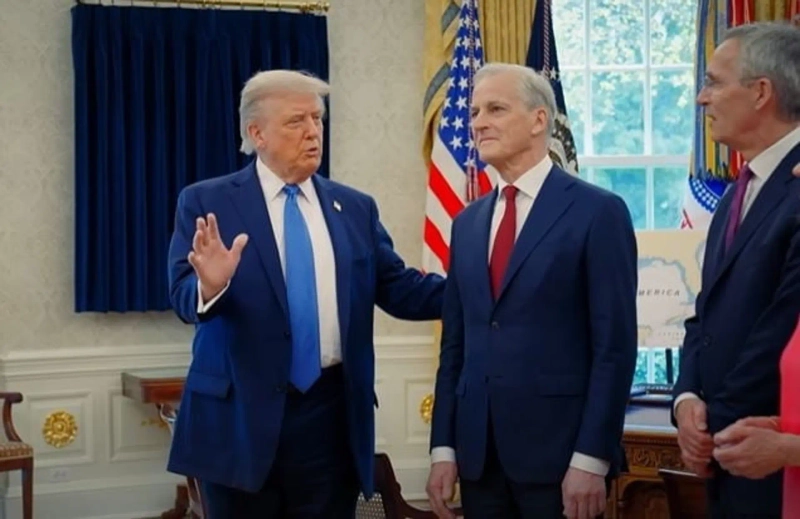
President Donald Trump reiterated his willingness to negotiate tariffs with China, leading to a relief rally in the New York stock market. Key figures in the US Federal Reserve mentioned the possibility of a rate cut in the event of an economic slowdown accompanied by employment shocks, boosting market gains.
On the 24th local time, the major three indices at the New York Stock Exchange increased their gains from the morning, recovering much of the losses caused by recent tariff shocks. The S&P500 index rose 2.03% to 5,484.77, and the Nasdaq increased 2.74% to 17,166.04. The Dow Jones Industrial Average, which had suffered significant losses due to UnitedHealth Group's earnings shock, also rose 1.23% to 40,093.04, recovering the 40,000-dollar level.
President Trump, after a summit with Norwegian Prime Minister Jonas Gahr Støre, told reporters, "We consulted with China this morning." He did not disclose the individuals involved in the contact. Trump's remarks were a clarification against the Chinese Ministry of Commerce's statement the previous day that "there were no negotiations on economy and trade between the two countries." Following a meeting with CEOs of major US retailers such as Walmart and Home Depot on Monday, Trump has maintained a conciliatory stance, hinting at the possibility of lowering tariffs on Chinese products. Bloomberg and the Wall Street Journal reported the previous day that the US White House is considering reducing the current 145% tariffs on Chinese products by half or implementing differential tariffs of 35% or 100% based on security threat levels, as proposed by the House China Committee.
US Treasury Secretary Scott Besant, who is leading tariff negotiations with countries worldwide, emphasized that trade consultations are proceeding smoothly, explaining the results of the first bilateral meeting with our country. Secretary Besant, during a press conference at the White House Oval Office in the afternoon, evaluated the bilateral talks with Korea as "very successful" in response to President Trump's request for additional explanations regarding trade negotiations. After concluding negotiations with Deputy Prime Minister and Minister of Economy and Finance Choi Sang-mok and Minister of Trade, Industry and Energy Ahn Deok-geun, he stated, "Progress is faster than expected, and we may be able to discuss technical conditions for a mutual understanding as early as next week."
Meanwhile, Deputy Prime Minister Choi Sang-mok, who disclosed the results of bilateral trade consultations in Washington D.C. late in the afternoon, stated that he conveyed the concerns of our people regarding mutual tariffs and tariffs on specific items. Deputy Prime Minister Choi reported, "We conveyed our vision and commitment to cooperate on trade, investment, shipbuilding, and energy, which are major interests of the US." Regarding the negotiation process, Deputy Prime Minister Choi emphasized that "the US is a trustworthy partner," suggesting that both countries seek 'mutually beneficial cooperation plans' that benefit both sides.
In the consultations, the two countries discussed trade between Korea and the US, energy security, and Korea's contribution to the reconstruction of the US shipbuilding industry. According to Deputy Prime Minister Choi, before the 90-day mutual tariff grace period ends on July 8, the two countries are expected to continue discussions focusing on four areas: non-tariff barriers, security, investment cooperation, and monetary policy. The US currently applies a 25% tariff on our country's automobiles, steel, and aluminum, and a 10% mutual tariff, which is common worldwide.
Separately, US Vice President J.D. Vance is setting up a framework for trade consultations with Indian Prime Minister Modi, creating a positive sentiment in the market as the US administration accelerates negotiations with various countries.
The stance of US Federal Reserve (Fed) officials, concerned about uncertainty due to tariffs, is also shifting. Christopher Waller, a key figure within the Fed, stated in an interview with Bloomberg, "If tariffs reduce demand, inflation may remain a temporary price factor," and indicated that if economic slowdown appears, they would respond without waiting.
Cleveland Fed President Bess Hemek, in another interview, stated, "If clear and convincing indicators emerge, we could lower rates in June," which also pulled down the US 10-year Treasury yield. The US 10-year Treasury yield fell 7.2 basis points to 4.315% from the previous trading day, and the dollar index, which evaluates the value of the dollar against six major countries, fell 0.62% to 99.23 on the London ICE futures market, dropping below the 100 mark again.
President Hemek, who worked at Goldman Sachs before joining the Fed, said, "As a policymaker, I consider the market in the decision-making process," and "I am looking at what indicators influence rather than the market itself." According to him, the three indicators affecting the Fed's decision-making process are the personal consumption expenditures price index, the consumer price index, and the unemployment rate.
The two Fed officials commonly expressed concern about "uncertainty" confirmed in the Beige Book, a report on economic trends from 12 regional banks released the previous day, while showing more concern about economic shocks from rising unemployment rates than inflation. The weekly initial jobless claims released by the US Department of Labor on this day were 222,000, matching market expectations.
US economic indicators did not have much impact on the market on this day. The durable goods orders for March, compiled by the US Department of Commerce, showed a 9.2% increase from the previous month, the highest since July last year. It was confirmed that there was significant pre-order demand to avoid tariff impacts, with transportation equipment orders, including automobiles, increasing by 27%.
US corporate earnings exceeded market expectations. Following Netflix last week, Alphabet, which took over the earnings baton from large tech companies, recorded a 12% increase in revenue to $90.23 billion, driven by an 8.5% increase in advertising revenue compared to the previous year. Earnings per share jumped 49% to $2.81, surpassing the market expectation of $2.01, rising more than 5% at one point in after-hours trading.
Google Cloud fell short of consensus but performed well with an operating profit of $2.18 billion. Google approved a $70 billion share buyback and decided to increase dividends by 5% to 21 cents.
On the other hand, concerns continued over Intel's major business restructuring, including cost reductions. Intel's first-quarter revenue announced on this day was $12.67 billion, higher than market expectations, but adjusted earnings per share were 13 cents, significantly below the consensus of 74 cents. Despite the recent announcement of a 20% workforce reduction, the second-quarter guidance revenue was $12.2 billion to $12.4 billion, lower than the initially expected $12.9 billion. Additionally, the next quarter's adjusted earnings per share were 0 dollars, falling short of the consensus of 7 cents. As a result, Intel is plummeting 6% in after-hours trading.
PepsiCo, a major US beverage and food company, fell 4.8% as it reported potential cost increases and consumer slowdown due to tariffs. Major airlines American Airlines and Southwest Airlines withdrew their annual guidance due to a sharp slowdown in passenger revenue since February, but each rose by 3% due to expectations of gradual business restructuring.
Reporter Kim Jong-hak jhkim@wowtv.co.kr

Korea Economic Daily
hankyung@bloomingbit.ioThe Korea Economic Daily Global is a digital media where latest news on Korean companies, industries, and financial markets.