

How Severe is the Impact of the Tariff War... Focus on China's April PMI
Summary
- The Chinese stock market is reportedly showing a wait-and-see attitude as it watches the outcome of the tariff war.
- China's April Manufacturing PMI is set to be released, and it is an important indicator for assessing the growth momentum of the manufacturing sector.
- Experts have analyzed that the Manufacturing PMI, which showed an increase in the first quarter, may slow down from the second quarter.
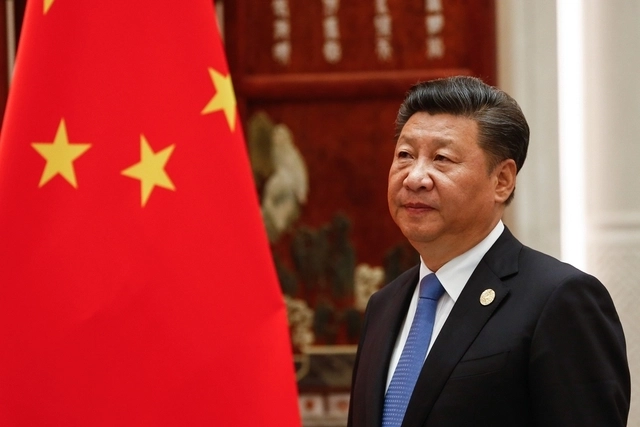
The Chinese stock market is showing a wait-and-see attitude as it observes the direction of the tariff war with the United States. The Shanghai Composite Index closed at 3295.06 on the 25th, down 0.07% from the previous trading day.
On a weekly basis, it rose by 0.56%, but it was not a significant upward trend. The market fluctuated with statements from U.S. President Donald Trump urging China's prompt participation in negotiations and the subsequent response from the Chinese government.
Investors are already expressing optimism that the U.S.-China trade friction will ease. The announcement that China has suspended tariffs on some U.S. imports and the timely statement from the Central Political Bureau of the Communist Party of China to lower the benchmark interest rate are prompting investors to reconsider their investments.
On the 30th, China's National Bureau of Statistics will release the April Manufacturing Purchasing Managers' Index (PMI). The Manufacturing PMI is an important indicator for assessing the condition of China's manufacturing sector amid the intense tariff war with the United States.
China's Manufacturing PMI, which fell to 49.1 in January, rose consecutively in February (50.2) and March (50.5). As of last month, among the five indices that make up the Manufacturing PMI, the production index, new orders index, and supplier delivery time index were above the baseline.
At the time, Reuters and others diagnosed that "although trade uncertainty in China is increasing, the manufacturing sector is showing stability." A Manufacturing PMI above 50 indicates economic expansion, while below 50 indicates contraction.
However, the rebound in the Manufacturing PMI in the first quarter was largely due to Chinese companies moving in advance to prepare for the tariff war. Experts are analyzing that from the second quarter, the actual growth momentum of manufacturing will slow down, negatively impacting the PMI. The Chinese stock market, which is closed on May 1st and 2nd for Labor Day, is expected to show some volatility depending on the PMI results.
Beijing Correspondent Kim Eun-jung kej@hankyung.com

Korea Economic Daily
hankyung@bloomingbit.ioThe Korea Economic Daily Global is a digital media where latest news on Korean companies, industries, and financial markets.