

[Monday Outlook] Will the Impact of the US Tariff War Be Revealed in 'April Export-Import Trends'?
Summary
- It is expected that the impact of the US 'Trump Tariffs' on Korean exports will be confirmed in the 'April Export-Import Trends' announced this week.
- According to the Bank of Korea, the first quarter GDP decreased by 0.2%, deepening the economic downturn.
- The US decision on the 'automobile parts tariff' is expected to have a significant impact on the Korean economy.
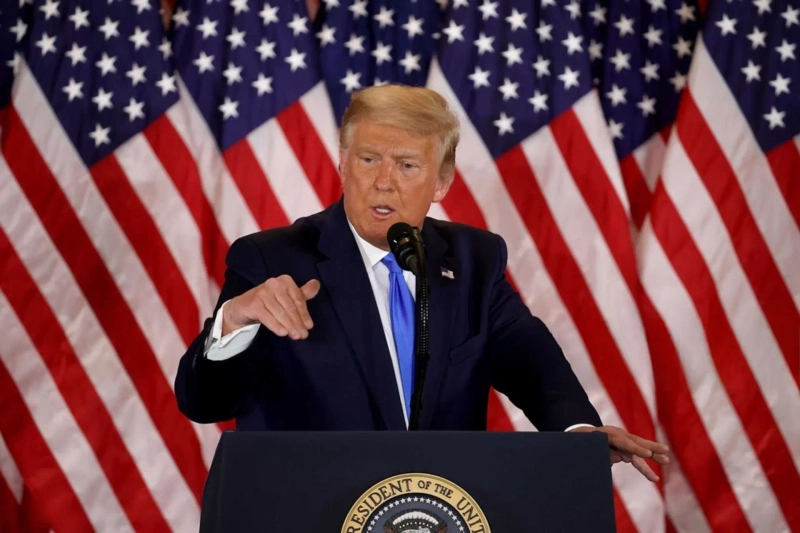
This week, we can gauge how much the exports that support the Korean economy have been hit by 'Trump Tariffs'. The US began imposing tariffs on automobile items (each 25%) and reciprocal tariffs (basic tariff 10%) earlier this month, and the impact is expected to be confirmed in the 'April Export-Import Trends' announced by the government. Economic indicators that can confirm the detailed situation of the economic downturn will also be released. The Bank of Korea announced last week that the real GDP growth rate for the first quarter decreased by 0.2% compared to the previous quarter.
The National Assembly's Special Committee on Budget and Accounts will hold a plenary session on the 28th and 29th to review the supplementary budget of 12.2 trillion won submitted by the government. The government has prepared an essential supplementary budget for prompt wildfire damage support and response to trade risks. It aims to pass the National Assembly early next month. The Democratic Party of Korea demands an increase to 'at least 15 trillion won', including the livelihood sector. The government and the People Power Party agree to 'some increase'.
Statistics Korea will release the 'March Industrial Activity Trends' on the 30th. With the first quarter GDP decreasing by 0.2%, the 'negative growth shock' is becoming full-fledged, and the specific impact on consumption, production, and investment can be confirmed. In February, overall industrial production increased by 0.6% compared to the previous month, and retail sales (+1.5%) and facility investment (+18.7%) also showed generally favorable trends.
Attention is also focused on the April Export-Import Trends to be announced by the Ministry of Trade, Industry and Energy on the 1st of next month. According to the Korea Customs Service, Korea's exports from April 1 to 20 decreased by 5.2% compared to the same period last year. For the whole of April, it is highly likely that the tariffs on steel and automobile items and reciprocal tariffs imposed by the US have been more significantly reflected in exports.
On the 2nd of next month, Statistics Korea will release the 'April Consumer Price Trends'. In March, consumer prices rose by 2.1% compared to the same month last year. As oil prices have stabilized this year, the consumer price inflation rate remains generally stable in the early 2% range. However, the burden of living costs is increasing as the processed food industry continues to raise prices.
As for overseas indicators, the preliminary GDP growth rate for the first quarter announced by the US Department of Commerce on the 30th is important. Depending on the level of economic recession, the direction of Trump's tariff policy targeting the world may change. For Korea, it is particularly important whether the US will actually impose the 'automobile parts tariff' announced for May 3. Reports from the local area suggest that US President Donald Trump is considering excluding automobile parts from the 25% tariffs on steel and aluminum items, considering the adverse effects on the domestic automobile industry.
Reporter Kim Dae-hoon daepun@hankyung.com

Korea Economic Daily
hankyung@bloomingbit.ioThe Korea Economic Daily Global is a digital media where latest news on Korean companies, industries, and financial markets.