

"US to Create Tariff Negotiation Framework... Relay Meetings with 18 Countries"
Summary
- The US announced plans to create a standardized negotiation framework and conduct intensive reciprocal tariff negotiations with 18 countries over two months.
- The Trump administration plans to use the USTR-prepared negotiation framework to organize negotiation categories such as non-tariff barriers, digital trade, and economic security.
- It was stated that if negotiations with the US are not completed by July 8, reciprocal tariffs may be imposed as originally planned.
USTR, Non-tariff & Rules of Origin, etc.
Organizing US Requirements by Item
Intensive Negotiations Until Tariff Suspension Deadline
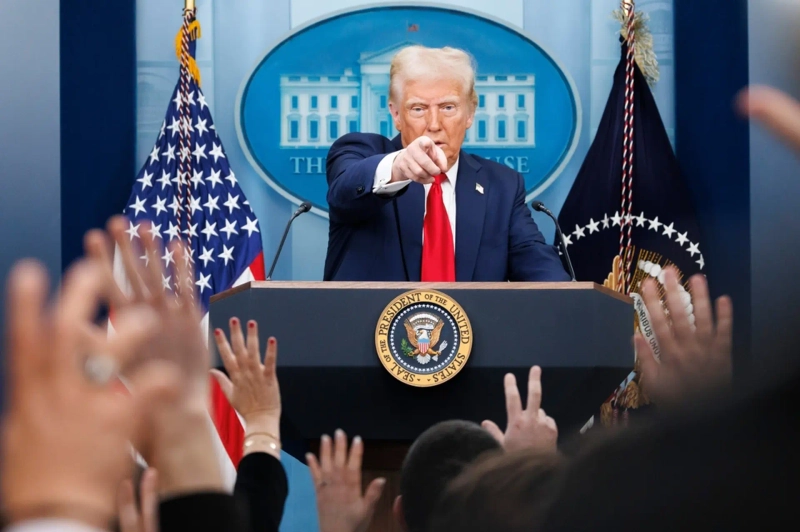
The United States plans to create a standardized negotiation framework and conduct intensive reciprocal tariff negotiations with 18 countries over the next two months, the Wall Street Journal (WSJ) reported on the 25th.
According to the WSJ, the Donald Trump administration intends to utilize a negotiation framework prepared by the United States Trade Representative (USTR) to efficiently conduct reciprocal tariff negotiations. Major categories of negotiation, such as tariffs and quotas, non-tariff barriers, digital trade, rules of origin, economic security, and other commercial issues, are organized.
Sources say the US plans to continue negotiations with 18 major trading partners over the next two months based on the framework. The USTR plans to present US requirements by negotiation item for each country. The method involves negotiating with six countries per week, completing negotiations with a total of 18 countries over three weeks, and repeating this cycle. If an agreement with the US is not reached by the reciprocal tariff suspension deadline of July 8, and President Trump does not extend the suspension period, reciprocal tariffs will be imposed as originally planned.
The list of negotiation target countries has not yet been disclosed. The White House stated on the 22nd that "18 written proposals have been received from various countries," but did not disclose the countries.
The European Union (EU) has decided to review the amendment of corporate tax guidelines applicable to multinational companies to ease tensions with the US. According to Bloomberg News, the EU member states meeting this week will discuss policy options that could change the application method of the 'Minimum Tax Directive' (imposing a minimum tax of 15% on multinational companies with certain revenue). They plan to look into the possibility of amending the 'Undertaxed Payments Rule' (UTPR), which allows additional tax to be imposed if the effective tax rate in the country of headquarters (US) and local jurisdictions is below 15%.
It is also known that the EU will discuss ways to treat the EU's Minimum Tax Directive and the 'Global Intangible Low-Taxed Income' (GILTI) provision of US foreign subsidiaries equally. The US government and companies have raised concerns about double taxation, arguing that the two directives have similar purposes but different methods of calculating the actual tax rate.
Bloomberg explained that "the EU's openness to amending the Minimum Tax Directive shows a willingness to prevent tensions with the Trump administration from worsening." On the first day of President Trump's inauguration, the White House declared, "We will reclaim US sovereignty and economic competitiveness by clarifying that the (OECD) global tax agreement has no binding force or effect in the US."
Reporter Han Gyeong-je hankyung@hankyung.com

Korea Economic Daily
hankyung@bloomingbit.ioThe Korea Economic Daily Global is a digital media where latest news on Korean companies, industries, and financial markets.