

PiCK
Wall Street Investment Banks Warn of Potential Structural Decline in Dollar
Summary
- U.S. investment banks have warned of the potential structural decline of the dollar, citing a reduction in foreign investments.
- To hedge against the dollar's decline, investors are considering yen purchases and Australian dollar short selling.
- An analysis suggests that if the national employment report indicates a higher likelihood of a Fed rate cut, yen purchases would be the best hedge.
"Trump's Fed Disruption Leads to Decline in Dollar Confidence"
"Hedging Dollar Asset Decline with Yen Purchases and Australian Dollar Short Selling"
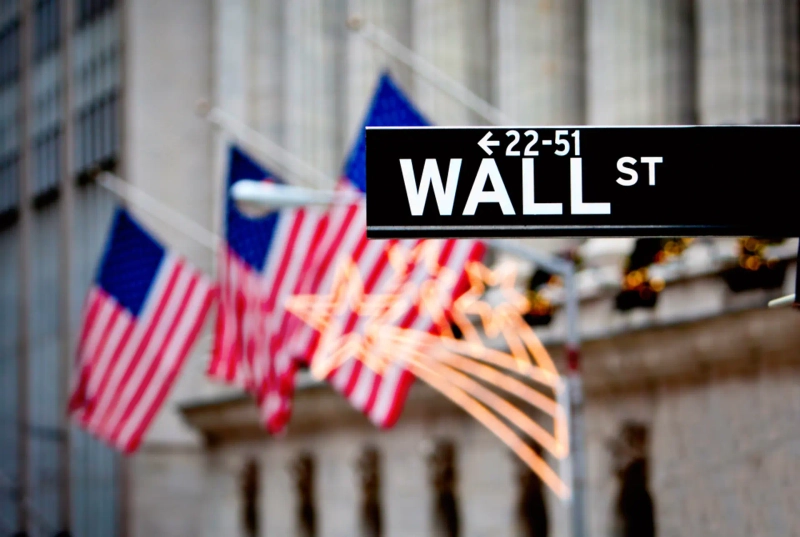
U.S. investment banks have warned of the potential structural decline of the U.S. dollar. They cited the uncertainty of U.S. government policies and the reduction in investments by foreigners in U.S. treasuries and dollars as major reasons.
According to CNBC on the 28th (local time), Deutsche Bank pointed out last week that "the dollar's downward trend is structural." Barclays reported that the dollar index has fallen by 8.3% so far this year compared to major currencies.
In fact, the ICE dollar index, which was at 109.65 earlier this year, fell to 99.67 based on the European market on the 28th.
Currency strategists at Deutsche Bank predicted that "the dollar value will fall to $1.30 per euro over the next five years, ending the era of an expensive dollar." George Saravelos, head of foreign exchange research at the bank, said, "The conditions for the dollar to enter a downward cycle have been met."
The decline in the dollar's value this year is mainly attributed to President Trump's trade tariff policies. However, many analysts pointed out that Trump's attacks on the U.S. central bank and its chairman had a greater impact on reducing confidence in the dollar. Schroders, a UK asset management company with over $1 trillion (1,444 trillion won) in assets, described these actions as "a de facto rejection of the U.S. dollar-centered global currency system."
Goldman Sachs, which had advocated for a strong dollar until just before the announcement of reciprocal tariffs, predicted that "exceptions to U.S. assets will decrease" due to the highest tariffs in 100 years.
Kamakhya Trivedi, head of global foreign exchange at Goldman Sachs, pointed out that "U.S. policy uncertainty is increasing and U.S. consumer sentiment has deteriorated." As the possibility of U.S. corporate profits and real household income being affected increases, they abandoned the strong dollar outlook.
The possibility that foreign investors are reducing their exposure to U.S. assets is also fueling dollar weakness. Earlier this month, when U.S. treasuries plummeted, there was speculation that foreign investors, including China, might sell U.S. treasuries.
According to Goldman Sachs, foreign capital invested in U.S. stocks earlier this year reached a record high of about $18 trillion (26,000 trillion won). Foreign capital invested in bonds amounted to $7 trillion (1 quadrillion won).
However, since March, foreign investors have sold about $63 billion (91 trillion won) in U.S. stocks. The "majority" of the recent selling is estimated to be by European investors.
As the dollar declines, if investors hedge currency exposure, the value of the dollar could depreciate further.
Bank of America stated that foreign investors often do not hedge U.S. stocks. In the case of European investors, the unhedged amount is $6.5 trillion. However, as the recent dollar weakness has created an 'urgent need to hedge,' there may be additional demand to sell U.S. dollars.
Athanasios Vamvakidis, a foreign exchange strategist at the bank, predicted that the U.S. dollar would fall by another 3.5% by the end of the year to $1.19 per euro. The bank also forecasted that the dollar could weaken against the British pound, falling to $1.50 per pound. This is a level not seen since the pound's weakness following Brexit in 2016.
Goldman Sachs suggested buying Japanese yen and short selling Australian dollars as effective hedges against the decline in dollar assets.
Historically, buying yen and selling dollars has generally been profitable during recessions. This year, especially with questions about the Fed's independence and the variable of the trade war, the yen-buying-dollar-selling strategy may not be as effective.
Goldman's strategists argued that "despite the sharp movements in recent weeks, the dollar will fall further, and the main beneficiary of this structural background will be European currencies." If the national employment report released this Friday shows clear signs of a labor market slowdown and the possibility of an early Fed rate cut increases, the best hedge would be a yen purchase position.
Goldman Sachs currently expects the yen, which is strong at 143 yen per dollar, to rise to 135 yen per dollar within the next 12 months. By 2028, the yen could rise to 115 yen per dollar.
Not all analysts expect the dollar's weakness to continue.
Capital Economics, a consulting firm based in London, pointed out that the recent decline in the dollar occurred in a situation where the interest rate differential was moving favorably, i.e., the Fed did not lower rates while the ECB did. This reflects a "risk premium" due to irregular policy decisions and market turmoil, similar to the temporary turmoil in the UK bond market in 2022.
Sivan Tandon, a capital markets expert at the consulting firm, predicted that the dollar would "recover some value in the coming months" as the interest rate differential widens again. Tandon forecasted that the dollar would be strong against other currencies because the Fed would find it difficult to cut rates due to inflation caused by tariffs.
Capital Economics said that currently, "due to a lack of reliable alternatives," the dollar is likely to remain the center of the global financial system and maintain demand as a reserve currency for the time being.
Guest Reporter Kim Jung-ah kja@hankyung.com

Korea Economic Daily
hankyung@bloomingbit.ioThe Korea Economic Daily Global is a digital media where latest news on Korean companies, industries, and financial markets.