

Vesent U.S. Treasury Secretary: "China Responsible for U.S.-China Trade Agreement"
Summary
- Scott Vesent, U.S. Treasury Secretary, stated that the responsibility for the U.S.-China trade agreement lies with China, and that China exports five times more goods than the U.S.
- Goldman Sachs analyzed that if negotiations with China fail, exports to the U.S. would plummet, threatening millions of jobs within China.
- Secretary Vesent predicted that Europe is in a panic state due to the euro's strength against the dollar, and that the ECB will adjust the euro's value.
"China exports five times more than the U.S."
Goldman Sachs: "Millions of Chinese jobs at risk if negotiations fail"
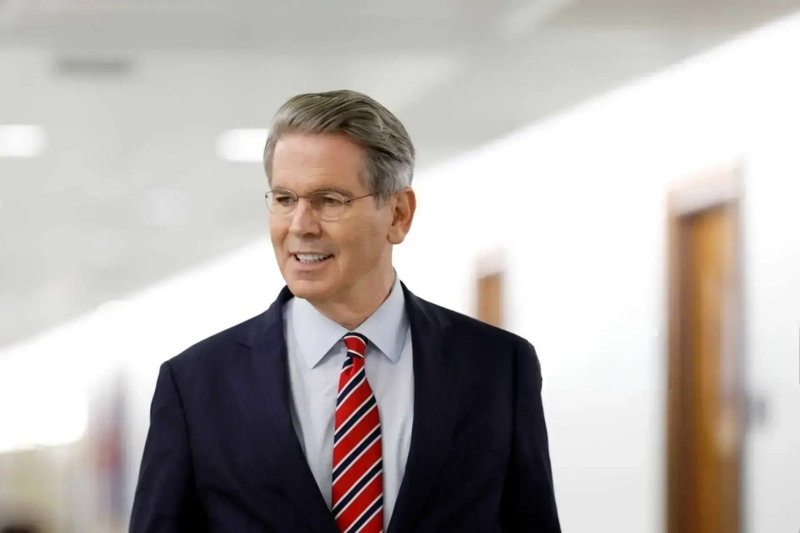
Scott Vesent, U.S. Treasury Secretary, emphasized on the 28th (local time) that the responsibility for the U.S.-China trade agreement lies with China. This dampened the heightened expectations for the U.S.-China trade talks following Trump's mention of a call with Xi Jinping.
On this day, Secretary Vesent, in an interview with CNBC, shifted the responsibility by stating, "China exports five times more products than the U.S., so it is China's responsibility to ease the unsustainable 125%, 145% tariffs."
Last weekend, President Trump said, "I spoke with Xi Jinping," but China denied this. Treasury Secretary Vesent also responded that he was unaware of any phone call between President Trump and President Xi.
Vesent recently stated that the U.S. has made progress in trade negotiations and is likely to sign the first trade agreement with India among the 15-18 major countries involved in the negotiations. He said, "Many countries have made good offers, and we are evaluating them."
Vesent claimed that since the trade tensions began, European countries are likely in a "panic state" due to the euro's strength against the U.S. dollar. Earlier this year, the dollar and euro were moving at almost the same level, but now the euro has risen nearly 10% against the dollar.
He also predicted that the European Central Bank (ECB) would lower interest rates to bring down the euro's value. He said, "Europe does not want a strong euro, but we adhere to a strong dollar policy."
Recently, administration officials have sent mixed signals about the status of the negotiations.
President Trump stated last week that Chinese officials discussed trade issues when they visited Washington. However, Chinese officials visited Washington to attend World Bank and International Monetary Fund (IMF) meetings, so no negotiations took place.
Chinese officials have downplayed the impact of the trade war with the U.S. on their economy.
According to Xinhua News Agency, Zhao Chenxin, Deputy Director of China's National Development and Reform Commission, expressed confidence that China could achieve its 5% economic growth target this year despite the tariff war with the U.S.
Experts predicted that if negotiations with the U.S. fail, China's exports to the U.S. would plummet, putting millions of jobs at risk. Goldman Sachs estimated that if tariffs remain, China's exports of goods to the U.S. would decrease to two-thirds of last year's level.
Goldman Sachs analysts stated, "According to our estimates, 16 million jobs in China are related to the production of goods for export to the U.S., and one-quarter of them are in the retail sector." They also added, "The telecommunications equipment, apparel, and chemical product sectors are more vulnerable than other manufacturing sectors due to their high proportion of exports to the U.S."
Guest reporter Kim Jung-ah kja@hankyung.com

Korea Economic Daily
hankyung@bloomingbit.ioThe Korea Economic Daily Global is a digital media where latest news on Korean companies, industries, and financial markets.