

"Trump, the US President with the Largest Stock Drop in 100 Days Since Nixon"
Summary
- During President Trump's early days in office, the S&P500 index fell by 7.8%, marking the largest drop since Nixon.
- Deckers Outdoor, Albemarle, and Tesla saw significant declines, while Palantir and Philip Morris rose.
- Wall Street expects a rebound following the short-term crash, with several companies receiving buy recommendations.
S&P500 Index Falls 7.8% in First 100 Days, Worst Since Nixon in the 1970s
Declines in Deckers, Albemarle, Tesla; Rises in Palantir, Philip Morris
"Most Anti-Business, Anti-Economic Policies Amid Pro-Business Expectations"
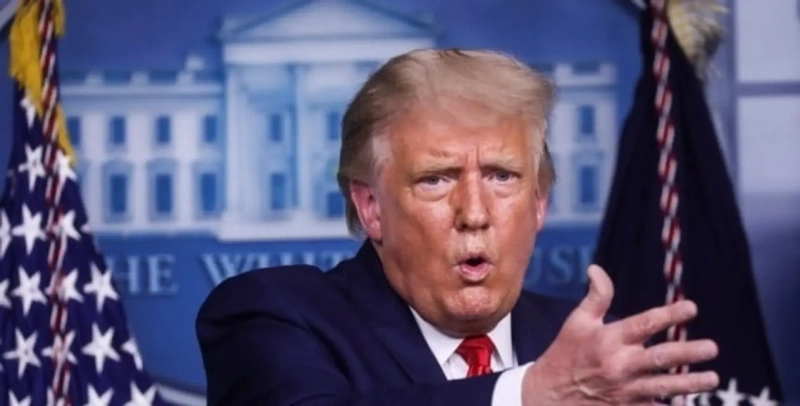
President Trump is expected to be recorded as the president who caused the largest drop in the US stock market in 55 years since Richard Nixon's second term in the 1970s during his first 100 days in office. During these 100 days, companies like Deckers Outdoor, Albemarle, and Tesla saw significant declines, while Palantir and Philip Morris rose.
According to foreign media such as CNBC on the 29th (local time), the S&P500 index of the New York Stock Exchange fell by 7.8% as of the closing price on the 25th compared to the closing price on Friday, January 17, before President Trump took office this year. This is the second largest drop since the S&P500 index fell by 9.7% during Richard Nixon's first 100 days in 1970. Despite a pro-business image, it is evaluated that the most anti-economic and anti-business tariff policies dealt a fatal blow to the market.
Some companies were particularly hard hit, with many experiencing a stock price crash.
According to CNBC analysis, the biggest decline among the 500 companies that make up the S&P500 was Deckers Outdoor. This company plummeted 48% during this period.
Deckers, a manufacturer of UGG boots and Hoka sneakers, relies heavily on production in China and Vietnam.
Despite this situation, Wall Street is expecting a rebound following the short-term crash. According to a survey conducted by LSEG, most analysts have issued buy recommendations, with an average target price about 67% higher than the current price.
Lithium mining company Albemarle, a supplier of electric vehicle battery materials, also fell nearly 40%. Concerns about Trump's well-known anti-electric vehicle policies were reflected.
The stock prices of Delta Air Lines (DAL) and United Airlines (UAL) also fell by more than 36% each. In addition to worsening inflation, consumer sentiment has weakened, and expectations that government spending cuts and corporate austerity policies will affect business travel demand have played a role.
Tesla, a company led by Elon Musk, who pledged loyalty to Trump, was also one of the hardest-hit companies. Tesla's stock fell 33% during Trump's first 100 days. Before Musk announced that he would reduce the duties of the Department of Government Efficiency (DOGE) under the Trump administration, it was about to become the stock with the largest drop during Trump's first 100 days. Musk returned to Tesla duties, and rumors of easing auto parts tariffs under the Trump administration led to a rebound starting last week.
Nevertheless, it is pointed out that significant changes are needed to restore the damaged Tesla brand. Although a significant number of analysts surveyed by LSEG have given 'buy' ratings, the average target price reflects expectations that it will remain flat at the current level.
While the US stock market is generally struggling, some companies have defied this trend and seen their stock prices rise. Palantir is a representative example.
Palantir, which also rose significantly last year, surged more than 57% during this period.
The company's management stated that demand is increasing due to government restructuring work. However, Wall Street is taking a cautious stance following Palantir's stock surge. According to target prices compiled by Wall Street analysts surveyed by LSEG, the company's stock is expected to fall by nearly 18% over the next year.
Philip Morris International, a tobacco company, recorded the second-highest increase with a 40% rise.
Netflix's stock also surged more than 28% during this period, which is noteworthy. The company's industrial characteristics, which are not significantly affected by tariffs, were highlighted, and subscriber growth exceeded expectations, leading to a significant rise.
Most analysts compiled by LSEG have issued buy ratings, but the average target price suggests that there is less than a 2% chance of rising from the current price in the future.
Additionally, discount retailer Dollar General rose significantly by 36.7%, and healthcare groups CVS and Eli Lilly also saw their stock prices rise by more than 20%.
Guest Reporter Kim Jung-ah kja@hankyung.com

Korea Economic Daily
hankyung@bloomingbit.ioThe Korea Economic Daily Global is a digital media where latest news on Korean companies, industries, and financial markets.