

PiCK
Expectations of Trade Negotiation Progress Lead to Joint Gains…S&P500 and Dow Rally for 6 Days [New York Stock Market Briefing]
Summary
- The Dow Jones 30 and S&P500 indices recorded a 6-day consecutive gain, reflecting market expectations for progress in trade negotiations.
- The smooth progress of U.S. trade negotiations, with active negotiations with Asian countries, stimulated buying sentiment.
- However, the expansion of the trade deficit and the decrease in corporate investment are worsening economic indicators, which could act as a source of market anxiety.
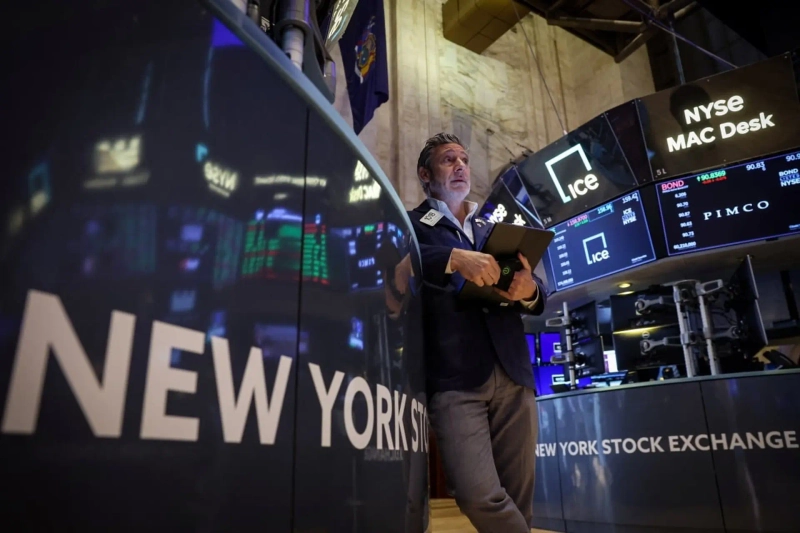
The three major indices of the New York Stock Exchange closed with joint gains. It is interpreted that expectations that the United States will smoothly conduct trade negotiations with major countries have been reflected.
On the 29th (local time) at the New York Stock Exchange (NYSE), the Dow Jones Industrial Average closed at 40,527.62, up 300.03 points (0.75%) from the previous session. The Standard & Poor's (S&P) 500 index rose 32.08 points (0.58%) to 5,560.83, and the Nasdaq Composite Index rose 95.18 points (0.55%) to close at 17,461.32.
On this day, the S&P500 and Dow indices continued their upward trend for six consecutive trading days. The Nasdaq index turned back to an upward trend after a slight decline the previous day.
The fact that trade negotiations between the United States and major trading partners are proceeding smoothly stimulated buying sentiment.
Scott Besant, the U.S. Treasury Secretary, said at an event explaining economic policy on the 100th day of the Donald Trump administration, "We will establish 18 important trade relationships in the next few weeks," adding, "Excluding China, 17 are in motion."
He added that Asian countries are particularly active in negotiations, with outlines of negotiations emerging with Korea and considerable discussions underway with Japan.
Howard Lutnick, the U.S. Secretary of Commerce, also said in an interview with CNBC that the United States has completed trade agreements with some countries, with only the approval of the counterpart's prime minister and parliament remaining. He did not disclose which countries these were.
Ross Mayfield, an investment strategist at Baird, predicted, "Until a solution to trade issues emerges, other issues are not very important," adding, "While investors await progress in trade negotiations, the S&P500 could fluctuate between 5,100 and 5,700."
Economic indicators continued to deteriorate. According to the Conference Board (CB), the consumer confidence index for this month was recorded at 86. This is a decrease of 7.9 points from the previous month's 93.9, marking the lowest level since the early days of the COVID-19 pandemic.
The April expectations index plunged 12.5 points from the previous month to 54.4. This is the lowest level in 13 years since October 2011.
The U.S. goods trade deficit in March recorded the largest ever, returning to an increasing trend. This was the result of companies placing advance orders ahead of President Trump's tariff announcement.
According to the U.S. Department of Commerce, last month's goods trade deficit was recorded at $162 billion, up 9.6% from the previous month's $147.8 billion.
Gene Seroka, the executive director of the Port of Los Angeles, said, "According to our own system measuring the volume in the Asian region, next week's volume is expected to decrease by about 35% compared to last year," adding, "The imposition of tariffs has led several major U.S. retailers to completely halt cargo shipments from China, causing a sharp decline in volume."
The number of job openings in the U.S. last month also fell short of market expectations. According to the March Job Openings and Labor Turnover Survey (JOLTS) released by the U.S. Department of Labor, the seasonally adjusted number of job openings was 7.192 million. This is the lowest level since September last year and also fell short of the market expectation of 7.48 million.
Chris Senyek, chief investment strategist at Wolfe Research, said, "The economy is weakening in real-time, CEO confidence is declining, and corporate investment is halted due to the impact of tariff policies," adding, "If the non-farm payroll report also weakens, this could lead to a decline in the stock market."
By sector, all sectors except energy were strong. No sector rose more than 1%.
Large tech companies showed mixed results within a narrow range, with only Tesla rising more than 2%. Amazon considered displaying tariff costs next to product prices but dropped the idea after receiving a protest call from President Trump. The White House also criticized Amazon's plan in an official commentary as "hostile and political action." In the process, Amazon's stock price fell more than 2% but ended slightly lower.
General Motors (GM) recorded a slight decline. Although GM's performance exceeded expectations, it announced that it would review its annual guidance and temporarily suspend additional share buyback plans considering the impact of tariffs, suppressing investor sentiment.
Coca-Cola recorded a slight gain on first-quarter results that exceeded market expectations. Despite tariff uncertainties, Coca-Cola maintained its annual guidance. Pfizer jumped more than 3% as earnings improved.
According to the Chicago Mercantile Exchange (CME) FedWatch tool, the probability that the U.S. Federal Reserve (Fed) will keep the benchmark interest rate unchanged until the end of June was 35.1%, the same as at the close of the previous day. The probability of a 0.25 percentage point cut was reflected at 60.2%.
The Chicago Board Options Exchange (CBOE) Volatility Index (VIX) fell 0.98 points (3.90%) to 24.17 from the previous session.
Reporter Goh Jeong-sam, Hankyung.com jsk@hankyung.com

Korea Economic Daily
hankyung@bloomingbit.ioThe Korea Economic Daily Global is a digital media where latest news on Korean companies, industries, and financial markets.