

Eurozone Grows Stronger Than Expected by 0.4% in Q1
Summary
- Eurostat announced that the Eurozone economy grew by 0.4% in Q1, surpassing economists' expectations.
- There is growing uncertainty as a slowdown in growth is expected over the next six months due to the impact of US tariffs.
- The European Central Bank (ECB) stated that despite lowering interest rates to stimulate economic growth, the Eurozone's growth remains sluggish.
Economists Exceed 0.2% Forecast
"Tariffs to Impact Growth Over the Next 6 Months" Forecast
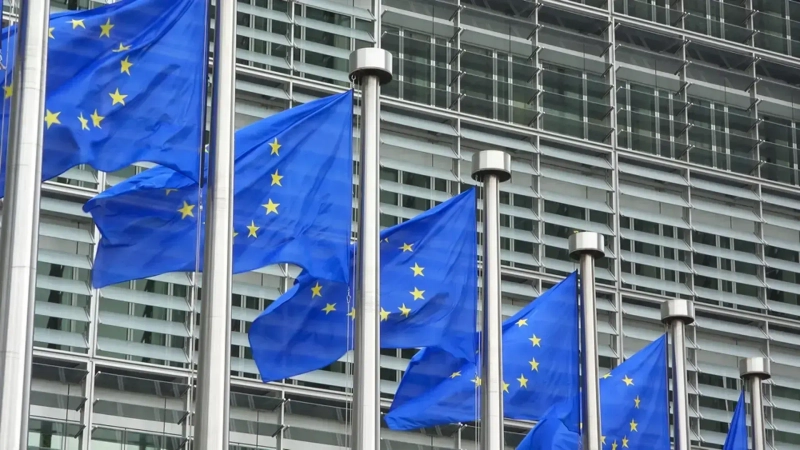
The Eurozone economy recorded a stronger-than-expected growth of 0.4% in the first quarter.
On the 30th (local time), Eurostat, the statistical office of the European Union (EU), announced that the Eurozone recorded an economic growth of 0.4% in the first quarter of this year. Economists had expected a growth rate of 0.2%. However, the growth outlook for the Eurozone remains uncertain due to tariff tensions.
Germany, the largest economy in Europe, also grew by 0.2% in GDP in the first quarter. France's GDP increased by 0.1% over three months.
Southern Europe and smaller economies ranked higher, with Spain and Lithuania's GDP growing by 0.6% each. Italy increased by 0.3%. Ireland's economy, which is highly volatile due to the presence of multinational companies, grew by 3.2% in the first quarter.
Franziska Palmas, the chief European economist at Capital Economics, predicted that despite the first-quarter GDP figures, "the tariffs imposed by the US starting in April will hit economic activity, leading to a sharp slowdown in growth over the next six months." She added that the effects of Germany's massive fiscal stimulus, which is set to begin, will mostly be felt next year.
The euro fell by 0.08% against the US dollar as of 10:35 AM London time. The yield on Germany's 10-year benchmark government bond, a benchmark for the Eurozone, fell by 3 basis points (bp).
The European Central Bank (ECB) cut interest rates to stimulate growth and economic activity, but the Eurozone's economic growth remained sluggish for most of 2023 and 2024. The ECB's deposit rate, its key interest rate, was cut to 2.25% earlier this month. This is down from a peak of 4% in mid-2023.
The ECB stated in March that the Eurozone economy is expected to grow by 0.9% in 2025. This is slightly lower than the forecast in January.
The EU faces a 20% blanket tariff from the US. With a 90-day grace period from the US, the EU has also temporarily suspended its own retaliatory measures. The EU is also subject to additional tariffs on steel, aluminum, and automobiles. Nevertheless, the Eurozone's economic sentiment in April fell to its lowest level since December 2024.
Guest reporter Kim Jung-ah kja@hankyung.com

Korea Economic Daily
hankyung@bloomingbit.ioThe Korea Economic Daily Global is a digital media where latest news on Korean companies, industries, and financial markets.