

"Will you uphold the Constitution?" Trump answers "I don't know"... Controversy arises
Summary
- President Trump sparked controversy by responding 'I don't know' to a question about upholding the Constitution during an interview.
- He emphasized strengthening policies for deporting illegal immigrants, which raised the possibility of violating the Fifth and 14th Amendments.
- Due to constitutional violation controversies, U.S. courts are blocking Trump's hardline immigration policies.
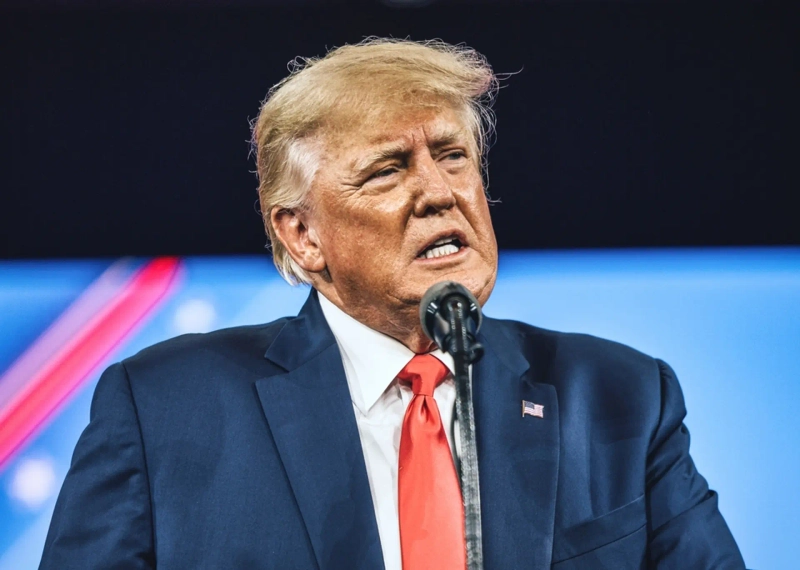
U.S. President Donald Trump has sparked controversy by responding "I don't know" when asked if he believes he should uphold the Constitution during his presidency.
According to the U.S. political circles on the 4th (local time), the controversial remark was made during an interview with NBC News while discussing his intention to deport illegal immigrants.
President Trump argued that he needs the authority to quickly deport illegal immigrants, claiming that it is unimaginable to handle millions of lawsuits in court. He stated, "I was elected to get them out of here, but the courts are preventing me from doing so."
When the host asked if he still had to uphold the Constitution, President Trump replied, "I don't know." He explained, "I have great lawyers working for me, and they will certainly follow the Supreme Court's ruling."
Subsequently, the Washington Post (WP) reported that it seemed as if he was ignoring the inaugural oath to preserve and protect the Constitution, further fueling the controversy.
During last year's presidential election, President Trump pledged the largest deportation operation of illegal immigrants in U.S. history and has made cracking down on illegal immigration a top priority since taking office. This has led to ongoing constitutional violation controversies.
Previously, the Trump administration expanded the authority for immigration officials to deport illegal immigrants without court intervention, leaving immigrants without the opportunity for a trial. This was criticized as violating the Fifth Amendment of the U.S. Constitution, which states that no one shall be deprived of life, liberty, or property without due process of law.
The proposal to eliminate birthright citizenship, which grants citizenship to anyone born in the U.S. regardless of their parents' nationality, also sparked constitutional controversy. The 14th Amendment of the U.S. Constitution states, "All persons born or naturalized in the United States, and subject to the jurisdiction thereof, are citizens of the United States and of the state wherein they reside."
As U.S. courts repeatedly blocked the excessive deportation policies, President Trump even attacked the judge who made the ruling, suggesting that they should be impeached.
Reporter Shin Hyun-bo, Hankyung.com greaterfool@hankyung.com

Korea Economic Daily
hankyung@bloomingbit.ioThe Korea Economic Daily Global is a digital media where latest news on Korean companies, industries, and financial markets.