

Summary
- Japanese Finance Minister Kato Katsunobu revised his statement, saying that US Treasuries held by Japan will not be used as a card in US-Japan tariff negotiations.
- Professor Suzuki Kazuto explained that US Treasuries can be a trump card but cannot be used easily.
- It was analyzed that a large-scale sale of US Treasuries by Japan could increase interest rates and the US government's interest burden.
Kato: "US Treasuries Not a Tool for Tariff Negotiations"
3 Days Ago: "Exists as a Negotiation Card"
Analysis Suggests Revision to Avoid Provoking the US
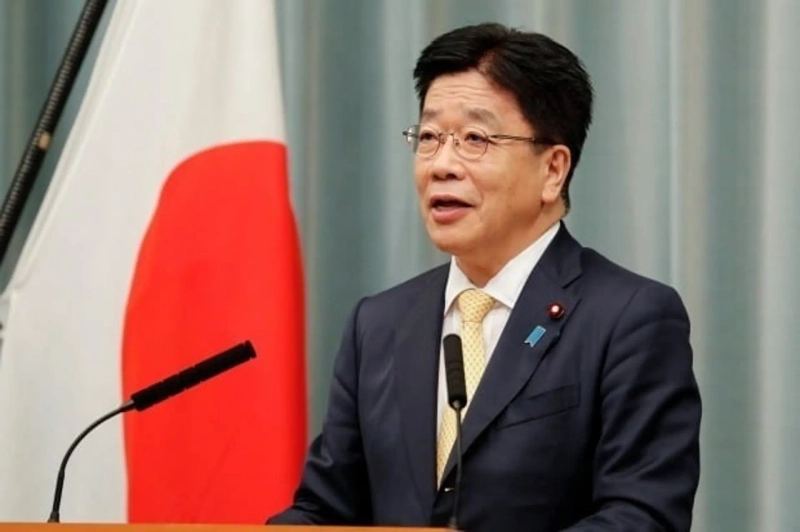
Japanese Finance Minister Kato Katsunobu stated that the US Treasuries held by Japan are not a card for US-Japan tariff negotiations. This reverses his statement made three days ago, interpreted as an intent not to provoke the US.
On the 4th (local time), at a press conference after the '28th ASEAN+3 (Korea, Japan, China) Finance Ministers and Central Bank Governors' Meeting' held in Milan, Italy, Finance Minister Kato said regarding tariff negotiations with the US, "We are not considering selling US Treasuries as a negotiation tool." Nihon Keizai Shimbun reported that "(Finance Minister Kato) revised his statement regarding the US Treasuries held by Japan."
On the 2nd, Finance Minister Kato appeared on a Japanese TV program and, when asked if there was a way to convey the message that 'US Treasuries will not be easily sold,' he stated, "It exists as a (negotiation) card." This was interpreted as a warning message that if the US does not retract its tariff measures, Japan might sell off the Treasuries.
In the press conference that day, he explained about his previous statement, "I did not mention selling US Treasuries." Analysts suggest that Finance Minister Kato revised his statement after receiving criticism that it might provoke the US. Professor Suzuki Kazuto of the University of Tokyo's Graduate School of Public Policy commented, "US Treasuries are undoubtedly a trump card in negotiations with the US, but they cannot be used so easily," and "It is not good to worsen the negotiation position in this way."
Japan is the largest holder of US Treasuries. According to the Ministry of Finance, as of the end of March, Japan's foreign exchange reserves stood at $1.2725 trillion. Most of the securities held as foreign exchange intervention resources are estimated to be US Treasuries. If Japan were to sell a large amount of US Treasuries, the price of US Treasuries could fall (interest rates rise), significantly increasing the US government's interest burden.
US-Japan tariff negotiations are at a stalemate. The two countries held a second negotiation in Washington on the 1st but failed to find a point of agreement. The US side presented a 'framework for agreement' centered on reducing mutual tariffs (Japan 24%). It is difficult to reduce tariffs on automobiles and steel/aluminum (25%).
The Japanese side strongly opposed. They stated that if tariff reductions on automobiles and steel/aluminum are not on the negotiation table, it would be difficult to cooperate in reducing the US trade deficit with Japan. The US and Japan are coordinating schedules to hold a third negotiation after mid-month. Tokyo = Kim Il-kyu, Correspondent

Korea Economic Daily
hankyung@bloomingbit.ioThe Korea Economic Daily Global is a digital media where latest news on Korean companies, industries, and financial markets.