

PiCK
'SpaceX Token' Turns Out to Be Fake? Robinhood Faces Rug Pull Controversy
Summary
- It was revealed that the SpaceX token launched by Robinhood was not actually a tokenized product of SpaceX shares.
- Robinhood cashed out the tokens, burned them, and changed the name, leading to a rug pull controversy among investors.
- Experts pointed out the possibility of unregistered securities issuance and regulatory violations, raising concerns about investor damage.
All SpaceX tokens burned after being cashed out
Investors protest, asking, "Isn't this a rug pull scam?"
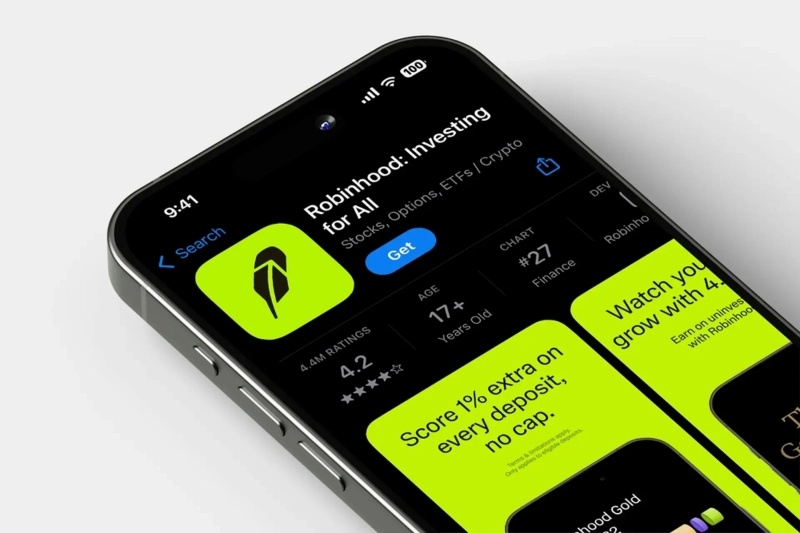
The U.S. investment platform Robinhood has launched new tokenized stock products in the market and is now embroiled in a 'rug pull' controversy—a term referring to an act in which the perpetrators abscond with investor funds, resulting in damages.
On the 30th of last month (local time), Robinhood announced in Europe the distribution of tokenized stocks for 'SpaceX' and 'OpenAI', saying it aimed to increase investment accessibility to unlisted companies. These tokenized stocks are created through a Special Purpose Acquisition Company (SPAC) owned by Robinhood, allowing investors to indirectly invest in unlisted stocks through the tokens.
Investors misunderstood the 'SpaceX' token as a product that tokenized actual SpaceX shares and began purchasing. Previously, regarding the 'OpenAI' token, Robinhood CEO Vlad Tenev had stated, "It is a tokenization of OpenAI shares," and shared related transactions, leading investors to believe the 'SpaceX' token was likewise backed by actual SpaceX shares.
However, on the 7th, Robinhood cashed out about half of the 'SpaceX' tokens sold, then burned the remaining supply and changed the token name to 'Demo 1'. This led investors to strongly protest, stating, "Isn't selling tokens that people purchased and even changing the name basically a scam?" As of now, neither the Robinhood CEO nor SpaceX has released any particular statement on the incident.
Jang Hyuk-soo, infrastructure team lead at A41, remarked, "Since the Robinhood CEO himself disclosed the issuance of 'OpenAI' tokens and the related transactions, it was inevitable that the 'SpaceX' token, issued from the same address, would be recognized as an official SpaceX token," and criticized, "Robinhood deceived investors in a way that is even more deceptive than a typical crypto rug pull."
In addition, the 'OpenAI' token also faced controversy over its legitimacy. Last week, OpenAI made an official statement, declaring, "The 'OpenAI' token is unrelated to our company and does not represent actual equity," further emphasizing, "We have never approved any equity transfer." The Bank of Lithuania also stated, "We have requested an explanation regarding the structure of the 'OpenAI' token from Robinhood," and that it would determine the regulatory compliance status of the token.
As the controversy around the 'OpenAI' token grew, the Robinhood CEO said in an interview with CNBC on the 8th, "Technically, the token is not a stock, but is issued through a Special Purpose Vehicle (SPV) managed by Robinhood," and explained, "It is a product designed to allow European users access to unlisted stocks."
Jin Hyun-soo, chief attorney at Decent, explained, "It appears to be an unregistered securities issuance, and the token name change could also be problematic," adding, "If regulatory issues arise, even though Robinhood claims it is a 'tokenization of stocks', selling such tokens becomes a clear act of fraud."

Doohyun Hwang
cow5361@bloomingbit.ioKEEP CALM AND HODL🍀